
Get A Precise Business Insurance Quote For Your Appliance Repair Company
It Just Takes A Few Clicks
Or Talk To One Of Our Specialists At (440) 826-3676
Access Coverage Built Around How You Actually Work
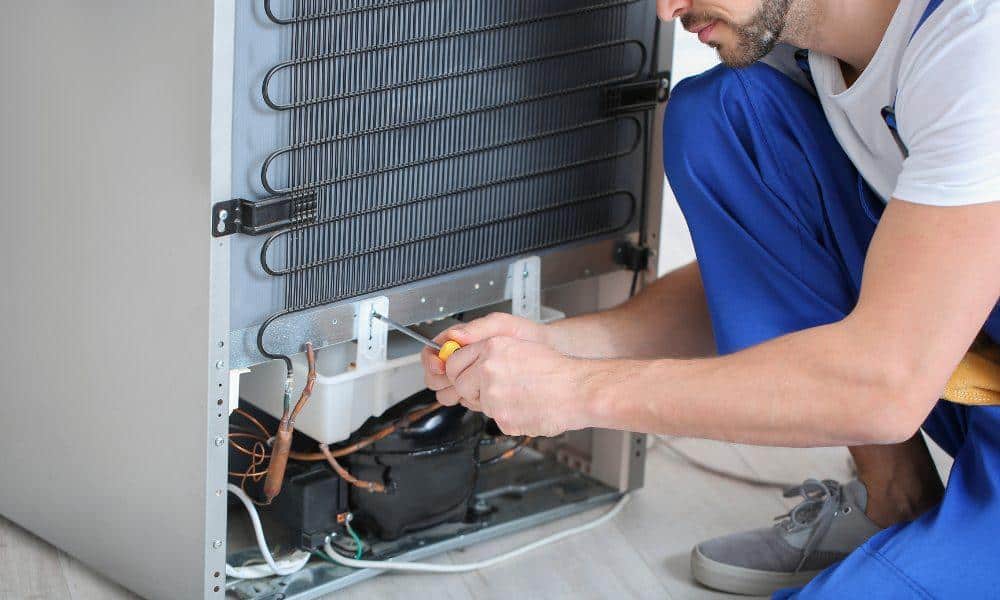
Every appliance repair job carries risk. A loose water line floods a kitchen. A cracked tile becomes a lawsuit. A slip-and-fall turns into a claim that threatens everything you’ve built.
Appliance repair insurance handles the legal fees, the property damage, and the medical bills, so one bad day doesn’t end your business.
At The Allen Thomas Group, we’re an independent agency with over 20 years of experience. We compare quotes from multiple top-rated insurers across 27 states to find coverage that matches your operations, solo technician or full crew.
Our Carrier Partners
That allows us to find the best rates for our local contractors and construction companies.



Getting The Right Insurance For Your Appliance Repair Business
We know how frustrating and complex the process of finding the right coverage and getting a COI can be and how it slows down your ability to care for your customers.
Let us help fix it for you in 3 easy steps.

Tell us about your specific needs and we will find the right policy for you.

Review the results of our search.

We will walk you through your new policy step by step.
What Does Appliance Repair Insurance Cover?

There is no single “appliance repair insurance” policy. That surprises a lot of business owners. What you’re actually buying is a combination of commercial insurance coverages, each one engineered to protect against a different risk your appliance repair business faces every time you pick up your tools and walk through a customer’s door.
Here’s what most appliance repair businesses need to stay fully protected.
General Liability Insurance
This is where it starts. General liability insurance covers third-party bodily injury, property damage, and advertising injury claims. These are the risks you carry on every service call, in every customer’s home, on every job site you enter.
Picture this. You reconnect a washing machine water line. You test the connection. Everything looks solid. But the fitting fails overnight. Water pours across the customer’s hardwood floors for hours. By morning, the damage is catastrophic — and the homeowner wants you to pay for all of it. Their lawyer is already calling.
With general liability coverage, your insurance policy handles the repair costs, the legal defense fees, and the potential settlement. Without it? That entire bill belongs to you.
Appliance repair contractors typically pay an average of $67 per month for general liability coverage with $1 million per occurrence / $2 million aggregate limits.
Here’s something else most appliance technicians don’t realize. General liability also includes completed operations coverage. That matters — a lot. Problems don’t always surface while you’re still on-site. Sometimes a repair fails days later. Sometimes it fails weeks later. Completed operations coverage protects your appliance repair business long after you’ve packed up your tools and left the job.
Business Owner's Policy (BOP)
A business owner’s policy is simple. It bundles general liability insurance and commercial property insurance into one package at a discounted rate. You get broader protection. You deal with less paperwork. And you pay less than you would buying each coverage separately.
Average cost: $83 per month for appliance repair businesses.
Beyond the liability protection, a BOP covers your shop space and stored parts inventory. It covers your business equipment and tools kept on-premises. It covers business interruption losses if a fire, storm, or act of vandalism forces you to temporarily shut down operations and lose revenue while you recover.
For most small appliance repair companies — especially those with a physical shop, a parts room, or dedicated office space — a BOP is the smartest first insurance investment you can make. It protects more. It costs less. And it simplifies everything.
Commercial Auto Insurance
You drive to every job. Your service van carries your tools, your replacement parts, and sometimes the appliances themselves. But here’s what catches a lot of appliance repair business owners completely off guard — your personal auto insurance won’t cover an accident that happens while you’re driving for work.
Not partially. Not with exceptions. It simply won’t pay.
Commercial auto insurance protects against collision damage to your work vehicle, liability claims from at-fault accidents during service calls, and medical expenses for injuries sustained in work-related crashes.
What if your technicians drive their own cars? Hired and non-owned auto (HNOA) coverage fills that critical gap. Most states require commercial auto coverage for any vehicle used for business purposes. Driving without it puts your appliance repair company at serious financial risk — and serious legal risk.
Workers' Compensation Insurance
Appliance repair is physical. There’s no way around it. Your technicians lift heavy refrigerators. They squeeze into tight laundry closets. They kneel on hard kitchen floors for hours. They work around live electrical components and gas connections every single day. Injuries happen — even to experienced professionals who’ve done the same repair a thousand times.
If you have employees, most states require workers’ compensation insurance. Appliance repair falls under NCCI Class Code 9519 — that’s the classification for businesses that install, service, and repair household and commercial electrical appliances. Premium rates typically run $3 to $5 per $100 of payroll, depending on your state, your experience modification rate, and your claims history.
Workers’ comp covers medical expenses and lost wages when an employee gets hurt on the job. But it does something else that’s equally important — it protects your appliance repair business from costly employee injury lawsuits through the employer’s liability component that comes built into most policies.
Even sole proprietors should consider voluntary workers’ compensation. Why? Because personal health insurance can deny claims for injuries sustained while working. You lift a commercial freezer wrong. You herniate a disc. Your health insurer reviews the claim, sees it happened during a service call, and refuses to pay. Without workers’ comp, you absorb the full cost of surgery, rehab, and lost income yourself.
Tools and Equipment Coverage (Inland Marine Insurance)
Your tools are your livelihood. Multimeters. Hand tools. Diagnostic equipment. Refrigerant gauges. Specialty wrenches. Replacement parts. Lose them, and you can’t work. It’s that simple.
Tools and equipment coverage, a form of inland marine insurance, protects these items whether they’re at a customer’s home, sitting in your service van, stored at your shop, or in transit between jobs. A stolen toolbox from an unlocked van shouldn’t shut down your entire week. A break-in at your shop shouldn’t cost you thousands in replacement gear and days of lost revenue.
Typical cost: $100 to $169 per year. That’s less than most technicians spend on a single set of specialty tools — and it keeps your appliance repair business running without interruption.
Professional Liability Insurance (Errors and Omissions)
Mistakes happen. They happen to good technicians. They happen to great ones. Maybe you misdiagnose a refrigerator compressor issue and the appliance fails again a week later. Maybe a dishwasher repair takes longer than you estimated, and the customer claims your delay cost them business. Maybe you recommend a full replacement when a less expensive repair would have solved the problem, and now the customer feels misled.
Errors and omissions (E&O) insurance covers claims tied to professional errors, faulty advice, and service failures. It handles your legal defense costs. It pays potential settlements or judgments. And it prevents one bad call from becoming a financial catastrophe that threatens your entire appliance repair business.
Average cost: approximately $74 per month for appliance repair contractors.
Cyber Liability Insurance
This one surprises people. But think about it. Your appliance repair business stores customer information — names, home addresses, payment details, service histories. That data has value. And if someone steals it, you’re the one who’s responsible.
Even a basic ransomware incident or a stolen customer database can trigger mandatory notification requirements, regulatory fines, credit monitoring obligations, and customer lawsuits. Cyber liability insurance covers data breach response costs, notification expenses, credit monitoring services, and legal defense fees related to compromised customer information.
If your appliance repair business uses scheduling software, processes online payments, or keeps digital service records, cyber coverage is no longer a luxury. It’s a necessity.
Bailee's Insurance (Customer Property in Your Care)
When a customer drops off a dishwasher at your repair shop, that appliance is your responsibility. If a fire breaks out overnight and destroys it, you owe them. If a pipe bursts and water damages it, you owe them. If someone breaks in and steals it, you owe them. Your general liability policy? It likely won’t cover any of these scenarios.
Bailee’s insurance fills that gap. It covers customer-owned property while it’s in your care, custody, and control at your shop — protecting you against damage, theft, and loss during the repair process. If your appliance repair business handles any off-site or in-shop repairs where you’re holding someone else’s property, this coverage is critical.
The Real Risks of Running an Appliance Repair Business
Every job site is someone else’s home. That means risk, and most appliance repair business owners don’t fully appreciate how much until a claim arrives.
Water Damage Is the Biggest Threat
Small mistakes lead to enormous claims. A faulty hose connection. A loose refrigerator water line. The average water damage claim exceeds $13,900 — and some run far higher.
Other Common Risks for Appliance Repair Contractors
- Property damage — Scratched hardwood, cracked countertops, dented cabinetry from moving heavy appliances
- Slip-and-fall injuries — Customers stepping in water or tripping over tools during a repair
- Employee injuries — Back strains, electrical burns, cuts, and repetitive joint stress from physical work
- Tool theft — Stolen equipment from unlocked vans, shop break-ins, or smashed vehicle windows
- Vehicle accidents — Collisions between service calls without commercial auto coverage
No Insurance Means No Contracts
Property managers, commercial building owners, home warranty companies, and general contractors all require a certificate of insurance (COI) before they’ll hire you. No coverage means no COI, and those jobs go to your insured competitors.
For appliance repair businesses that want to grow, insurance isn’t just protection. It’s a business development tool.
The exact steps you need to know to lower your costs as an appliance repair company
You want to pay less. Everyone does. Here’s how to actually make that happen.
Bundle your Policies
A business owner’s policy combines general liability and commercial property coverage at a built-in discount. Most appliance repair businesses save 10–15% compared to purchasing these coverages separately. One policy. Two coverages. Real savings.
Maintain a Clean Claims History
This is the single most powerful lever you have. Fewer claims mean lower premiums at every renewal. Invest in safety training for your appliance technicians. Document your repair procedures. Address small problems before they become expensive losses. Carriers reward businesses that don’t cost them money — and they punish those that do.
Use the Correct Classification Codes
General liability codes 91155 (residential appliance repair) and 91150 (commercial appliance repair) ensure your premium accurately reflects your actual operations. The wrong code can mean you’re overpaying by hundreds — sometimes thousands — of dollars per year for coverage that doesn’t even match what you do.
Implement Safety and Loss-Control Practices
Carriers don’t just look at your claims history. They look at what you’re doing to prevent claims in the first place. Documented training programs. Vehicle safety protocols. Proper lifting techniques. Water damage prevention checklists. These aren’t just good business practices — they’re premium reducers that compound year after year.
Work with an Independent Agent
This is the difference-maker. We don’t sell you one carrier’s product. We shop your appliance repair insurance across multiple competitive carriers and find you the best combination of coverage, price, and service. Every single year. Not just the first year, every year.
Protect Your Appliance Repair Business Today
You built this business with your hands. You built it with your skills. You built it with years of hard work learning how to diagnose problems, source parts, and fix the appliances that people depend on every single day. One unexpected claim shouldn’t be able to take all of that away.
The Allen Thomas Group makes getting the right appliance repair insurance simple. We compare carriers. We explain your options in plain language. We answer your questions honestly. And we get you covered — often within 24 hours.
Ready to protect your appliance repair business?
Call us at (440) 826-3676 to speak with an insurance specialist today.
Frequently Asked Questions About Appliance Repair Insurance
What type of insurance does an appliance repair business need?
Start with general liability insurance. It’s the foundation — the one policy every appliance repair business must carry before taking on a single job. General liability protects you against third-party bodily injury and property damage claims every time you enter a customer’s home.
From there, most appliance repair companies layer on additional coverages. A business owner’s policy (BOP) bundles liability and property coverage at a discount. Commercial auto insurance protects your service vehicles. Workers’ compensation is required in most states if you have employees. Beyond those core policies, many appliance repair businesses also carry professional liability (E&O) for claims related to faulty advice or misdiagnosis, tools and equipment coverage to protect the gear they depend on, cyber liability insurance for data breach protection, and bailee’s insurance for customer appliances held at their shop.
Which combination is right for you? That depends on specifics — how many technicians you employ, what types of appliances you service, how many vehicles you operate, and which states you work in. That’s exactly what an independent agent helps you figure out.
How much does appliance repair insurance cost?
General liability for appliance repair contractors averages about $67 per month with standard $1 million per occurrence / $2 million aggregate limits. A business owner’s policy runs approximately $83 per month. Workers’ compensation averages around $254 per month. Commercial auto comes in near $173 per month.
Those are median figures. Your actual premium could be higher. It could be lower. It depends on your annual revenue, your employee count, your geographic location, your claims history, your deductible selections, and the specific types of appliances you service. Two appliance repair businesses in the same city with similar revenue can pay very different premiums based on their loss history and coverage structure alone.
The most effective way to find a competitive rate is straightforward — have an independent agent compare quotes across multiple carriers on your behalf. That’s exactly what we do for every appliance repair client who calls us.
Do I need insurance if I'm a solo appliance repair technician?
Yes. And it’s not even a close call.
Every time you walk into a customer’s home to repair a dishwasher, install a refrigerator water line, or troubleshoot a faulty dryer, you’re one accident away from a claim you’d have to pay entirely out of your own pocket. One water damage incident. One property damage lawsuit. One customer who slips on a wet floor and breaks their wrist. Any single one of these events can produce costs that exceed what most individuals have in personal savings.
General liability insurance puts a barrier between your business liabilities and your personal assets — your home, your savings account, your vehicle. Without it, a plaintiff’s attorney can come after everything you own.
And here’s the practical reality that solo technicians often discover the hard way. Property management companies require proof of insurance. Home warranty providers require it. Commercial clients require it. They all want a valid certificate of insurance (COI) before they’ll book you for a single job. No coverage means no COI, no contracts, and no access to the steady, high-volume work that actually grows a business.
Does appliance repair insurance cover water damage I cause at a customer's home?
Yes. This is one of the most common claims in the appliance repair industry — and it’s exactly what general liability insurance is designed to handle.
If a water line connection fails during your repair, a drain hose comes loose after installation, or a supply valve leaks because of your work, your general liability policy covers the cost to repair the customer’s damaged property. Hardwood floors. Drywall. Cabinets. Carpeting in adjacent rooms. Whatever the water reached, your coverage responds.
But the protection doesn’t stop when you leave the job site. Your policy’s completed operations coverage extends that same protection to damage that occurs days or even weeks after your service call. A washing machine connection that holds fine during your pressure test but fails three days later? Completed operations covers that claim. A dishwasher drain line that slowly leaks into the subfloor over a week? Covered.
Your general liability policy also pays for your legal defense if the customer decides to sue — attorney fees, court costs, expert witnesses, and settlement negotiations. All of it. That’s the coverage working the way it’s supposed to.
What happens if I don't have appliance repair insurance and someone files a claim?
Everything falls on you. Every dollar. Every consequence.
That means paying for the customer’s property damage repairs out of your own bank account. Covering their medical bills if someone was injured. Hiring and paying for your own attorney when the lawsuit is filed. Absorbing the full settlement or court judgment if you lose — and you very well might, because without an insurer’s legal team defending you, you’re at a significant disadvantage.
The numbers are sobering. A single water damage claim can exceed $13,000. A bodily injury lawsuit with attorney fees, medical costs, and a settlement can reach well into six figures. For most small appliance repair businesses and solo technicians, one uninsured claim is enough. Not enough to struggle. Enough to close permanently.
And there’s more beyond the immediate financial hit. Operating without required insurance — workers’ compensation, in particular — can trigger state penalties, significant fines, and revocation of your contractor’s license. In some states, it’s a criminal offense.
The cost of insurance is real. But the cost of not having it is almost always worse.