
Summer Camp Insurance
Summer and day camps put minors in motion all day long, across swimming, sports, archery, hiking and off-site field trips, and that pairing of children and high-hazard activity creates exposures a standard business policy was never built to absorb. Two perils sit at the center of every camp account: abuse and molestation claims involving campers, and participant injuries during the very activities the camp exists to offer. The Allen Thomas Group structures camp programs so neither gap is left to chance.
Carriers We Represent
Why Summer Camps Need Specialized Insurance
A summer or day camp's defining liability is abuse and molestation. Wherever minors are enrolled and supervised by staff and volunteers, sexual misconduct allegations are the exposure carriers scrutinize first, and the coverage most likely to be missing. The peril sits in a hard market and is frequently excluded outright from base general liability and business owners policies, or sublimited to as little as $25,000 to $100,000 per occurrence, far below the cost of defending or settling a single claim. Because of this, dedicated or endorsed abuse and molestation (A&M) coverage with its own limit and aggregate is now treated as essential rather than optional for any camp serving children. Allen Thomas Group builds camp commercial insurance programs that lead with this gap, not bury it.
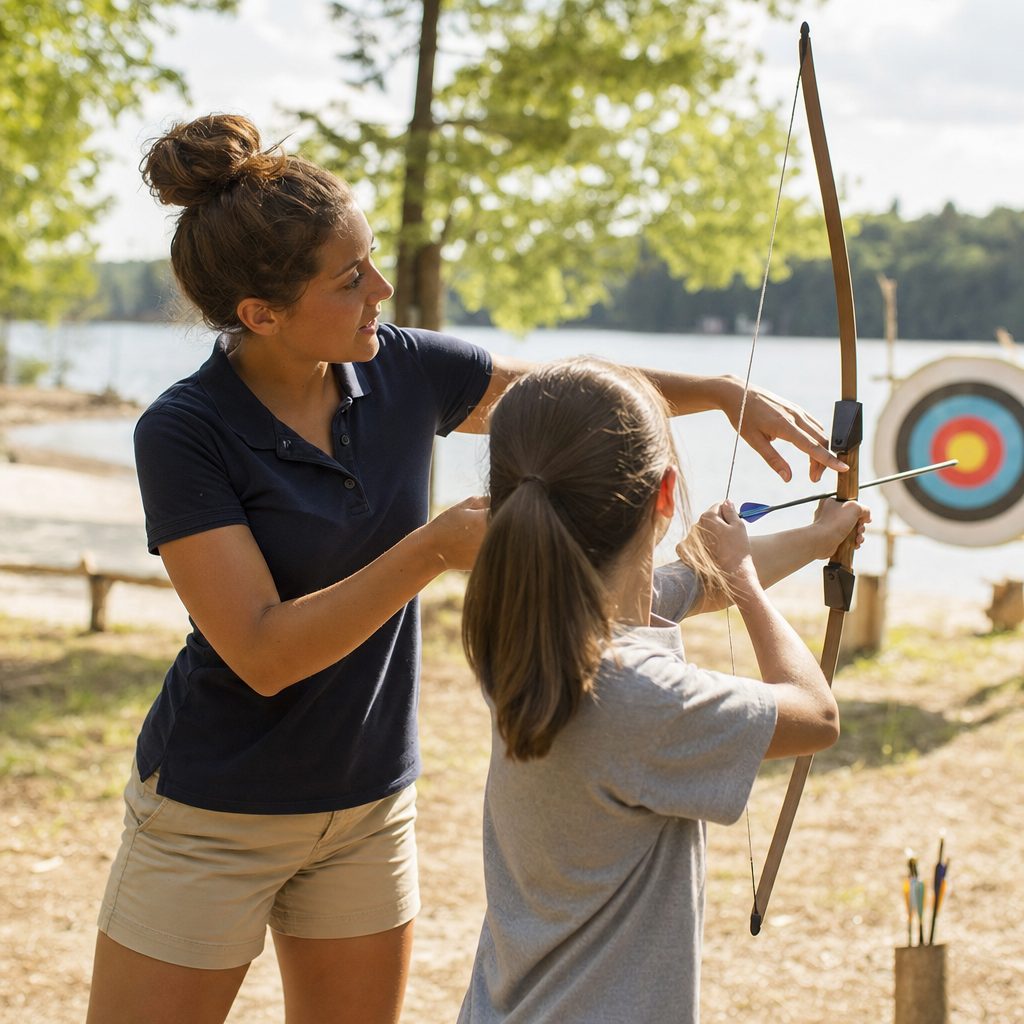
The second spine is participant injury. A camp's entire value proposition is activity, swimming and waterfront, field sports, archery, climbing, horseback riding, arts and off-site field trips, and the base general liability form often limits or excludes injuries arising out of the participating activity itself. A camper hurt at the lake, on the ropes course or on a chartered bus is exactly the loss the camp must be ready for, yet exactly the loss an unendorsed policy may not respond to. Named participant coverage, accident-medical (student-accident) coverage and properly worded liability address this, while signed participation agreements and waivers backstop the file.
Camps also carry exposures that compound seasonally: a workforce of young, short-tenure counselors hired for ten weeks, camper transportation by bus and van, and equipment and facilities that sit idle most of the year. The American Camp Association, which sets the recognized health and safety benchmark for the industry, frames camp risk around exactly these areas, supervision, aquatics, transportation and emergency response, which is why a camp's insurance has to be assembled deliberately rather than pulled off a generic shelf.
- Abuse & molestation is the #1 camp peril and is routinely excluded or sublimited (as low as $25K-$100K) on base GL/BOP forms
- Participant/activity injury, waterfront, sports, archery, ropes, riding, is often limited or excluded by the standard GL participating-activity language
- Camper transportation by bus, van and chartered coach creates real auto and hired/non-owned exposure on every off-site trip
- Seasonal hiring of young counselors and volunteers amplifies both supervision risk and workers' compensation exposure
- Equipment and facilities (waterfront gear, athletic equipment, dining halls, cabins, vehicles) need property protection even during the off-season
- Camper medical incidents demand accident-medical/student-accident coverage that pays regardless of fault
- Camps that follow ACA accreditation standards still need insurance written to match those activities, accreditation is not coverage
Core Coverages for Summer Camps
Coverage for a camp is layered from the highest-severity exposures down. Abuse & molestation (sexual misconduct) liability comes first, ideally on its own limit and aggregate so an A&M claim never erodes the general liability available for an ordinary slip-and-fall. Participant accident-medical (student-accident) coverage pays a camper's medical bills after an injury regardless of who was at fault, an inexpensive layer that resolves the majority of camper incidents before they escalate into liability claims. General liability then sits underneath for premises and bodily-injury exposure, with participant-injury wording confirmed for the camp's actual activities.
From there the stack fills out with commercial property and inland marine for buildings, dining and program equipment, waterfront and athletic gear; commercial auto for camp-owned buses and vans plus hired-and-non-owned auto for chartered coaches and staff vehicles used on field trips; and workers' compensation sized for a seasonal counselor and support payroll. Directors & officers / management liability matters for nonprofit and association-run camps, employment practices liability (EPLI) addresses staff and counselor employment claims, and cyber/data coverage protects the camper registration and health records the camp collects. A commercial umbrella ties the liability lines together at the higher limits many facility and school-district host agreements require. We arrange these as commercial insurance tailored to each camp's program mix.
Named carrier programs purpose-built for camps, including the long-standing K&K Insurance youth day camp program, are designed to bundle these elements for camp operators rather than forcing a camp into a generic small-business policy. As an independent agency, Allen Thomas Group can place camps with these specialty markets and compare them against standard carriers.
- Abuse & molestation (sexual misconduct) liability, on a dedicated limit/aggregate so it does not cannibalize the GL limit
- Participant accident-medical / student-accident coverage that pays camper medical bills regardless of fault
- General liability with participant-injury wording confirmed for the camp's specific activities
- Commercial auto plus hired-and-non-owned auto for buses, vans, chartered coaches and field-trip transportation
- Commercial property & inland marine for buildings, program equipment, waterfront and athletic gear
- Workers' compensation sized for seasonal counselor and support-staff payroll, plus EPLI and D&O for nonprofit boards
- Cyber/data coverage for camper registration and health records, and a commercial umbrella for host-agreement limit requirements
Licensing, Compliance & Regulatory Considerations for Summer Camps
Camp licensing is set at the state level and varies widely. Many states regulate youth and day camps through their department of health or human services, Texas, for example, requires youth camps to be licensed and inspected through the Texas Department of State Health Services Youth Camp Program, while other states treat day camps as a form of licensed child care or, like Minnesota, license overnight camps but not day camps. Because the licensing body, the inspection schedule and the staff-screening rules differ by state, a camp's first compliance step is confirming which agency governs it and what background-check and supervision mandates that license carries.
Alongside state licensing, the American Camp Association (ACA) accreditation program is the recognized national benchmark for camps. ACA accreditation evaluates a camp against a few hundred health, safety and risk-management standards covering aquatics, transportation, supervision ratios, staff screening and emergency response, and many states and host organizations reference those standards as the operational benchmark. Accreditation is voluntary and is not a substitute for insurance, but accredited camps often present better to underwriters and may access broader markets.
Insurance itself frequently becomes a compliance requirement contractually rather than statutorily: school districts, municipalities, churches and venues that host or rent to camps almost always require certificates of insurance, named-additional-insured status and minimum liability limits, often including a specified abuse & molestation sublimit, before a camp can use their facilities. Reviewing those contracts before signing is where coverage gaps surface.
- Confirm the state licensing authority, many states license youth/day camps through the Department of Health or Human Services; rules vary widely by state
- Some states regulate day camps as licensed child care; others (e.g., Minnesota) license overnight but not day camps, verify locally
- Background checks and staff/volunteer screening are typically mandated by the licensing agency for everyone working with minors
- ACA accreditation benchmarks the camp against up to ~300 health, safety and risk-management standards, recognized but voluntary
- Host venues (schools, churches, municipalities) require COIs, additional-insured status and minimum limits, often with an A&M sublimit
- Aquatics, transportation and emergency-response standards drive both licensing inspections and underwriting questions
- Accreditation and licensing are not insurance, coverage must still be written to match the camp's activities and contracts
Why Summer Camps Choose The Allen Thomas Group
The Allen Thomas Group is an independent, family-owned insurance agency founded in 2003, licensed in 28 states and backed by relationships with more than 15 A-rated carriers, including the specialty camp and youth-program markets that standard agencies cannot reach. We hold an A+ rating with the Better Business Bureau, and our role is advocacy: we represent the camp, not a single insurer.
Camps come to us because we understand that abuse & molestation and participant injury are not line items to be checked off, they are the account. We read host-facility contracts before a camp signs them, confirm that A&M coverage carries its own limit, and verify that the liability form actually responds to the camp's specific activities rather than assuming it does. Because we are independent, we place each camp where its risk profile and program mix fit best and compare 15+ carriers side by side.
Our work does not end at the binder. We conduct annual coverage reviews to keep pace with new activities, added vehicles, changing enrollment and evolving abuse-prevention requirements, so a camp that grows from one site to several, or adds a waterfront or overnight component, is never quietly underinsured the following season.
- Independent, family-owned agency founded in 2003, never tied to one carrier's appetite
- Licensed in 28 states with access to 15+ A-rated carriers, including specialty youth-camp programs
- A+ Better Business Bureau rating and a consultative, advisory approach, never transactional
- Deep focus on the two perils that define camps: abuse & molestation and participant/activity injury
- Contract and certificate-of-insurance review before camps sign host-facility agreements
- Side-by-side comparison of standard and specialty camp markets for the best fit
- Annual reviews that track new activities, added vehicles, enrollment changes and evolving safety mandates
How Much Does Summer Camp Insurance Cost?
Camp insurance pricing is driven primarily by exposure to children and activity hazard rather than by revenue alone. The biggest premium drivers are camper enrollment and total camper-days, the specific activities offered (waterfront and aquatics, climbing, archery, horseback riding and contact sports push pricing up materially), the abuse & molestation limit selected, the number of counselors and the seasonal payroll behind workers' compensation, owned and chartered vehicles, building and equipment values, and the camp's prior claims and abuse history.
As rough guidance, a small day camp with limited activities and no transportation often falls in the low-to-mid four figures annually for a packaged liability and property program, while a larger day or resident camp with aquatics, a vehicle fleet, higher A&M limits and a sizable seasonal payroll can run well into the five figures once workers' compensation and umbrella are included. Accident-medical (student-accident) coverage is typically inexpensive on a per-camper basis and is among the most cost-effective layers a camp can add.
These are illustrative ranges, not quotes. Two camps with identical enrollment can price very differently based on activity mix, A&M limits and claims history, which is exactly why comparing multiple carriers matters.
- Camper enrollment and total camper-days are the foundation of the rate
- Activity mix is a major driver, aquatics, climbing, archery, riding and contact sports raise premiums
- The abuse & molestation limit selected (and whether it is dedicated) materially affects cost
- Seasonal counselor headcount and payroll drive the workers' compensation component
- Owned buses/vans, chartered transportation and field-trip frequency add commercial-auto cost
- Building, equipment and waterfront values set the property and inland-marine premium
- Prior claims, and especially any abuse history, weigh heavily on availability and price
Summer Camp Risk Management & Coverage Considerations
The single most effective camp risk-management practice is preventing abuse before it can occur. That means thorough background checks and reference verification on every counselor, staffer and volunteer, enforced two-adult (no one-on-one) rules, clear supervision ratios, mandatory abuse-prevention training, and documented reporting procedures. Insurers underwrite these controls directly, and the camps with the strongest screening and supervision regimes access the best A&M terms.
Activity and transportation safety form the second layer. Signed participation agreements and waivers for every camper, certified instructors and lifeguards for high-hazard activities, written aquatics and emergency-action plans, vehicle inspection and driver-screening protocols for buses and vans, and headcount procedures on every field trip all reduce both the frequency and severity of participant-injury claims. Camps following ACA standards will already have much of this documented; the insurance simply needs to be written to match it.
Emerging considerations round out the picture. Camper health and registration data should be protected with sound cyber and FERPA-style data practices; specialty programs (STEM, equestrian, watercraft, travel/excursion camps) introduce activity-specific exposures that must be disclosed to the carrier; and growth, adding a site, a waterfront, an overnight component or new transportation, should trigger an immediate coverage review rather than waiting for renewal.
- Background checks, reference verification and ongoing screening for every counselor, staffer and volunteer
- Enforced two-adult / no one-on-one rules and documented supervision ratios for all camper contact
- Mandatory abuse-prevention training and clear, documented incident-reporting procedures
- Signed participation agreements and waivers for every camper and high-hazard activity
- Certified lifeguards and instructors, plus written aquatics and emergency-action plans
- Driver screening, vehicle inspections and headcount procedures for buses, vans and field trips
- Cyber/FERPA-style protection of camper registration and health data, with coverage reviews whenever activities, sites or transportation change
Frequently Asked Questions
Does general liability insurance cover abuse or molestation claims at a summer camp?
Usually not, or not adequately. Base general liability and business owners policies frequently exclude abuse and molestation entirely or cap it with a low sublimit, sometimes as little as $25,000 to $100,000 per occurrence. For any camp serving minors, a dedicated or endorsed abuse & molestation (A&M) limit with its own aggregate is considered essential, so an A&M claim does not exhaust the limit available for ordinary injury claims.
Does general liability cover camper injuries during camp activities?
Not always. Standard general liability often limits or excludes bodily injury arising out of the participating activity itself, which is precisely what a camp does all day, swimming, sports, archery, climbing and field trips. Camps need the liability form's participant-injury wording confirmed for their actual activities, backed by accident-medical (student-accident) coverage and signed participation agreements and waivers.
What is accident-medical or student-accident coverage and why does a camp need it?
Accident-medical (often called student-accident) coverage pays a camper's medical bills after an injury regardless of who was at fault. It is relatively inexpensive on a per-camper basis and resolves most minor camper incidents quickly, before they can escalate into liability claims. It is one of the most cost-effective layers a camp can carry.
Do I need commercial auto insurance if my camp transports campers?
Yes. Any camp-owned bus or van needs commercial auto coverage, and personal auto policies will not respond to camper transportation. If the camp charters coaches or staff use their own vehicles for field trips, hired-and-non-owned auto coverage is also needed to close that gap on every off-site trip.
Is my summer camp required to be licensed?
It depends on your state. Many states license youth and day camps through their Department of Health or Human Services, some regulate day camps as a form of child care, and a few license overnight camps but not day camps. Confirm which agency governs your camp and what background-check, supervision and inspection rules its license carries.
Does ACA accreditation replace the need for insurance?
No. American Camp Association accreditation benchmarks a camp against up to roughly 300 health, safety and risk-management standards and is widely recognized, but it is voluntary and is not insurance. Accredited camps often present better to underwriters, but coverage still has to be written to match the camp's specific activities and contracts.
Do I need workers' compensation for seasonal counselors?
In almost all cases, yes. Seasonal counselors and support staff are employees, and most states require workers' compensation regardless of whether the work is seasonal. Premium is driven by the seasonal payroll and the activities staff supervise; camps with aquatics and high-hazard programs typically pay more.
Why do the venues that host my camp ask for insurance certificates and abuse coverage?
Schools, churches, municipalities and other facilities that host or rent to camps almost always require a certificate of insurance, additional-insured status and minimum liability limits, frequently including a specified abuse & molestation sublimit, before a camp can use their space. Reviewing those contract requirements before signing is the best way to catch a coverage gap early.
Protect Your Campers and Your Camp Before the Next Season Starts
From abuse & molestation and activity-injury coverage to camper transportation and seasonal staff, we build summer and day camp programs around the perils that actually define your operation. Call The Allen Thomas Group at (440) 826-3676 and we'll compare 15+ A-rated carriers, including specialty camp markets, to find the right fit.