
Martial Arts School Insurance
A martial arts school teaches contact. Karate sparring, BJJ rolling, taekwondo kicks, and MMA classes put students in deliberate physical contact with one another, and the very activity you instruct is the activity most fitness and gym policies quietly exclude. The Allen Thomas Group builds coverage around that reality, so a mat injury or a parent's claim doesn't put your dojo at risk.
Carriers We Represent
Why Martial Arts Schools Need Specialized Insurance
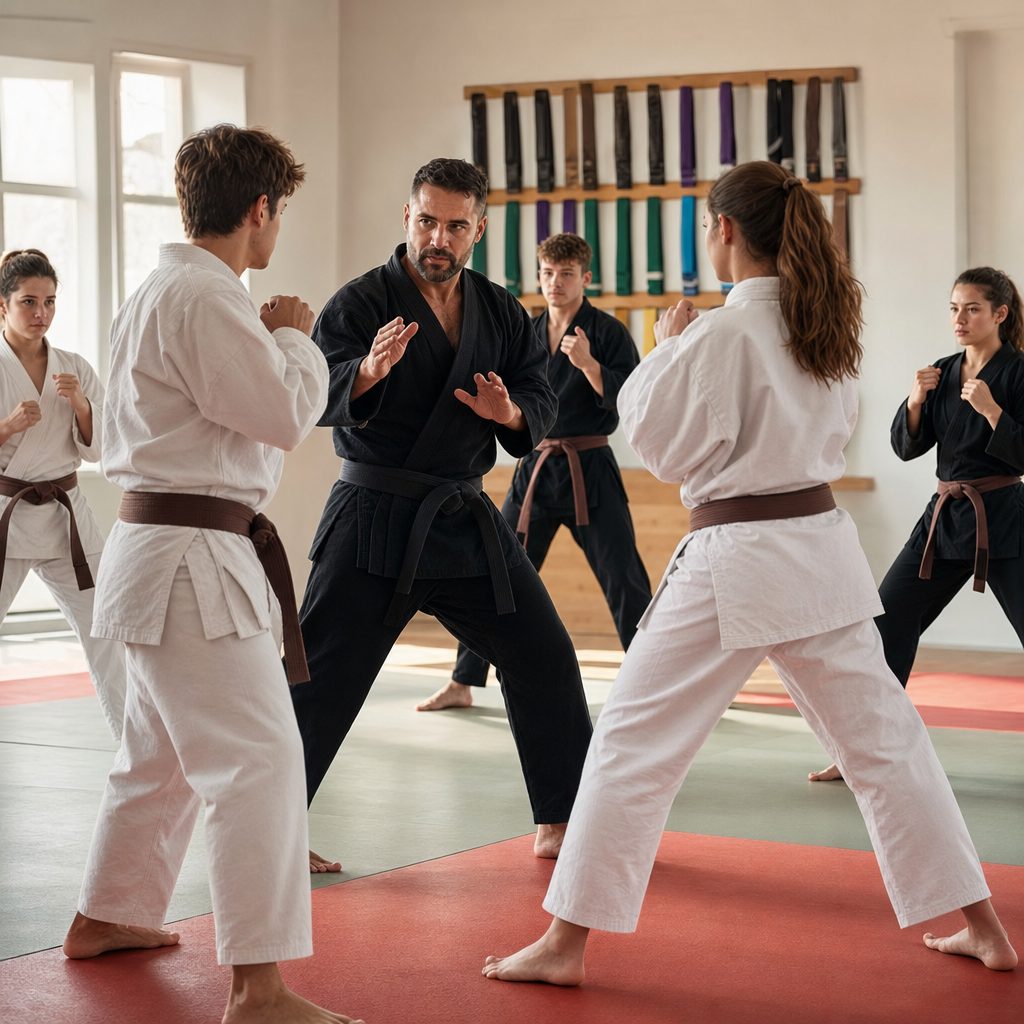
The defining risk of a martial arts school is student-on-student contact. Sparring, grappling, throws, and pad work are not accidents that happen around your business; they are the business. A student takes a kick to the head, a BJJ roll hyperextends an elbow, a takedown breaks a wrist, and the injured party (or a parent) looks to the school. That is exactly the exposure that generic fitness, gym, and health-club liability policies are written to exclude.
Most off-the-shelf sport and recreation general liability programs attach an ISO athletic-or-sports participant exclusion, Form CG 21 01, which removes coverage for bodily injury sustained by anyone while practicing for or participating in athletic activity. With that endorsement in place, your GL becomes little more than a spectator policy: it pays if a parent slips in the lobby, but not if your actual student is hurt doing the very thing you teach. For a dojo, that is the wrong way around.
Specialized martial arts coverage closes that gap with an affirmative grant of participant or accident-medical coverage, paired with signed waivers and participation agreements, abuse-and-molestation protection for the minors in your youth classes, and property coverage for the mats, pads, and equipment the school runs on. The Allen Thomas Group structures commercial insurance programs for instruction-based contact schools rather than treating you like a treadmill gym.
- Student-on-student sparring, grappling, and throws are the core hazard, not an incidental one
- Generic fitness/gym GL routinely attaches a participant exclusion that voids the claims you most need covered
- An injured student or their parent can sue the school, the head instructor, and the assistant coaches alike
- Youth karate, taekwondo, and kids' BJJ classes add an abuse-and-molestation exposure on top of injury risk
- Belt-test sparring, in-house tournaments, and demo-team events concentrate injury risk on a single day
- Waivers and participation agreements reduce but do not eliminate liability; insurance backs them up
- Mats, bags, throwing dummies, and weapons are both a property asset and a slip/strike hazard
Core Coverages for Martial Arts Schools
The spine of a martial arts program is participant and accident-medical coverage. Participant legal liability responds when an injured student sues the school over a sparring or training injury; accident-medical (often written as a separate student-accident benefit) pays the medical bills for a hurt student regardless of fault, which keeps minor injuries from escalating into lawsuits. These are the coverages most commonly missing from a borrowed gym or franchise policy.
Around that core, a complete dojo program layers general liability for premises and slip/fall claims, abuse-and-molestation coverage for your youth classes (frequently excluded or sublimited on a base policy to as little as $25,000, which is not a real limit for an A&M claim), commercial property for the mats, training equipment, mirrors, and signage, and workers' compensation for instructors and front-desk staff. Schools that run vans to tournaments or summer camps add hired-and-non-owned or commercial auto. The Allen Thomas Group assembles this stack from commercial insurance carriers that actually want martial arts risk.
Worth underscoring: this is coverage for an instruction business, a school that teaches martial arts to students, not for a member-access fitness facility. A 24-hour gym with bags in the corner is a different risk than a dojo running structured, contact, ranked instruction, and is generally addressed under our Sports & Fitness program instead.
- Participant legal liability for student-on-student sparring, grappling, and contact-training injuries
- Accident-medical / student-accident coverage that pays a hurt student's bills regardless of fault
- Abuse & molestation coverage for youth and kids' classes, written above the base policy's tiny sublimit
- General liability for premises, slip/fall, and spectator/parent injuries in the lobby and viewing area
- Commercial property for mats, heavy bags, throwing dummies, weapons racks, mirrors, and pro-shop stock
- Workers' compensation for head instructors, assistant coaches, and reception staff
- Hired-and-non-owned or commercial auto for tournament travel, demo teams, and camp transportation
Licensing, Compliance & Regulatory Considerations for Martial Arts Schools
Martial arts schools generally are not licensed the way a cosmetology or nursing school is, but the moment minors train under your roof you fall under federal child-protection obligations. The Protecting Young Victims from Sexual Abuse and Safe Sport Authorization Act of 2018 created a standard of care for youth-serving sport organizations: it imposes a mandatory duty to report suspected child sex abuse to law enforcement, requires reasonable procedures to limit one-on-one adult-minor interaction so contact stays observable and interruptible, and calls for abuse-prevention training for adults in regular contact with minor athletes.
Schools affiliated with a National Governing Body, such as USA Taekwondo or USA Judo, take on additional obligations administered through the U.S. Center for SafeSport, including SafeSport-style training, background screening, and the Minor Athlete Abuse Prevention Policies (MAAPP). Even independent dojos increasingly adopt these as the de facto standard of care, and carriers writing A&M coverage will often ask whether you follow them.
Beyond child protection, expect general business licensing, your municipal certificate of occupancy and fire-code limits on class size, and any landlord-required insurance. There is no martial-arts surety requirement in most states, but signed liability waivers and parental participation agreements are the practical compliance backbone of the dojo.
- Federal Safe Sport Authorization Act duty to report suspected child abuse to law enforcement
- Reasonable procedures to keep adult-minor interaction observable and interruptible (two-adult rule)
- Abuse-prevention and grooming-awareness training for instructors in regular contact with minors
- SafeSport training, background checks, and MAAPP for schools tied to a National Governing Body
- Background screening of all instructors, assistant coaches, and volunteers who work with kids' classes
- Signed liability waivers and parental participation/consent agreements for every enrolled student
- Local business license, certificate of occupancy, fire-code occupancy limits, and landlord insurance requirements
Why Martial Arts Schools Choose The Allen Thomas Group
The Allen Thomas Group is an independent, family-owned insurance agency founded in 2003, licensed in 28 states, with access to more than 15 A-rated carriers and an A+ rating from the Better Business Bureau. We are advocates for the school owner, not a single carrier, so when it comes time to place a dojo we shop the participant-contact and A&M exposures across the markets that genuinely understand them.
We have seen the borrowed-gym-policy mistake too many times: a school owner discovers, at claim time, that the participant exclusion gutted the coverage they thought they had. Our job is to read the endorsements before that happens, confirm participant and accident-medical coverage are affirmatively granted, and make sure the abuse limit on a youth program is a real number rather than a $25,000 placeholder.
Because martial arts schools evolve, adding a kids' program, a competition team, a second location, a summer camp, we review the program every year so the coverage tracks the school. You get a consultative partner who explains the policy in plain language, not a transactional quote engine.
- Independent, family-owned agency founded in 2003, licensed across 28 states
- Access to 15+ A-rated carriers, including specialty sport, recreation, and education markets
- A+ Better Business Bureau rating and a consultative, owner-first advisory approach
- We read the endorsements to confirm the participant exclusion is bought back, not buried
- Real abuse-and-molestation limits structured for youth and kids' martial arts programs
- Annual coverage reviews that track new programs, competition teams, and added locations
- Plain-language guidance on waivers, participation agreements, and risk transfer, not just a price
How Much Does Martial Arts School Insurance Cost?
Premiums for a martial arts school are driven by enrollment, the disciplines you teach, the share of minor students, the number of instructors and staff on payroll, your square footage and property values, whether you transport students, and your claims and abuse history. A discipline matters: full-contact MMA and heavy sparring underwrite higher than a non-contact, forms-focused kids' karate program.
As a general guide, a small to mid-size dojo can expect a general liability or business owner's policy in the range of roughly $700 to $2,500 per year, with participant and accident-medical coverage layered on top. Standalone abuse-and-molestation coverage for a youth program commonly adds a few hundred to over a thousand dollars depending on limits and screening practices, and workers' compensation is rated on your instructor and staff payroll. Schools with vans, large competition teams, or prior injury claims will sit toward the high end.
Because these ranges swing widely with contact level and youth enrollment, the only honest number is a quoted one. The Allen Thomas Group compares pricing across 15+ carriers so the premium reflects how your school actually trains.
- Enrollment and the percentage of minor students enrolled in youth classes
- Disciplines taught and contact level (full-contact MMA/sparring rates higher than non-contact forms)
- Number of instructors, assistant coaches, and staff on payroll (drives workers' comp)
- Square footage, mat area, and total value of equipment, mirrors, and pro-shop inventory
- Whether the school transports students to tournaments, demos, or camps (auto exposure)
- Prior injury, liability, and any abuse-related claims history
- Limits selected for participant, accident-medical, and abuse-and-molestation coverage
Martial Arts School Risk Management & Coverage Considerations
Good risk management at a dojo starts before a student ever steps on the mat. Signed liability waivers and parental participation agreements for every enrollee, age- and rank-appropriate sparring rules, mandatory protective gear, and supervised, graduated contact all reduce both the frequency and severity of injury claims, and they make the school far more attractive to a carrier.
On the abuse side, the controls carriers reward are concrete: background-check every instructor and volunteer, enforce a two-adult / observable-and-interruptible rule so no adult is ever alone with a minor, install sightlines and viewing windows, and train staff to recognize grooming behavior. Document the training. A school that can show its SafeSport-style program in writing places A&M coverage more easily and at better terms.
Round it out with maintained mats and equipment, written emergency and concussion-response plans, credentialed and insured instructors, and sensible handling of the student data and payment information you collect. As schools add online instruction, streamed classes, and digital waiver systems, keep an eye on the cyber and student-data exposure that comes with them.
- Signed liability waivers and parental participation agreements on file for every student
- Background checks on all instructors, assistant coaches, and volunteers working with minors
- Two-adult / observable-and-interruptible rule and viewing windows for all youth classes
- Documented abuse-prevention and grooming-awareness training for staff (SafeSport-style)
- Age-, rank-, and gear-appropriate sparring rules with graduated, supervised contact
- Maintained mats and equipment plus written emergency, injury, and concussion-response plans
- Secure handling of student records, payment data, and online-class/digital-waiver information
Frequently Asked Questions
Does general liability cover a student injured while sparring?
Often it does not. Most fitness and gym general liability policies attach an athletic-or-sports participant exclusion that removes coverage for injuries to anyone participating in the activity. Since sparring, grappling, and contact training are the activity at a martial arts school, you need participant legal liability and accident-medical coverage added back affirmatively, not a generic gym policy.
Why does a regular gym or fitness policy not work for my dojo?
A health-club or fitness policy is built around members using equipment on their own, and it typically excludes participant contact injuries. A martial arts school is an instruction business built on deliberate student-on-student contact, which is exactly what those policies exclude. The coverage has to be structured for contact instruction, not facility access.
Does general liability cover abuse or molestation claims in my kids' classes?
Usually not adequately. Abuse and molestation is frequently excluded from base liability policies or sublimited to as little as $25,000, which is not a meaningful limit for that kind of claim. Any school enrolling minors should carry standalone or endorsed abuse-and-molestation coverage at a real limit, supported by background checks and a two-adult rule.
What is participant or accident-medical coverage and why do I need it?
Participant legal liability responds when an injured student sues the school over a training injury, and accident-medical pays a hurt student's medical bills regardless of fault. Together they cover the injuries that happen during the contact you teach, and they are the coverages most commonly missing from a borrowed gym or franchise policy.
Do I still need insurance if every student signs a waiver?
Yes. Waivers and parental participation agreements are essential and they reduce liability, but they can be challenged, do not always hold up for minors, and never cover gross negligence. They work alongside insurance, not instead of it. Carriers expect both.
Do I need workers' compensation for my instructors?
In most states, if you have employees, including assistant coaches and front-desk staff, workers' compensation is required. It pays for work-related injuries to your team, which is a real exposure when instructors demonstrate techniques and spar with students. It is rated on your payroll.
What about insurance for tournaments, demos, and summer camps?
Off-site events and transportation add exposure. In-house tournaments and belt tests concentrate injury risk on one day, and driving students to events introduces auto liability that personal policies will not cover. We add event coverage and hired-and-non-owned or commercial auto so travel and competition are protected.
Is my school covered under the Sports & Fitness program or the Education program?
A martial arts school is treated as an education and instruction business, a dojo that teaches ranked students, rather than a member-access fitness facility. A 24-hour gym is a different risk and is generally handled under our Sports & Fitness program. We place martial arts schools as the instruction business they are.
Protect the Mat, the Students, and the School You Built
Don't find out at claim time that a participant exclusion gutted your coverage. The Allen Thomas Group compares 15+ A-rated carriers to build a martial arts program that actually covers sparring injuries, your youth classes, and your equipment; call (440) 826-3676 to talk it through.