
Massage Therapy School Insurance
A massage therapy school carries risks no spa or solo practitioner faces: supervised students performing hands-on treatment on the paying public, intimate physical contact that magnifies abuse and misconduct exposure, and the promise of graduating licensure-ready professionals. The Allen Thomas Group builds coverage around the school as a teaching institution, not as a massage practice. We protect your student clinic, your instructors, and your accreditation standing.
Carriers We Represent
Why Massage Therapy Schools Need Specialized Insurance
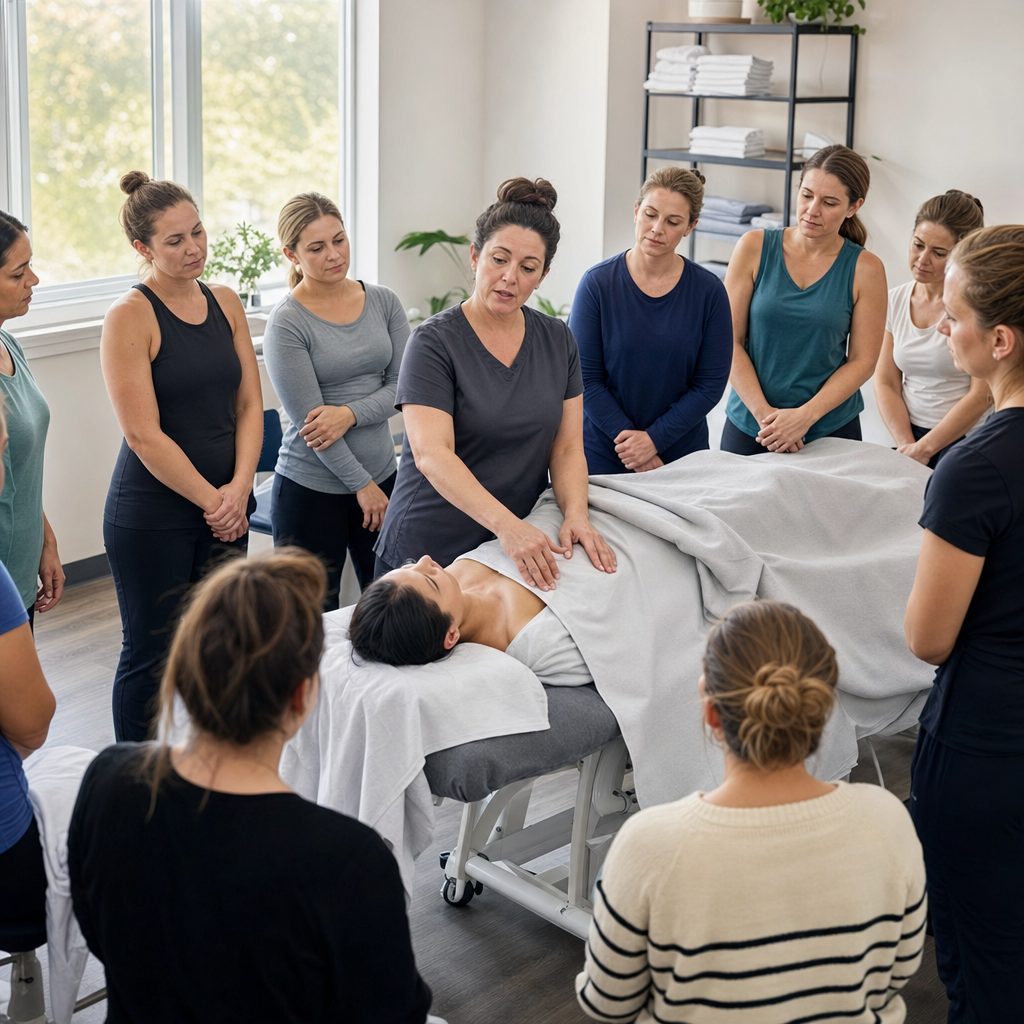
A massage therapy school occupies a risk position that ordinary commercial policies were never written for. Your student clinic puts enrolled trainees hands-on with members of the paying public under instructor supervision, which means a treatment performed by a not-yet-licensed student can injure a client and expose the school to a direct liability claim. Generic spa or business-owner policies presume a licensed operator delivering the service, not a teaching institution supervising hundreds of supervised contact hours each term. To meet state hour requirements, most programs run between 500 and 1,000 supervised hours, and a large share of those hours involve real bodywork on real clients. The Federation of State Massage Therapy Boards confirms the licensure exam exists precisely because entry-level competency varies, which is the same competency gap your clinic is closing in real time. We assemble commercial insurance programs that treat the student clinic as the core exposure.
The defining peril, however, is abuse and sexual misconduct. Massage instruction involves sustained, intimate, full-body physical contact, and that single fact makes a massage therapy school one of the highest-scrutiny education risks an underwriter will see. Standard general liability and business-owner forms frequently exclude abuse and molestation outright or sublimit it to a token amount, leaving the school nakedly exposed to the very claim type it is most likely to face. A single allegation against a student or instructor can trigger litigation, regulatory action against the program, and reputational damage that threatens enrollment. According to the Federation of State Massage Therapy Boards, professional conduct and client safety are central to the standards the profession is held to, and your school is where those standards are taught and where they can first fail.
Layered on top is failure-to-certify and educators errors and omissions exposure. Students enroll on the implicit promise that the program will prepare them to sit for the MBLEx and qualify for state licensure. If a curriculum gap, an administrative error, or a lapse in accredited standing means graduates cannot be licensed, the school faces claims for tuition, lost income, and negligent instruction. This trio, student-clinic public liability, abuse and misconduct, and failure-to-certify, is the spine every massage therapy school policy must address before anything else.
- Supervised students performing hands-on bodywork on the paying public in your teaching clinic, a direct school liability exposure
- Abuse and sexual-misconduct claims arising from intimate full-body contact, the highest-scrutiny peril for this school type
- Abuse and molestation routinely excluded or sublimited under base general liability and business-owner forms
- Failure-to-certify and negligent-instruction claims when graduates cannot sit for the MBLEx or obtain licensure
- Loss of state approval or COMTA accredited standing jeopardizing enrollment and triggering tuition-refund demands
- Student and client injuries from improper technique, positioning, or pre-existing conditions during supervised treatment
- Reputational and regulatory fallout from a single misconduct allegation against a student or instructor
Core Coverages for Massage Therapy Schools
Coverage begins with the student clinic and professional liability stack. Professional liability and educators errors and omissions respond when supervised student treatment injures a client, when a credentialing or instruction failure leaves a graduate unable to be licensed, or when the program is alleged to have fallen short of the standard of care it teaches. Because licensed practitioners normally carry their own malpractice cover, a school program must specifically extend to acts of unlicensed students performed under supervision, an extension generic policies do not contemplate.
Abuse and sexual-misconduct coverage is non-negotiable for a massage school and should be written on a dedicated or specifically endorsed basis rather than left to the limited or excluded treatment in a standard form. We pair that with general liability for premises and slip-and-fall exposure, commercial property and equipment coverage for tables, linens, oils, hydrotherapy and modality equipment, classroom and clinic build-out, and computers, and workers' compensation for instructors and clinic staff. Where the school operates as a private institution with a board, directors and officers and educators legal liability protect governance decisions, and employment practices liability addresses staff and student-employee claims. Cyber and student-data coverage protects enrollment, financial-aid, and health-intake records. We build the full stack as integrated commercial insurance rather than disconnected policies.
Proprietary and career-school status often brings additional requirements: a surety bond posted with the state licensing or proprietary-school authority, and business interruption coverage to keep tuition revenue and payroll funded if a covered loss closes the clinic. We size every limit to enrollment, clinic volume, and the school's actual contact-hour exposure.
- Professional liability and educators E&O extended to supervised, unlicensed student treatment and failure-to-certify claims
- Dedicated abuse and sexual-misconduct (A&M) coverage written or endorsed at a meaningful limit, not sublimited
- General liability for premises, clinic waiting areas, and slip-and-fall exposure
- Commercial property and equipment for tables, linens, oils, modality equipment, build-out, and computers
- Workers' compensation for instructors, clinic supervisors, and administrative staff
- Directors and officers, educators legal liability, and EPLI for governance and employment exposures
- Cyber and student-data coverage, surety bonds for proprietary status, and business interruption for tuition revenue
Licensing, Compliance & Regulatory Considerations for Massage Therapy Schools
Massage therapy schools sit under two regulatory umbrellas. First, the state massage therapy board approves or recognizes the program so its graduates qualify to sit for licensure, and most states require completion of a board-approved or accredited program of a set minimum hours. The Florida Board of Massage Therapy, for example, requires schools to obtain approval and to document their licensing standing before their hours count toward graduation, a model echoed by boards nationwide. Many states layer this with proprietary or postsecondary-school licensing through the state department of education or an independent-education commission.
Second is accreditation. The Commission on Massage Therapy Accreditation (COMTA) is the specialized accrediting body recognized by the U.S. Department of Education for massage therapy and bodywork programs, and COMTA accredited standing is frequently tied to Title IV financial-aid eligibility and to public credibility. The Federation of State Massage Therapy Boards governs the MBLEx, the entry-level licensure examination used in the large majority of regulated jurisdictions, so a program's curriculum must map to that exam's competencies.
Insurance intersects compliance at several points: proprietary-school licensure often requires a surety bond; financial-aid participation imposes recordkeeping and student-data obligations; and accreditation and board reviews scrutinize student and client safety practices, including supervision and conduct policies that directly inform abuse-and-misconduct underwriting. Maintaining current approval and accreditation is itself a risk-management measure, because a lapse converts directly into failure-to-certify exposure.
- State massage therapy board approval or recognition so graduates qualify to sit for licensure
- Minimum supervised-hour requirements (commonly 500 to 1,000 hours) tied to board approval
- Proprietary or postsecondary-school licensing via the state department of education or independent-education commission
- COMTA accreditation, recognized by the U.S. Department of Education and often linked to Title IV financial-aid eligibility
- Curriculum alignment to the FSMTB-administered MBLEx licensure examination
- Surety bond requirements common to proprietary and career-school licensure
- Student-data, financial-aid recordkeeping, and documented safety, supervision, and conduct policies
Why Massage Therapy Schools Choose The Allen Thomas Group
The Allen Thomas Group is an independent, family-owned insurance agency founded in 2003 and licensed in 28 states. We place coverage with more than 15 A-rated carriers and hold an A+ rating with the Better Business Bureau. Because we are independent, we advocate for the school rather than for any single insurer, and we shop your student-clinic, abuse-and-misconduct, and E&O exposures across carriers that genuinely understand education and bodywork risk.
Most agents treat a massage school like a spa and miss the supervised-student-on-public exposure entirely, or they accept a sublimited abuse endorsement without flagging the gap. We do not. We read your accreditation and board-approval status, your clinic volume, and your supervision model, then structure a program that holds up to scrutiny from underwriters, regulators, and accreditors alike.
Our relationship does not end at the binder. We conduct annual coverage reviews as enrollment grows, clinic hours expand, or you add modalities or campuses, and we draw on specialty education and professional-liability markets to keep your limits and endorsements current. The result is coverage built for a teaching institution, defended by people who know the difference between a school and a practice.
- Independent, family-owned agency founded in 2003, licensed in 28 states
- Access to 15+ A-rated carriers and an A+ BBB rating
- Coverage scoped to the school as a teaching institution, not as a massage practice or spa
- Specialists in supervised student-clinic, abuse-and-misconduct, and failure-to-certify exposures
- Independent advocacy that shops your risk rather than defending one carrier
- Annual coverage reviews as enrollment, clinic hours, modalities, and campuses change
- Access to specialty education and professional-liability markets for current limits and endorsements
How Much Does Massage Therapy School Insurance Cost?
Premiums for a massage therapy school are driven primarily by exposure, not by square footage. The biggest factors are enrollment and the number of supervised clinic hours, the count of students and instructors, annual payroll for workers' compensation, the volume of public clients treated in the student clinic, claims and any abuse-allegation history, and the replacement value of property and equipment. The presence and limit of dedicated abuse-and-misconduct coverage is often the single largest line item because of the elevated scrutiny this peril carries.
As rough guidance, a smaller program might pay roughly $2,500 to $6,000 a year for a general liability and professional liability foundation, with dedicated abuse-and-misconduct coverage frequently adding $1,500 to $5,000 or more depending on limit and enrollment. Workers' compensation is rated on payroll and typically runs a few thousand dollars for a modest instructor and staff roster, while property and equipment coverage scales with the value of tables, modality equipment, and build-out. A mid-size, COMTA-accredited school running a busy public clinic should budget a higher all-in figure, with total programs commonly landing in the five-figure range annually.
These are planning ranges, not quotes. We compare 15+ carriers to find the structure that fits your enrollment, clinic model, and risk-management posture, and a strong record of background checks, supervision, and conduct policy can meaningfully reduce the abuse-coverage component.
- Enrollment and total supervised student-clinic hours, the primary cost driver
- Number of students and instructors, and annual payroll for workers' compensation
- Volume of public clients treated in the student teaching clinic
- Claims history and any prior abuse or misconduct allegations
- Dedicated abuse-and-misconduct limit, often the largest single premium line
- Replacement value of tables, modality equipment, linens, computers, and build-out
- Strength of background-check, supervision, and conduct policies, which can lower premium
Massage Therapy School Risk Management & Coverage Considerations
Because abuse and misconduct is the defining peril, risk management starts there. Run criminal background checks on instructors and clinic supervisors, enforce clear draping and consent protocols on every supervised treatment, and consider chaperone or open-door practices in the teaching clinic. Document a written code of professional conduct that mirrors the standards the state board and FSMTB hold licensees to, and train every student on boundaries, consent, and reporting before they touch a public client.
Protect the school against client-injury and failure-to-certify claims with signed clinic-treatment consent and intake forms, thorough health screening of clinic clients, and documented supervision ratios so an instructor is genuinely overseeing student work. Keep instructor credentials and continuing education current, and align curriculum and contact hours to both state board requirements and the MBLEx so accreditation and approval never lapse. Maintain meticulous records of approval and COMTA standing, because a documentation gap is a failure-to-certify claim waiting to happen.
Finally, safeguard data and continuity. Secure student enrollment, financial-aid, and client health-intake records under FERPA-aligned and cyber-protective practices, build an emergency and incident-response plan for the clinic, and review coverage whenever you add modalities, expand clinic hours, or open a second location. Emerging exposures include online or hybrid instruction, expanded esthetics or bodywork modalities, and externship placements at outside facilities, each of which should be scoped before it goes live.
- Criminal background checks on instructors and clinic supervisors, with documented hiring screening
- Mandatory draping, consent, and boundary protocols, plus chaperone or open-door practices in the clinic
- Written professional-conduct code mirroring state board and FSMTB standards, taught before public contact
- Signed clinic consent and intake forms, client health screening, and documented supervision ratios
- Current instructor credentials and curriculum aligned to board hours and the MBLEx exam
- FERPA-aligned, cyber-protected handling of enrollment, financial-aid, and client health records
- Pre-launch coverage review for online/hybrid instruction, new modalities, externships, and added campuses
Frequently Asked Questions
Does general liability cover abuse or sexual-misconduct claims at a massage therapy school?
Usually not adequately. Standard general liability and business-owner policies frequently exclude abuse and molestation entirely or sublimit it to a small amount, sometimes as low as a few thousand dollars. Because intimate physical contact makes abuse and misconduct the single highest exposure for a massage school, you need dedicated or specifically endorsed abuse-and-sexual-misconduct coverage written at a meaningful limit, not the token treatment in a base policy.
Is this insurance for the school, or for a massage practice or spa?
It is for the school as a teaching institution. The coverage centers on supervised students performing bodywork on the public, instructor and curriculum errors, and failure-to-certify exposure. A spa or solo practitioner buys massage therapist professional liability for a licensed operator delivering the service. A massage therapy school needs a different program because its core risk is training, supervision, and the student clinic, not commercial practice.
Does general liability cover a failure-to-certify or negligent-instruction claim?
No. General liability responds to bodily injury and property damage on your premises, not to claims that your program failed to prepare a student for licensure or sit for the MBLEx. Those allegations fall under professional liability and educators errors and omissions, which is why a massage school needs both lines rather than general liability alone.
Who covers an injury when a student treats a public client in our teaching clinic?
Your school's professional and general liability program should respond, provided it is specifically extended to acts of supervised, unlicensed students. This is a coverage gap in many off-the-shelf policies, which assume a licensed practitioner. We confirm the policy contemplates student treatment in the clinic before it binds.
Do we need workers' compensation for our instructors?
In nearly every state, yes. Workers' compensation is generally mandatory once you have employees, including instructors, clinic supervisors, and administrative staff. It covers work-related injuries and is rated on payroll. Misclassifying instructors as contractors to avoid it can create significant liability.
How do state approval and COMTA accreditation affect our coverage?
They are both compliance requirements and risk-management factors. State board approval lets your hours count toward licensure, and COMTA accreditation is recognized by the U.S. Department of Education and often tied to financial-aid eligibility. Underwriters view current approval and accreditation favorably, and a lapse converts directly into failure-to-certify exposure, so maintaining them protects both your students and your premium.
Are externships or off-site clinical placements covered?
Only if the policy is written to include them. When students provide bodywork at an outside facility, the exposure can extend beyond your premises and may require additional insured arrangements with the host site. Tell your agent about every externship and placement so coverage and any required agreements are in place before students go off-site.
What drives the cost of massage therapy school insurance?
The biggest factors are enrollment and total supervised clinic hours, the number of students and instructors, payroll, the volume of public clients in the student clinic, claims and any abuse-allegation history, and property values. The dedicated abuse-and-misconduct limit is often the largest single line item. Strong background-check, supervision, and conduct policies can reduce that component.
Protect Your Massage Therapy School the Right Way
The Allen Thomas Group compares programs from 15+ A-rated carriers to build coverage around your student clinic, abuse-and-misconduct exposure, and accreditation, not a generic spa policy. Call (440) 826-3676 to talk with an advisor who understands massage therapy schools.