
Oilfield Services Insurance
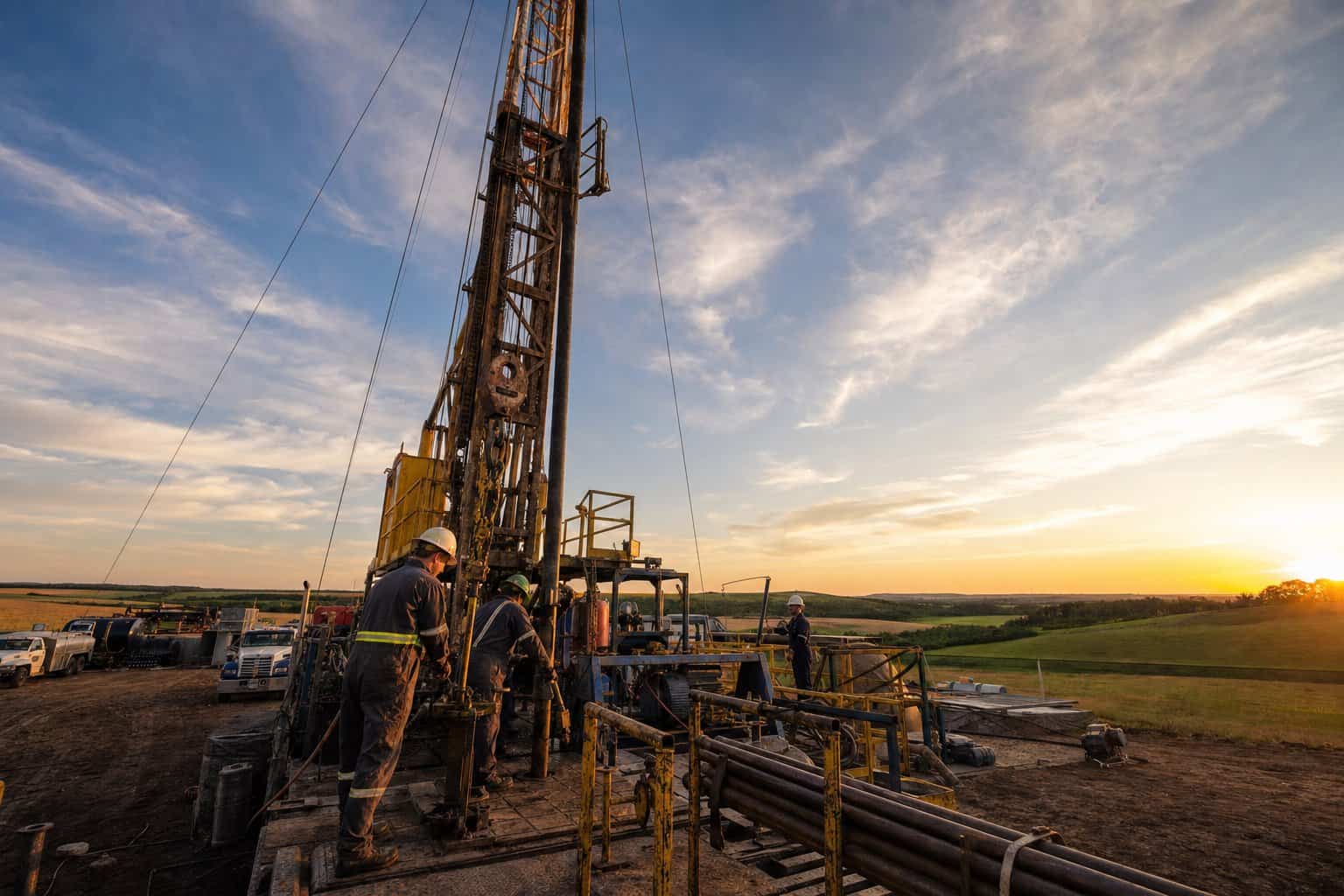
Whether you run workover rigs, wireline units, well testing crews, water hauling trucks, or rental equipment into producing fields, you are on someone else’s location, under someone else’s contract, working around pressure, product, and produced water every shift. The Allen Thomas Group builds oilfield services insurance programs around the well control, pollution, and contractual exposures a generic commercial policy leaves wide open.
✓ 15+ A-rated carriers
✓ A+ BBB rated
✓ Licensed in 28 states
Founded
States Licensed
A-Rated Carriers
BBB Rated
Carriers We Represent
Why Oilfield Services Companies Need Specialized Insurance
An oilfield services company is not the operator drilling or producing the well; it is the specialist that shows up when the well needs work: a workover rig, a wireline unit, a well testing crew, a frac or stimulation support truck, a water hauler, or a rental-equipment provider. You work on a well pad you do not own, under a contract you did not draft, around pressurized equipment and produced fluids that can turn a routine job into a pollution event or a well-control incident in minutes. Standard commercial general liability was written for offices and retail stores, not for crews handling hydrocarbons and salt water on a lease road, which is why oilfield services programs are built differently from the ground up.
Pollution is the exposure that defines this trade. Produced water is a highly contaminated waste stream carrying salts, hydrocarbons, and heavy metals, and a spill during hauling, transfer, or well servicing can trigger cleanup costs and third-party claims that dwarf the job’s original invoice. Most general liability policies contain an absolute pollution exclusion that removes the carrier from environmental claims almost entirely, which means a produced water or fluid-handling company operating without dedicated pollution liability coverage is effectively self-insuring its single largest risk. We help oilfield services companies close that gap before it becomes a balance-sheet event.
Layered on top of pollution risk is well control exposure. A blowout, a loss of pressure control, or a wireline or workover incident that damages the wellbore can trigger costs, redrilling, and pollution cleanup, and drilling contractors and well-servicing companies alike, including wireline, coiled tubing, and other specialty crews, can be held responsible for those costs if something goes wrong during an intervention. Add a heavy truck fleet running lease roads at all hours and a stack of operator contracts that shift liability onto you by name, and it becomes clear why oilfield services companies need a program engineered for this trade, not adapted from one.
- Pollution and produced-water exposure is the central risk; standard GL’s absolute pollution exclusion leaves it uncovered
- Well control and blowout exposure during workover, wireline, well testing, and stimulation support work
- Heavy truck fleets hauling water, equipment, and product on rural and unpaved lease roads
- Operator master service agreements that push indemnification and additional-insured obligations onto your policy
- Elevated jobsite injury exposure working around pressurized equipment, moving iron, and hydrocarbons
- Rental and specialty equipment exposed to loss, damage, or contamination on someone else’s location
- Third-party property damage to the well, the pad, or adjacent equipment during servicing operations
Core Coverages for Oilfield Services Companies
An oilfield services program starts with pollution liability, written as a standalone policy because standard commercial general liability is not built to respond to contamination claims. Alongside it, control of well insurance, sometimes called well control or operator’s extra expense coverage, addresses the cost of regaining control of a well after a blowout, redrilling if needed, and the seepage, pollution, and contamination cleanup that follows; well-servicing companies performing wireline, coiled tubing, or workover intervention work can be held responsible for these costs and should not assume the operator’s policy protects them. General liability still matters for the third-party bodily injury and property damage claims that arise on and around the well site, and umbrella coverage adds the additional limits operator contracts frequently require above your primary policies.
Commercial auto is a major line item for this trade because oilfield service work runs on trucks, water haulers, vacuum trailers, equipment transports, and crew vehicles operating over rough, unpaved, and high-traffic lease roads at all hours. Workers’ compensation is mandatory in nearly every state once you have employees and is priced to reflect the elevated injury exposure of jobsite work around pressurized equipment and heavy iron. Inland marine or equipment coverage protects rental and specialty tools moved between locations, and contractual liability coverage responds to the indemnification obligations built into most operator master service agreements. We assemble these coverages through carriers that actually underwrite oilfield risk rather than decline it.
- Pollution liability: standalone coverage for produced water, spill, and contamination claims GL excludes
- Control of well / well control insurance: blowout response, redrilling, and seepage and pollution cleanup costs
- General liability: third-party bodily injury and property damage on and around the well site
- Commercial auto: water haulers, vacuum trailers, equipment transport, and crew vehicles on lease roads
- Workers’ compensation: jobsite injuries from pressurized equipment, moving iron, and manual handling
- Umbrella / excess liability: additional limits above primary policies, often required by operator contracts
- Inland marine / equipment coverage plus contractual liability for MSA indemnification obligations
Licensing, Compliance & Regulatory Considerations for Oilfield Services Companies
Worker safety compliance is a serious, ongoing line item in this trade. The federal Occupational Safety and Health Administration’s oil and gas extraction program exists because this industry has historically carried a fatality rate far above the U.S. average, driven largely by vehicle incidents and contact with equipment. Document your safety program, train crews on well-site hazard recognition, and keep records that support your defense if OSHA or an injured party’s attorney reviews a claim.
Most of your real risk transfer happens in the master service agreement (MSA) you sign with each operator before you ever set foot on a location. Operators typically require their contractors to indemnify them against claims arising from the contractor’s work and to name the operator as an additional insured, often on a mutual, knock-for-knock basis where each party is responsible for its own personnel and equipment regardless of fault. Several producing states, Texas among them, have oilfield anti-indemnity statutes that limit which indemnity provisions are enforceable and how insurance must be structured to support them, so an MSA that looks standard can still create coverage gaps if your policy limits and additional-insured endorsements do not match what you actually signed.
Because contract terms vary by operator and by state, review every MSA’s insurance requirements section before you accept a job, not after. Confirm required limits, additional-insured wording, waiver of subrogation clauses, and whether your pollution and well control coverage actually respond to the indemnity language you agreed to. We review these requirements with clients so the coverage in force matches the paper they signed.
- OSHA’s oil and gas extraction program targets an industry fatality rate well above the national average
- Document safety training and hazard-recognition protocols for well-site and lease-road work
- Operator MSAs typically require mutual indemnification and additional-insured status naming the operator
- Knock-for-knock indemnity structures make each party responsible for its own personnel and equipment
- Some states have oilfield anti-indemnity statutes that limit enforceable indemnity language
- Confirm insurance requirements in every MSA before accepting work, including limits and endorsement wording
- Waiver of subrogation and additional-insured endorsements must match what the contract actually requires
Why Oilfield Services Companies Choose The Allen Thomas Group
The Allen Thomas Group is an independent, family-owned insurance agency founded in 2003 and licensed in 28 states. Because we are independent, we are not tied to a single carrier; we compare programs across 15+ A-rated insurers and place your coverage with the one that genuinely understands pollution, well control, and oilfield contractual risk. That independence matters in this trade, where a generic commercial package often omits pollution liability entirely and leaves well control and MSA indemnification exposure unaddressed.
We act as your advocate, not an order-taker. We take time to understand exactly what services you provide, whether workover, wireline, well testing, stimulation support, water hauling, or equipment rental, and which operators and states you work in, then build the program around your actual contracts and jobs. We review your coverage as your fleet grows, your operator relationships change, or your MSA terms are renegotiated, and we hold an A+ rating with the Better Business Bureau. Our consultative, advisory approach means you understand exactly what you are buying and why before you ever step onto a location.
- Independent, family-owned agency founded in 2003, licensed across 28 states
- Access to 15+ A-rated carriers, compared side by side for your specific oilfield operation
- Deep familiarity with pollution, well control, and MSA indemnification requirements
- A+ rating with the Better Business Bureau
- True advocacy: we represent you, not a single insurer
- Ongoing coverage reviews as your fleet, operator base, and contracts evolve
- Consultative, advisory guidance so you understand every coverage decision
How Much Does Oilfield Services Insurance Cost?
Oilfield services pricing varies more than most trades because the exposure changes dramatically by service line. A company doing well testing or wireline work with a small crew and no fleet will price very differently than a water hauling operation running a dozen tanker trucks over lease roads all day. Commercial auto is frequently the largest line item for hauling and transport-heavy operations; oilfield-focused carriers price these fleets well above standard trucking risk because of the rough terrain, night operations, and spill exposure involved, and premiums in the range of several thousand dollars per unit annually are common for tanker and vacuum-trailer operations. Pollution liability and control of well coverage are typically priced separately from your general liability and scale with your revenue, the volume and type of well intervention work you perform, and the limits your operator contracts require.
General liability, professional and umbrella limits, workers’ compensation payroll classifications, and equipment values all factor into a full program, and MSA requirements from the operators you work for often set your minimum limits rather than your own risk appetite. Prior claims history, safety documentation, and the states you operate in also move the number. Because pricing is genuinely operation-specific in this trade, we quote across multiple carriers that specialize in oilfield risk rather than estimate a number that will not hold up when your actual contracts are underwritten.
- Commercial auto and fleet coverage is often the largest cost driver for hauling and transport operations
- Pollution liability and control of well coverage are priced separately and scale with revenue and job type
- Operator MSA insurance requirements frequently set your minimum required limits, not your own preference
- Workers’ compensation is rated on payroll and the elevated jobsite injury classification
- Fleet size, vehicle type, and lease-road versus highway operation affect commercial auto pricing significantly
- Prior claims and safety/OSHA documentation history is a meaningful underwriting factor
- States of operation and the specific service lines you perform shift the total program cost
Oilfield Services Risk Management & Coverage Considerations
The best claim is the one that never happens, and in oilfield services that starts with matching your coverage to your actual MSAs. Read the insurance requirements section of every operator contract before you sign it, confirm your pollution, general liability, and umbrella limits meet or exceed what is required, and verify your additional-insured and waiver of subrogation endorsements name the right parties in the right language. A mismatch between what you signed and what your policy actually covers is one of the most common and most preventable sources of an uncovered claim in this industry.
Fleet safety deserves its own program given how much of this trade’s risk rides on trucks. Maintain vehicle inspection and maintenance schedules, enforce hours-of-service and fatigue management for crews running lease roads at odd hours, and train drivers specifically on tanker rollover and unpaved-road hazards. On the well site, document pressure-control and well-servicing procedures, maintain spill response equipment and produced-water handling protocols, and keep incident logs that support both your OSHA compliance and your defense in a future claim.
Finally, manage the risk you bring in from subcontractors and rental equipment. Require proof of insurance and matching additional-insured coverage from any subcontracted crews or equipment providers you use on a job, and reassess your program whenever you add a new service line, expand into a new operator’s contract terms, or grow your fleet, since each of those changes can open an exposure your prior policy did not anticipate.
- Read every operator MSA’s insurance requirements before signing; confirm limits and endorsement wording match
- Maintain fleet inspection, maintenance, and hours-of-service programs for lease-road and highway trucking
- Train drivers specifically on tanker rollover, unpaved-road, and night-operation hazards
- Document well-servicing and pressure-control procedures plus spill response and produced-water protocols
- Keep incident logs that support OSHA compliance and defense in a future liability or pollution claim
- Require proof of insurance and additional-insured status from subcontractors and rental equipment providers
- Reassess coverage whenever you add a service line, a new operator relationship, or expand your fleet
Frequently Asked Questions
Does general liability cover a pollution or produced-water spill?
No. Standard commercial general liability contains an absolute pollution exclusion that removes coverage for contamination, spills, and produced-water discharge almost entirely. Oilfield services companies need a standalone pollution liability policy to respond to spill cleanup, third-party contamination claims, and regulatory cleanup costs that a base GL policy will not touch.
What is control of well insurance and do I need it as a service company, not the operator?
Control of well insurance, also called well control coverage, pays for regaining control of a well after a blowout, redrilling if necessary, and related seepage and pollution cleanup. Well-servicing companies performing wireline, coiled tubing, workover, or well testing intervention work can be held legally responsible for these costs if something goes wrong during the job, so this coverage matters to service companies, not only operators.
My operator’s master service agreement requires me to indemnify them and add them as an additional insured. How does that affect my policy?
Most oilfield MSAs use knock-for-knock indemnification, where each party is responsible for its own personnel and equipment regardless of fault, and require the contractor to name the operator as an additional insured on their liability policy. Your limits, endorsement wording, and waiver of subrogation terms need to actually match what the contract requires, or a claim can fall back on you personally even when the indemnity language looked standard.
Why is commercial auto coverage so important for an oilfield services company?
Oilfield service work runs on trucks: water haulers, vacuum trailers, equipment transports, and crew vehicles operating over rough, unpaved lease roads, often at night. That combination of heavy loads, harsh terrain, and spill exposure makes commercial auto one of the largest and most expensive lines in a typical oilfield services program, and a personal auto policy will not respond to this kind of commercial use.
Do I need workers’ compensation if my crew works on the operator’s well site, not my own property?
Yes. Workers’ compensation is mandatory in nearly every state once you have employees, regardless of whose location they work on. Oilfield jobsite work around pressurized equipment and heavy iron carries an elevated injury exposure, and workers’ comp covers your employees’ medical costs and lost wages while protecting your company from a direct lawsuit by an injured worker.
What is the biggest coverage gap you see in oilfield services companies before they come to us?
The most common gap is a company relying on a generic commercial package that has no standalone pollution liability and no control of well coverage, on the assumption that general liability or the operator’s own policy will respond. It typically will not. The second most common gap is an MSA whose insurance requirements do not actually match the coverage the contractor is carrying.
Does OSHA require anything specific for oilfield services companies?
OSHA maintains a dedicated oil and gas extraction safety program because this industry has historically carried a fatality rate well above the U.S. average, driven largely by vehicle incidents and contact with equipment. While there is no single standalone OSHA standard for the entire industry, employers are expected to protect workers from recognized hazards, and documented safety training and hazard-recognition protocols support both compliance and your defense in a claim.
How much does oilfield services insurance typically cost?
Pricing varies significantly by service line. A small wireline or well testing crew with a limited fleet prices very differently than a multi-truck water hauling operation, where commercial auto alone can run into the thousands of dollars per unit annually. Pollution liability, control of well coverage, and your operator MSAs’ required limits are added on top, which is why we quote across carriers that specialize in oilfield risk rather than estimate a single number.
Protect Your Oilfield Services Operation From the Ground Up
From pollution and well control to fleet and MSA indemnification exposure, we build oilfield services programs around the risks a generic commercial policy misses. Call (440) 826-3676 and we’ll compare 15+ A-rated carriers to match your operation.