
Wind Farm Insurance
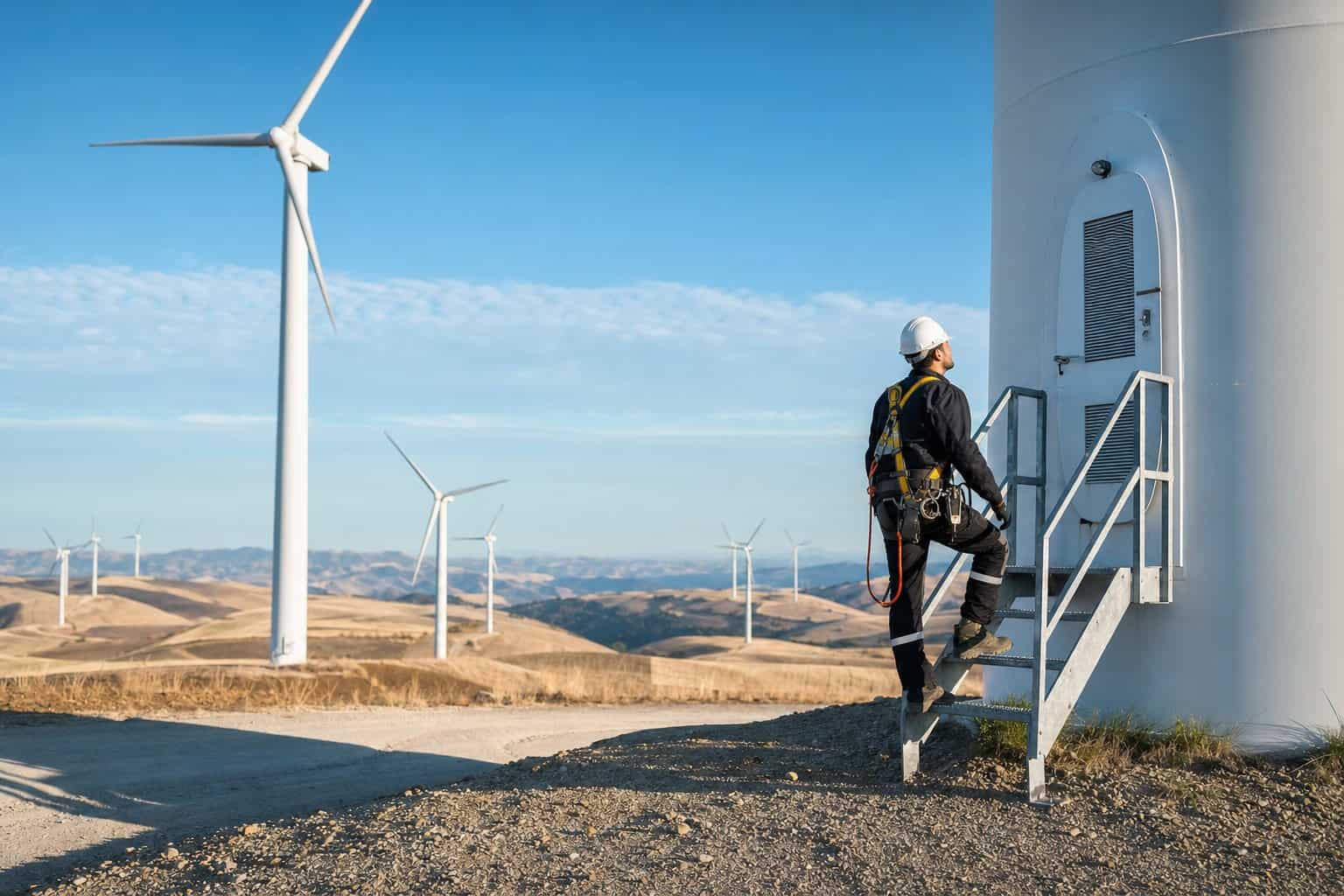
Wind farm operators and O&M contractors face a risk profile unlike almost any other industry — technicians working 250-300+ feet above the ground, permit-required confined spaces inside the nacelle, and turbines that are, quite literally, the tallest lightning rods on the landscape. The Allen Thomas Group builds coverage around those specific exposures, not a generic energy policy.
✓ 15+ A-rated carriers
✓ A+ BBB rated
✓ Licensed in 27 states
Carriers We Represent
Why Wind Farm Operations Need Specialized Insurance
Wind farm operations sit at the intersection of heavy industrial machinery, extreme-height work, and remote-site logistics — a combination that a standard commercial policy simply isn’t built to price correctly. A turbine technician’s job routinely involves climbing a fixed internal ladder 250 to 300+ feet inside a steel tower, then entering the nacelle itself, a confined, mechanically dense space that OSHA classifies as a permit-required confined space during much of the maintenance work performed inside it.
The property exposure is just as unusual. A single blade — often 150+ feet long and worth well into six figures — can be destroyed by a lightning strike, an internal mechanical failure, or a fire inside the nacelle, and the resulting downtime can idle a multi-million-dollar asset for weeks while a specialized crane and replacement part are mobilized to a rural site. Operators and O&M contractors need a policy built around these realities: fall-from-height and confined-space injury exposure, high-severity equipment breakdown, remote-location claims logistics, and (in many projects) a lease-driven relationship with a third-party landowner.
- Working at heights of 250-300+ feet inside the tower and nacelle
- Permit-required confined space entry for nacelle and hub maintenance
- High-value blade and nacelle equipment breakdown exposure
- Lightning strike risk on the tallest structure in the landscape
- Remote, rural site locations complicating emergency response and claims
- Landowner lease and easement liability obligations
- Heavy crane and specialized-equipment mobilization costs after a loss
Core Coverages for Wind Farm Operations
A properly structured wind farm insurance program layers several coverage types to match the actual risk, rather than treating a turbine like an ordinary piece of commercial equipment. General liability addresses third-party bodily injury and property damage claims, which matter in particular given the landowner relationships and public-facing access roads common to wind projects. Commercial property and equipment breakdown coverage responds to blade, nacelle, gearbox, and transformer damage from lightning, mechanical failure, or fire — often the single largest loss category on a wind farm.
Business interruption coverage is essential given how long a downed turbine can sit idle waiting on parts, cranes, and technicians in a rural location. Workers’ compensation is non-negotiable for O&M crews performing fall-hazard and confined-space work, and umbrella liability adds a layer of protection above the underlying limits for a single catastrophic event. Contractors performing installation or major component replacement should also carry inland marine coverage for equipment in transit and builder’s risk during construction phases.
- General liability for third-party bodily injury and property damage
- Commercial property and equipment breakdown for turbine components
- Business interruption / loss of income coverage
- Workers’ compensation for technicians and O&M crews
- Commercial umbrella liability
- Inland marine for equipment and parts in transit
- Builder’s risk during installation or major component replacement
Licensing, Compliance & Regulatory Considerations for Wind Farm Operations
Wind farm operations are governed by several overlapping OSHA standards that a well-built policy should account for. Fall protection is addressed under OSHA’s general industry and construction standards, with maintenance workers required to be protected from falls of four feet or more and construction crews protected at six feet or more, typically through personal fall arrest systems on tower ladders and platforms, as outlined in OSHA’s Green Job Hazards guidance for wind energy falls.
Nacelle and tower interiors also fall under OSHA’s permit-required confined space standard, 29 CFR 1910.146, given the mechanical, electrical, and atmospheric hazards technicians can encounter during maintenance, per OSHA’s own confined spaces guidance for wind energy. Operators leasing land from third-party landowners also carry contractual obligations — most wind energy lease and easement agreements require the developer or operator to indemnify the landowner and maintain liability insurance naming them as an additional insured, a structure documented in legal guidance on wind energy lease agreements.
- OSHA fall protection standards for tower and turbine work
- OSHA permit-required confined space rules for nacelle entry
- Lockout/tagout compliance for turbine maintenance
- Electrical safety standards for high-voltage components
- Landowner lease and easement indemnification requirements
- Additional insured status for landowners and developers
- State-specific siting and interconnection requirements
Why Wind Farm Operations Choose The Allen Thomas Group
The Allen Thomas Group has been an independent, family-owned agency since 2003, which means we aren’t tied to a single carrier’s appetite or pricing for an industry as specialized as wind energy. We represent 15+ A-rated carriers, including Travelers, Liberty Mutual, and The Hartford, and can shop your wind farm operation’s risk across multiple markets to find the coverage structure that actually fits your fleet size, O&M staffing model, and lease obligations.
Because we’re independent, we work for you, not the carrier. That matters when a claim involves a downed blade, a technician injury at height, or a dispute with a landowner over lease-driven liability — we help you navigate the claim rather than simply processing paperwork on the carrier’s behalf.
- Independent agency — not captive to one carrier
- 15+ A-rated carrier relationships to shop your risk
- Family-owned and operated since 2003
- A+ BBB rating
- Licensed in 27 states
- Direct advocacy during claims, not just policy sales
- Coverage built around O&M, height, and confined-space realities
How Much Does Wind Farm Insurance Cost?
Wind farm insurance premiums vary widely because the exposures behind them vary widely — a small O&M contractor servicing a handful of turbines has a very different risk profile than an operator running a multi-turbine project with full property and business interruption exposure. Underwriters generally weigh turbine count and value, technician headcount and training, geographic location and storm/lightning exposure, claims history, and whether the operation includes construction or installation work in addition to maintenance.
Premiums for renewable energy property programs, including onshore wind, have also trended upward industry-wide as insurers have absorbed larger natural catastrophe and lightning-related losses in recent years. The most reliable way to get an accurate number is a direct quote built around your specific turbine count, site locations, and O&M staffing — not a generic industry average.
- Number and value of turbines covered
- Technician headcount, training, and certification level
- Geographic and storm/lightning exposure of the site
- Claims history and loss control practices
- Scope of work — maintenance-only vs. construction/installation
- Business interruption limits and waiting period selected
- Landowner lease and additional-insured requirements
Wind Farm Risk Management & Coverage Considerations
Strong loss control starts with the same hazards underwriters price for. Fall protection equipment should be inspected and certified on a documented schedule, and every technician entering a nacelle or tower interior should follow a written permit-required confined space program, including atmospheric testing and a stand-by rescue plan. Lightning is a documented, recurring cause of blade and equipment damage — not a freak event — so lightning protection systems (down-conductors, receptors, and grounding) should be installed and inspected as part of routine maintenance.
Because most sites are rural, response time for both emergency medical care and post-loss claims adjustment is longer than in an urban industrial setting. Building a relationship with a local emergency response provider, keeping detailed maintenance and inspection logs, and working with an agent who understands renewable-energy business interruption claims all shorten the time between a loss and a resolved claim.
- Documented fall protection equipment inspection schedule
- Written permit-required confined space program with rescue plan
- Lightning protection system installation and maintenance
- Detailed maintenance and inspection recordkeeping
- Established relationships with local emergency responders
- Regular equipment breakdown and predictive-maintenance monitoring
- Clear landowner communication and lease compliance documentation
Frequently Asked Questions
Does wind farm insurance cover a blade damaged by a lightning strike?
Yes — commercial property and equipment breakdown coverage is generally built to respond to lightning-related blade and component damage, which is one of the most common and highest-severity causes of wind turbine loss. Business interruption coverage can also apply for lost income while a damaged blade or nacelle is repaired or replaced. Because lightning exposure varies significantly by region and turbine height, we structure limits and deductibles around your specific site conditions.
Is workers’ compensation required for wind turbine technicians?
In nearly every state, yes. Given the fall-from-height and confined-space hazards inherent to turbine maintenance, workers’ compensation is a baseline requirement for any O&M operation with employees. We help structure coverage that reflects your actual technician classifications, training level, and certification programs.
What does OSHA require for fall protection on wind turbines?
Maintenance workers must generally be protected from falls of four feet or more, and construction crews from falls of six feet or more, typically through personal fall arrest systems, guardrails, or safety nets. Ladder cages, landing platforms, and rescue plans are also part of a compliant program. Full details are available in OSHA’s wind energy fall hazard guidance.
Why is entering a wind turbine nacelle considered a confined space hazard?
The nacelle’s tight configuration combined with electrical, mechanical, and potential atmospheric hazards means OSHA classifies it as a permit-required confined space under 29 CFR 1910.146 for much of the maintenance work performed inside it. That requires a written entry program, atmospheric testing, and a rescue plan — all of which factor into how we help structure your liability and workers’ compensation coverage.
Do I need separate coverage if I lease land from a third-party landowner?
Most wind energy lease and easement agreements require the operator or developer to carry liability insurance and name the landowner as an additional insured, along with indemnification for damages arising from the project. We build that additional-insured requirement directly into your general liability program so it satisfies the lease terms.
How does business interruption coverage work for a wind farm?
Business interruption coverage compensates for lost income and continuing expenses while a damaged turbine is offline for repair — often the largest financial impact of a covered property loss given how long parts, cranes, and specialized crews can take to reach a rural site. Coverage terms, waiting periods, and the length of the indemnity period should be matched to your actual repair-time realities.
Does a wind farm’s remote location affect insurance cost or claims handling?
Yes. Remote, rural site locations can lengthen both emergency response time after an incident and the logistics of getting adjusters, cranes, and replacement parts on site after a covered loss, which factors into business interruption and property underwriting. Working with an agent who understands renewable-energy claims helps keep that process moving.
Can The Allen Thomas Group cover both O&M contractors and wind farm owner/operators?
Yes. We build coverage for both sides of the operation — O&M contractors performing turbine maintenance and technicians working at height, and owner/operators carrying the property, business interruption, and landowner-liability exposure on the asset itself.
Get a Wind Farm Insurance Quote
Talk to an independent agent who understands the height, confined-space, and equipment-breakdown exposures unique to wind energy operations.