
Aerospace Parts Manufacturing Insurance
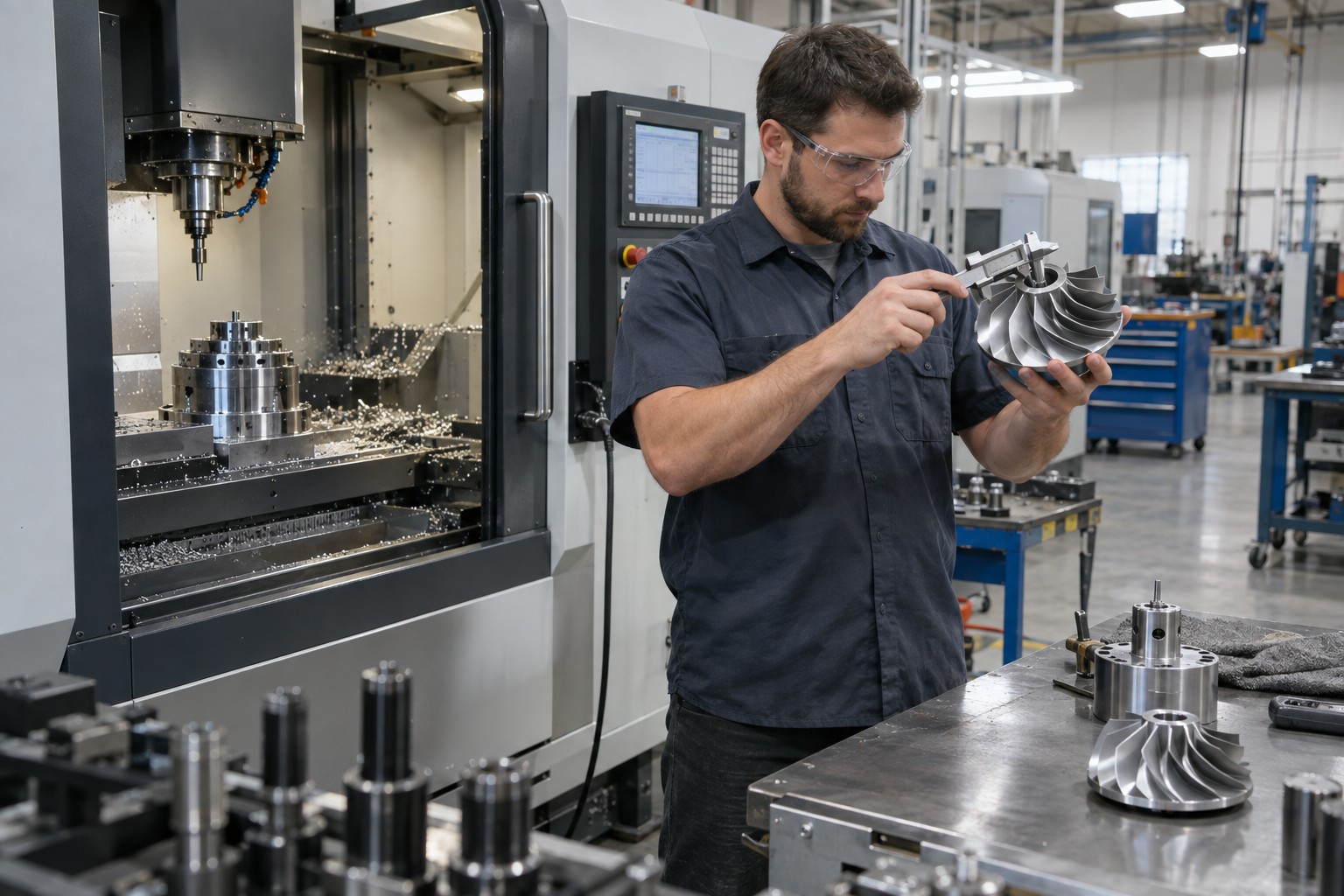
A defective part doesn't just trigger a product liability claim in this industry, it can become part of a federal accident investigation. Aerospace parts manufacturing insurance protects your operation against the certification, traceability, and liability exposures unique to producing components held to the highest quality standard in manufacturing. The Allen Thomas Group structures a complete program so your facility is defended on every part, not just the ones that pass inspection easily.
Carriers We Represent
Why Aerospace Parts Manufacturers Need Specialized Insurance Coverage
Aerospace component manufacturing carries a liability profile unlike almost any other trade: a defective part doesn't just create a products liability exposure, it can become physical evidence in a National Transportation Safety Board investigation. The NTSB's statutory mission is to determine probable cause in civil aviation accidents and issue safety recommendations, which means a part implicated in an accident generates a public, detailed factual record, a materially different severity and exposure profile than an ordinary manufacturing defect claim.
Quality and traceability requirements reflect that reality. AS9100, developed and administered by the International Aerospace Quality Group, is the aerospace-specific quality management standard built on ISO 9001 but adding clauses most manufacturers never have to think about: configuration management, first article inspection, counterfeit parts prevention, and full material traceability. Most aerospace OEMs and Tier 1 suppliers require AS9100 certification as a condition of doing business at all, making it as much a market-access requirement as a quality one.
Producing replacement or modification parts for certificated aircraft adds a further layer: the FAA's Parts Manufacturer Approval (PMA) process under 14 CFR Part 21, Subpart K, requires demonstrating a part meets the airworthiness standards of the original type certificate before it can legally be installed. A part produced or installed without proper PMA approval lacks the FAA's airworthiness finding entirely, a real and serious liability exposure distinct from a simple quality defect.
- Defective parts can become evidence in an NTSB aviation accident investigation
- AS9100 certification is an aerospace-specific quality standard most OEMs require for market access
- FAA Parts Manufacturer Approval (PMA) governs replacement/modification parts for certificated aircraft
- Full material traceability and documentation are built into AS9100's core requirements
- Export control compliance (ITAR/EAR) is a genuine operational risk for this trade
- Product liability severity profile differs materially from general industrial manufacturing
- General Aviation Revitalization Act creates a statute of repose for some general aviation parts
Core Coverages for Precision Aerospace Component Producers
A complete program layers coverage so each exposure has a clear home. Products liability sits at the center, responding to claims tied to a defective or non-conforming part, with limits and structure that should reflect the heightened severity profile aviation claims carry compared to typical manufacturing defect exposure. Product recall coverage funds the direct costs of identifying, retrieving, and replacing non-conforming parts once a defect is discovered.
Property and equipment breakdown coverage protects the precision CNC machining, inspection, and testing equipment this industry depends on, where downtime on a single machining center can cascade into missed delivery commitments across an entire supply chain. Cyber liability addresses the export-control and IP exposure of digital design files and technical data, particularly relevant where ITAR or EAR classifications apply. Workers compensation and general liability round out the program for shop-floor staff and premises risk, and errors and omissions coverage can matter for facilities that also provide engineering or design services alongside manufacturing.
We assemble these from 15-plus A-rated carriers so the structure matches your facility's actual certification level and customer base.
- Products liability sized to aviation's heightened claim-severity profile
- Product recall coverage for non-conforming part identification and replacement
- Property and equipment breakdown for precision CNC machining and inspection equipment
- Cyber liability for export-controlled technical data and digital design files
- Errors and omissions for facilities providing engineering/design alongside manufacturing
- Workers compensation for machinists, inspectors, and quality staff per state mandates
- General liability for premises and third-party bodily injury/property damage
Certification and Compliance Standards for This Industry
AS9100, administered by the International Aerospace Quality Group, is the baseline supplier-qualification standard across the aviation, space, and defense supply chain, with traceability clauses requiring identification marking, status tracking, and controlled acceptance records so every part can be traced back through its material certification chain. The FAA's Parts Manufacturer Approval process, governed by 14 CFR Part 21 Subpart K, is a combined design-and-production approval that allows a manufacturer to produce replacement or modification parts for type-certificated aircraft, requiring the manufacturer to demonstrate the part meets the original type certificate's airworthiness standards.
When an accident does occur, the NTSB's investigative process produces a detailed public factual record that can implicate a specific part or manufacturer, a dynamic with no real equivalent in most other manufacturing sectors. The General Aviation Revitalization Act of 1994 is a real, significant liability-limiting factor for parts of general aviation aircraft specifically: it creates an 18-year statute of repose barring most product liability suits against general aviation aircraft and parts manufacturers, with stated exceptions including knowing misrepresentation to the FAA. It applies specifically to general aviation rather than all aerospace parts broadly, so confirm which of your product lines actually qualify.
Many aerospace and defense parts manufacturers must also navigate export control classification under ITAR (International Traffic in Arms Regulations, administered by the State Department) or EAR (Export Administration Regulations, administered by Commerce), correctly classifying parts and technical data and controlling access by foreign persons as a genuine, ongoing operational compliance obligation.
- AS9100 (IAQG) sets the aerospace-specific quality management and traceability bar
- FAA Parts Manufacturer Approval (14 CFR Part 21, Subpart K) governs replacement parts
- NTSB investigations can produce a detailed public record implicating a specific part
- GARA (1994) creates an 18-year statute of repose for general aviation parts specifically
- GARA does not broadly cover all aerospace parts, only general aviation applications
- ITAR and EAR export-control classification is a real, ongoing compliance obligation
- Confirm which of your product lines fall under GARA, ITAR, or EAR before assuming coverage
Why Precision Manufacturers Choose The Allen Thomas Group
The Allen Thomas Group is an independent, family-owned insurance agency founded in 2003 and licensed in 28 states. We are not tied to a single carrier, which means our advice is built around your facility's actual certification level, AS9100, PMA, or both, rather than a generic industrial manufacturing template.
Our advisors compare programs across 15-plus A-rated carriers and explain the trade-offs in plain language: how products liability limits should reflect aviation's claim-severity profile, where export-control obligations intersect with your cyber coverage, and which endorsements matter for a facility supplying certificated parts. The agency holds an A+ rating with the Better Business Bureau, and we treat each renewal as a review rather than an auto-renewal, adjusting coverage as your certifications and customer base grow.
Above all, we act as your advocate. When a claim or an investigation arrives, you are dealing with people who understand the stakes of this industry, not a call-center queue.
- Independent, family-owned agency founded in 2003 and licensed in 28 states
- Access to 15-plus A-rated carriers for genuine program comparison
- A+ rating with the Better Business Bureau
- Advisory, consultative guidance built around your facility's actual certification level
- Annual coverage reviews that scale with certifications and customer base
- Hands-on claims advocacy during a products liability event or investigation
- Deep experience structuring programs for regulated precision manufacturing
How Much Does Aerospace Parts Manufacturing Insurance Cost?
There is no single published rate for this category, because pricing depends heavily on whether your facility is AS9100 certified, whether you hold FAA PMA approval, which aircraft systems your parts serve (fracture-critical/flight-critical parts carry a different risk profile than non-critical components), production volume, claims history, and export-control classification. A facility producing PMA-approved replacement parts for certificated aircraft typically faces a different underwriting conversation than one supplying non-critical ground-support equipment.
Products liability pricing reflects the industry's claim-severity profile more than its claim frequency, and recall coverage scales with the complexity of tracing and replacing affected parts across a supply chain. Because every variable shifts the total, the only accurate figure comes from comparing real quotes across carriers, which is the exercise our advisors run for each facility.
- AS9100 certification status and FAA PMA approval affect underwriting
- Whether parts are fracture-critical/flight-critical changes the risk profile significantly
- Production volume and customer concentration are meaningful premium drivers
- Claims history carries outsized weight given the severity profile of aviation claims
- Export-control classification (ITAR/EAR) factors into cyber and compliance pricing
- Recall coverage scales with supply-chain complexity and traceability requirements
- Comparing real quotes across carriers is the only reliable way to see your actual number
Risk Management for Certificated Parts Producers
Maintain AS9100 traceability documentation with zero gaps, since the standard's identification, status-tracking, and material-certification requirements exist precisely so any part can be traced back through its full production history if a question ever arises. Treat PMA approval status as a line-item check on every part number you produce, not a one-time facility certification, since an individual part's approval status is what actually matters in a liability or airworthiness dispute.
Confirm your export-control classification (ITAR, EAR, or neither) for every part and technical data package you handle, and control foreign-person access accordingly, since misclassification is a genuine, documented compliance risk in this industry. If any of your product lines serve general aviation specifically, understand how GARA's 18-year statute of repose does and doesn't apply, since it is a real liability-limiting factor but a narrowly scoped one.
Finally, review your products liability and recall limits whenever you add a new certification, a new aircraft system application, or a new customer relationship, since a limit set for your prior product mix may not reflect your actual current exposure.
- Maintain AS9100 traceability documentation with zero gaps across every part number
- Track PMA approval status per part number, not just at the facility level
- Confirm ITAR/EAR classification for every part and technical data package you handle
- Understand GARA's narrow scope before relying on its statute of repose
- Control foreign-person access to export-controlled technical data and design files
- Reassess coverage whenever you add a certification, application, or major customer
- Review the full program annually as certifications and production volume change
Frequently Asked Questions
What is AS9100 and why does it matter for insurance purposes?
AS9100 is the aerospace-specific quality management standard administered by the International Aerospace Quality Group, built on ISO 9001 with added requirements for configuration management, first article inspection, counterfeit parts prevention, and material traceability. Most aerospace OEMs require it as a condition of doing business, and it directly affects how underwriters assess your quality and liability risk.
What is FAA Parts Manufacturer Approval (PMA)?
PMA is a combined design-and-production approval under 14 CFR Part 21, Subpart K, that allows a manufacturer to produce replacement or modification parts for type-certificated aircraft. A part produced without proper PMA approval lacks the FAA's airworthiness finding, creating real liability exposure if it's installed on a certificated aircraft.
Why is aerospace parts product liability different from other manufacturing?
A defective aerospace part can become part of a National Transportation Safety Board accident investigation, producing a detailed public factual record. This creates a materially different claim-severity profile than a typical manufacturing product liability claim, which is why products liability limits in this industry are sized differently.
What is the General Aviation Revitalization Act (GARA)?
GARA, enacted in 1994, creates an 18-year statute of repose barring most product liability suits against general aviation aircraft and parts manufacturers, with exceptions including knowing misrepresentation to the FAA. It applies specifically to general aviation, not to all aerospace parts broadly, so confirm which product lines actually qualify.
Does export control regulation affect my insurance program?
It can. ITAR and EAR govern export of defense articles and dual-use items, including many aerospace and defense parts and technical data. Correctly classifying parts and controlling foreign-person access is a genuine operational compliance risk that intersects with cyber and data-security coverage.
How much does aerospace parts manufacturing insurance cost?
There is no single published rate. AS9100 certification status, FAA PMA approval, whether parts are flight-critical, production volume, claims history, and export-control classification all affect pricing. Comparing real quotes across carriers is the only reliable way to see an accurate figure for your facility.
Protect Your Facility With a Program Built Around Your Risk
Our advisors compare programs across 15-plus A-rated carriers to structure products liability, recall, cyber, and property coverage that fits your facility's certifications. Call The Allen Thomas Group at (440) 826-3676 for a consultative review of your coverage.