
Rubber Products Manufacturing Insurance
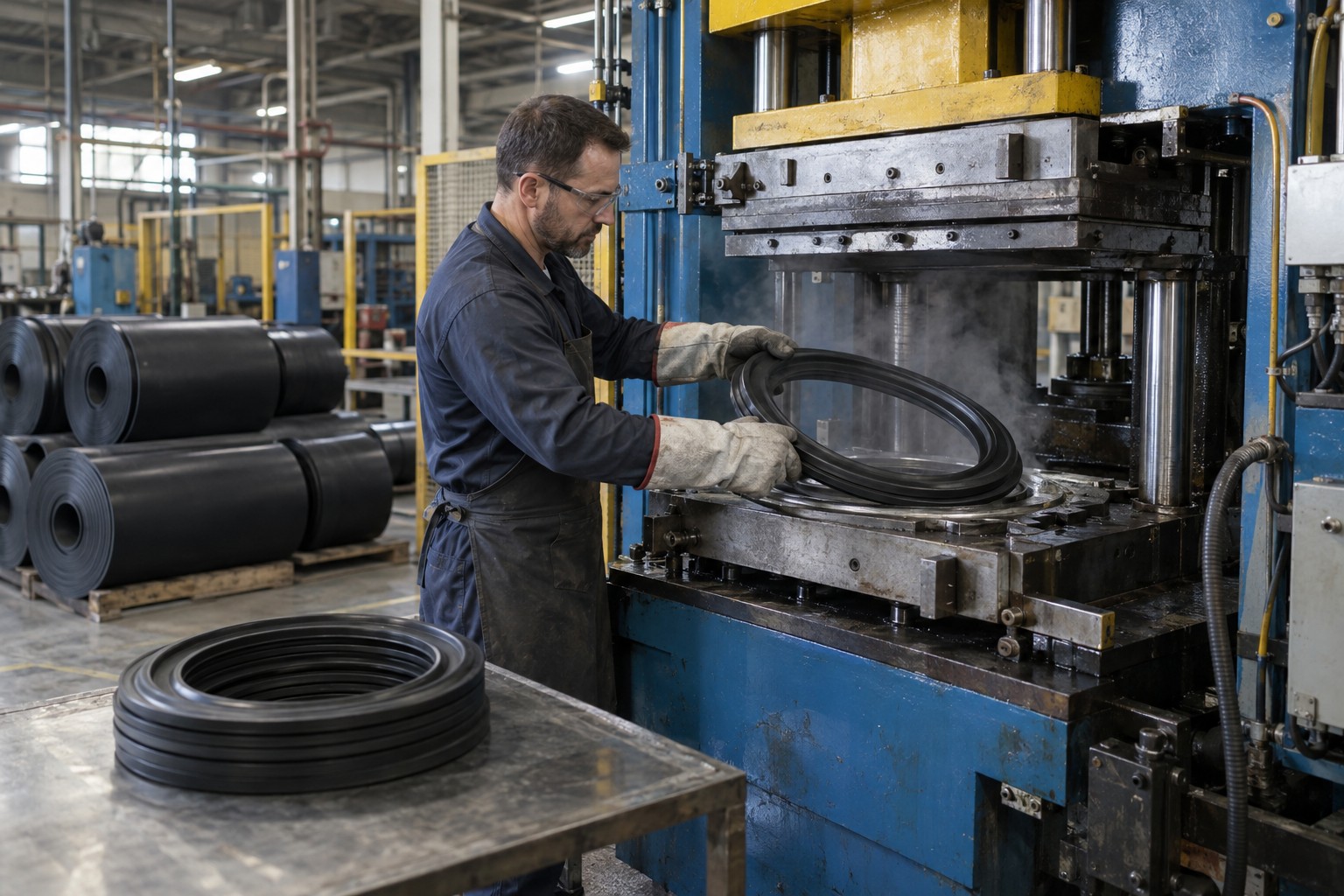
The curing process that turns raw rubber compound into a finished gasket, seal, or hose generates a genuinely distinctive occupational exposure most manufacturing trades never encounter, and a single seal failure in a critical application can trigger an expensive downstream claim. Rubber products manufacturing insurance protects your facility against the fire, occupational health, and product liability exposures unique to compounding and curing rubber. The Allen Thomas Group structures a complete program so your operation is defended on every batch, not just the easy runs.
Carriers We Represent
Why Rubber Products Manufacturers Need Specialized Insurance Coverage
Rubber compounding and curing carries an occupational health exposure most manufacturing trades don't have to think about: nitrosamine generation during vulcanization. OSHA has published Hazard Information Bulletins specifically addressing this, noting that the rubber industry was found to have relatively high nitrosamine levels, with NIOSH identifying specific curing operations as the exposure source. CDC/NIOSH has independently conducted a health hazard evaluation specifically investigating nitrosamine exposure during rubber curing and molding. This is a genuinely distinctive hazard profile, not a generic industrial-chemical concern borrowed from another trade.
Fire risk compounds the picture. Rubber compound and compounding materials like carbon black are recognized combustible commodities, reflected directly in how commercial property insurers approach this trade: FM Global, a major commercial property insurer and risk-engineering firm, publishes dedicated loss-prevention data sheets covering synthetic rubber production facilities and rubber commodity storage specifically, treating rubber as its own distinct fire-risk category rather than folding it into generic industrial storage guidance.
On the product side, rubber components frequently end up in critical sealing applications, gaskets, hoses, and seals used in automotive, industrial, and adjacent equipment, where a failure can trigger an expensive downstream claim well after the part has shipped. Products-completed operations coverage is the part of a general liability or dedicated products liability policy built specifically for that delayed-discovery scenario.
- Nitrosamine exposure during vulcanization is a documented, rubber-specific OSHA/NIOSH concern
- Carbon black and uncured rubber stock are recognized combustible materials
- FM Global treats rubber production and storage as its own distinct fire-risk category
- Products-completed operations coverage for seal/gasket failures discovered after shipment
- EPA regulates hazardous air pollutant emissions from rubber curing processes
- ASTM D2000 governs rubber product classification for critical applications
- OSHA's air contaminants standard specifically lists rubber-solvent substances
Core Coverages for Rubber Compounding and Molding Operations
A complete program layers coverage so each exposure has a clear home. Property and fire coverage sits at the center given rubber's recognized combustibility, both in process (compounding, calendering, curing) and in storage of raw and finished rubber stock. Products liability, including products-completed operations, responds to claims tied to a seal, gasket, or molded rubber part that fails in service, particularly relevant for parts used in critical sealing applications.
Workers compensation addresses the occupational health profile specific to this trade, including documented nitrosamine exposure during curing operations, alongside more conventional burn and chemical-handling risks. Equipment breakdown coverage protects mixing, calendering, and curing/vulcanization equipment, and environmental liability can matter given EPA regulation of hazardous air pollutant emissions from curing processes. General liability and cargo/inland marine round out the program for premises risk and product in transit.
We assemble these from 15-plus A-rated carriers so the structure matches whether you produce industrial gaskets and seals, hose, molded goods, or tire-adjacent products.
- Property and fire coverage reflecting rubber's recognized combustibility profile
- Products liability / products-completed operations for seal and gasket failure claims
- Workers compensation addressing documented nitrosamine exposure during curing
- Equipment breakdown for mixing, calendering, and curing/vulcanization equipment
- Environmental liability for HAP emissions from curing operations
- Cargo / inland marine for finished rubber products and raw compound in transit
- General liability for premises and third-party bodily injury/property damage
Regulatory and Quality Standards for Rubber Production
OSHA's general air contaminants standard, 29 CFR 1910.1000, sets permissible exposure limits for roughly 500 substances and specifically lists rubber-solvent naphtha among regulated materials, directly relevant to compounding and cementing operations. Beyond general solvent exposure, OSHA has published a Hazard Information Bulletin specifically on N-nitrosamine exposure in the rubber industry, noting that while most amine compounds carry no specific OSHA permissible exposure limit, N-nitrosodimethylamine is separately regulated under 29 CFR 1910.1016. A related OSHA bulletin on N-nitroso compounds confirms both rubber and leather manufacturing were found to carry relatively high nitrosamine levels tied to specific curing operations.
Emissions from rubber curing fall under EPA's Clean Air Act framework: the agency maintains a dedicated Rubber Tire Manufacturing NESHAP, codified at 40 CFR Part 63, Subpart XXXX, regulating hazardous air pollutant emissions specifically from rubber processing and curing operations. This rule is scoped by name to tire manufacturing; confirm which emissions standards actually apply to your specific rubber goods and curing process.
Product classification and quality for rubber used in critical applications is governed by ASTM D2000, the standard classification system for rubber products, originally developed for automotive applications but widely used across gasket, seal, and molded-goods manufacturing to classify vulcanized rubber materials by performance property.
- OSHA 29 CFR 1910.1000 regulates rubber-solvent naphtha and roughly 500 other substances
- OSHA has published dedicated Hazard Information Bulletins on rubber-industry nitrosamine exposure
- N-nitrosodimethylamine carries its own specific OSHA permissible exposure limit (1910.1016)
- EPA's Rubber Tire Manufacturing NESHAP (40 CFR 63, Subpart XXXX) regulates curing emissions
- Confirm which EPA emissions standards apply to your specific rubber goods and process
- ASTM D2000 classifies vulcanized rubber materials for critical sealing applications
- CDC/NIOSH has independently evaluated nitrosamine exposure during rubber curing and molding
Why Rubber Goods Producers Choose The Allen Thomas Group
The Allen Thomas Group is an independent, family-owned insurance agency founded in 2003 and licensed in 28 states. We are not tied to a single carrier, which means our advice is built around your facility's actual compounding, curing, and molding processes, rather than a generic industrial manufacturing template that doesn't account for this trade's distinctive occupational and fire-risk profile.
Our advisors compare programs across 15-plus A-rated carriers and explain the trade-offs in plain language: how fire and property coverage should reflect rubber's recognized combustibility, where workers compensation needs to account for documented curing-process exposures, and which products liability limits matter for parts used in critical sealing applications. The agency holds an A+ rating with the Better Business Bureau, and we treat each renewal as a review rather than an auto-renewal, adjusting coverage as your product lines and production volume grow.
Above all, we act as your advocate. When a claim or a loss arrives, you are dealing with people who understand how rubber compounding and curing actually works, not a call-center queue.
- Independent, family-owned agency founded in 2003 and licensed in 28 states
- Access to 15-plus A-rated carriers for genuine program comparison
- A+ rating with the Better Business Bureau
- Advisory, consultative guidance built around your facility's actual curing process
- Annual coverage reviews that scale with product lines and production volume
- Hands-on claims advocacy during a fire loss or products liability event
- Deep experience structuring programs for regulated industrial manufacturing
How Much Does Rubber Products Manufacturing Insurance Cost?
There is no single published rate for this category, because pricing depends heavily on your specific products (critical sealing components carry a different risk profile than general molded goods), production volume, fire protection systems in place, claims history, and the emissions controls your curing process requires. A facility producing gaskets and seals for automotive or industrial critical applications typically faces different products liability underwriting than one producing lower-stakes molded rubber goods.
Property and fire pricing reflects your facility's specific fire protection measures given rubber's recognized combustibility, and workers compensation pricing should account for documented curing-process exposures rather than assuming a generic industrial rate applies. Because every variable shifts the total, the only accurate figure comes from comparing real quotes across carriers, which is the exercise our advisors run for each facility.
- Product category (critical seals vs. general molded goods) drives products liability pricing
- Fire protection systems and storage practices significantly affect property pricing
- Production volume and curing process complexity are meaningful premium drivers
- Claims history materially affects both property and products liability renewal pricing
- Emissions controls and environmental compliance factor into environmental liability pricing
- Workers compensation pricing should reflect documented curing-process exposures
- Comparing real quotes across carriers is the only reliable way to see your actual number
Risk Management for Rubber Compounding and Curing Facilities
Review your curing operations against OSHA's published nitrosamine guidance, since this is a documented, rubber-specific exposure most generic industrial safety programs don't address by default. Confirm your fire protection systems and raw-material storage practices reflect rubber's recognized combustibility profile, since commercial property insurers treat this trade as its own distinct fire-risk category rather than generic industrial storage.
Document quality and classification testing against ASTM D2000 for any rubber components used in critical sealing applications, since that documentation is often the first thing reviewed if a products liability claim is ever disputed. Confirm which EPA emissions standards actually apply to your specific curing process and rubber goods, since the primary federal rule is scoped by name to tire manufacturing and may not directly apply to every rubber products facility.
Finally, reassess your coverage whenever you add a new rubber compound formulation, a new curing process, or a new critical-application product line, since a program built for your original product mix may not reflect your current actual exposure.
- Review curing operations against OSHA's published nitrosamine exposure guidance
- Confirm fire protection and storage practices reflect rubber's combustibility profile
- Document ASTM D2000 classification testing for critical-application rubber components
- Confirm which EPA emissions standards actually apply to your specific process
- Reassess coverage with any new compound formulation or curing process
- Maintain documented quality records to support any future products liability defense
- Review the full program annually as product lines and production volume change
Frequently Asked Questions
What is the nitrosamine exposure risk in rubber manufacturing?
OSHA has published Hazard Information Bulletins specifically on nitrosamine exposure in the rubber industry, noting the industry has relatively high nitrosamine levels tied to specific curing operations. CDC/NIOSH has independently conducted a health hazard evaluation on this exact exposure during rubber curing and molding.
Why is fire protection coverage so important for rubber manufacturers?
Rubber compound and compounding materials like carbon black are recognized combustible commodities. FM Global, a major commercial property insurer, publishes dedicated loss-prevention data sheets specifically for rubber production and storage, treating it as its own distinct fire-risk category.
Does OSHA regulate rubber manufacturing specifically?
Yes, in multiple ways. OSHA's air contaminants standard (29 CFR 1910.1000) lists rubber-solvent substances specifically, and separate OSHA Hazard Information Bulletins address nitrosamine exposure during curing, with N-nitrosodimethylamine carrying its own specific exposure limit under 29 CFR 1910.1016.
Does EPA regulate emissions from rubber manufacturing?
Yes. EPA maintains a Rubber Tire Manufacturing NESHAP (40 CFR Part 63, Subpart XXXX) regulating hazardous air pollutant emissions from rubber processing and curing. This rule is scoped by name to tire manufacturing, so confirm which emissions standards apply to your specific rubber goods and process.
What standard governs rubber product classification for critical applications?
ASTM D2000 is the standard classification system for rubber products, originally developed for automotive applications but widely used to classify vulcanized rubber materials by performance property across gasket, seal, and molded-goods manufacturing.
How much does rubber products manufacturing insurance cost?
There is no single published rate. Product category, production volume, fire protection systems, claims history, and emissions controls all affect pricing. Comparing real quotes across carriers is the only reliable way to see an accurate figure for your facility.
Protect Your Facility With a Program Built Around Your Risk
Our advisors compare programs across 15-plus A-rated carriers to structure property, fire, products liability, and environmental coverage that fits your curing process. Call The Allen Thomas Group at (440) 826-3676 for a consultative review of your coverage.