
Bike Shop Insurance
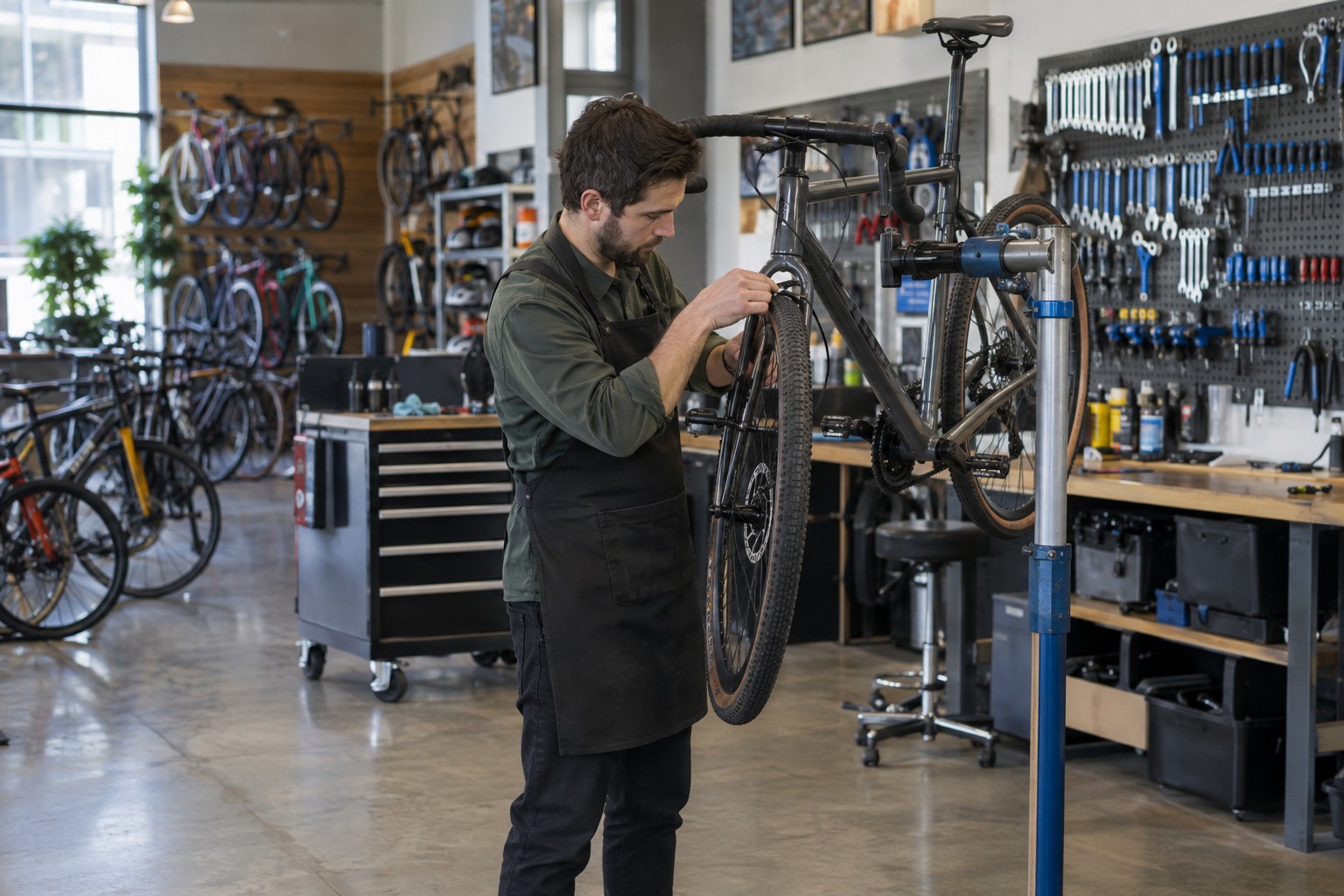
A brake that wasn't adjusted quite right after a tune-up, or a customer injured on a test ride in your parking lot, creates a liability that has nothing to do with theft of your inventory. Bike shop insurance protects your business against the repair, assembly, and test-ride exposures that come from servicing bicycles, not just selling them. The Allen Thomas Group structures a complete program so your shop is defended on every repair, not just the sales floor.
Carriers We Represent
Why Bike Shops Need Specialized Insurance Coverage
A shop that sells bikes carries ordinary retail risk, but a shop that assembles, repairs, and services bikes carries something more: an exposure that surfaces after the customer has already left with the bicycle. An improperly adjusted brake, a wheel not properly secured, or a steering component left loose can cause a crash well after the work is done, the kind of delayed-discovery exposure the insurance industry categorizes as completed operations, distinct from a simple products liability claim on a boxed, pre-assembled bike.
Federal safety standards underscore how seriously this is treated: the Consumer Product Safety Commission's bicycle safety regulation, 16 CFR Part 1512, sets mandatory requirements for brakes, steering, structural strength, and reflectors, standards that apply whether you're selling a new bike or performing a repair that touches those same systems. If your shop offers test rides or rentals, you take on a further, distinct premises and product liability exposure for injuries during that activity, and while liability waivers are a common risk-reduction tool, they generally don't eliminate liability for a business's own negligence, a point worth understanding clearly rather than assuming a signed waiver closes the door entirely.
E-bikes have added a genuinely new risk category in recent years. Lithium-ion battery fires are a real, documented hazard: NYC alone recorded 268 such fires in 2023, many powering e-bikes, a pattern serious enough that NFPA has published directly on the FDNY's experience with these incidents. UL 2849, a dedicated electrical-systems safety standard for e-bikes, now exists specifically to address this battery, charger, and motor-system fire risk as a complete system, not just the battery cell in isolation.
- Repair and assembly work creates a completed-operations exposure distinct from retail theft risk
- CPSC's 16 CFR Part 1512 sets mandatory federal bicycle safety requirements
- Test rides and rentals create distinct premises/product liability exposure
- Liability waivers reduce risk but generally don't eliminate liability for negligence
- E-bike lithium-ion battery fires are a real, documented, growing hazard category
- UL 2849 is a dedicated e-bike electrical-system fire safety standard
- Assembling or private-labeling bikes carries more manufacturer-like liability than pure resale
Core Coverages for Bike Retailers, Repair Shops and Rental Operations
A complete program layers coverage so each exposure has a clear home. General liability addresses premises risk, including injuries during test rides or rentals on or near your property. Products-completed operations coverage, often part of a broader general liability or garagekeepers-style policy, responds specifically to claims that surface after a repair, tune-up, or assembly job, when the actual failure shows up down the road rather than in the shop.
Products liability matters more directly if your shop assembles bikes under its own brand or substantially modifies frames and components, since that creates manufacturer-level exposure beyond simple retail resale of a boxed, name-brand bicycle. Property and inventory coverage should reflect e-bike inventory specifically, given the distinct fire risk lithium-ion batteries carry, and workers compensation addresses the recognized injury profile of repair work: tool-related lacerations, repetitive strain, and chemical exposure from lubricants and solvents. Equipment coverage protects repair-stand and shop tool investments.
We assemble these from 15-plus A-rated carriers so the structure matches whether you're primarily retail, repair-focused, or running test rides and rentals.
- General liability for premises risk, including test ride and rental injuries
- Products-completed operations coverage for repair, tune-up, and assembly work
- Products liability for shop-assembled or private-labeled bicycles specifically
- Property coverage reflecting e-bike inventory and its distinct fire risk profile
- Workers compensation for lacerations, repetitive strain, and chemical exposure
- Equipment coverage for repair stands, tools, and diagnostic equipment
- Commercial auto for any delivery or mobile repair service your shop offers
Safety Standards and Service-Related Compliance
The CPSC's Requirements for Bicycles (16 CFR Part 1512) is a mandatory federal safety standard covering brakes, steering systems, pedals, chains, wheels, frame/fork structural strength, and reflector requirements, along with required assembly instructions and labeling. This standard applies to the bikes you sell and, functionally, to the safety-critical systems your shop touches during assembly and repair work. CPSC has an active rulemaking process extending bicycle safety requirements to electric bicycles specifically, reflecting how quickly this product category has grown.
E-bike battery safety is addressed by UL 2849, the Standard for Electrical Systems for eBikes, which evaluates the battery pack, charger, motor, wiring, and controller together as a system rather than testing the battery cell alone. This standard exists because of a real, documented fire problem: New York City's own Fire Department recorded 268 lithium-ion battery fires in 2023, many involving e-bikes, prompting NFPA to publish directly on the department's experience with these incidents.
On test rides and rentals, understand that a liability waiver is a risk-reduction tool, not a liability shield, in most states; it generally does not eliminate liability for a business's own negligence. Confirm your specific state's treatment of waivers before relying on one as your primary risk-management strategy.
- CPSC's 16 CFR Part 1512 mandates federal bicycle safety requirements
- CPSC is actively extending bicycle safety rulemaking to cover e-bikes
- UL 2849 evaluates e-bike battery, charger, motor, and wiring as one complete system
- NYC FDNY documented 268 lithium-ion battery fires in 2023, many e-bike related
- Liability waivers reduce risk but generally don't eliminate negligence liability
- State law on waiver enforceability varies; confirm your specific state's treatment
- Shop-assembled/private-labeled bikes carry more manufacturer-like liability exposure
Why Repair Shops and Retailers Choose The Allen Thomas Group
The Allen Thomas Group is an independent, family-owned insurance agency founded in 2003 and licensed in 28 states. We are not tied to a single carrier, which means our advice is built around how your shop actually operates, retail, repair, rentals, or e-bike sales, rather than a generic sporting goods retail template that only addresses theft risk.
Our advisors compare programs across 15-plus A-rated carriers and explain the trade-offs in plain language: how completed-operations coverage protects you after a repair leaves the shop, where products liability shifts if you assemble bikes under your own brand, and which property endorsements matter for e-bike inventory specifically. The agency holds an A+ rating with the Better Business Bureau, and we treat each renewal as a review rather than an auto-renewal, adjusting coverage as your service offerings and e-bike inventory grow.
Above all, we act as your advocate. When a claim arrives, often well after the repair or sale, you are dealing with people who understand this business, not a call-center queue.
- Independent, family-owned agency founded in 2003 and licensed in 28 states
- Access to 15-plus A-rated carriers for genuine program comparison
- A+ rating with the Better Business Bureau
- Advisory, consultative guidance built around your shop's actual service mix
- Annual coverage reviews that scale with repair volume and e-bike inventory
- Hands-on claims advocacy for completed-operations and product liability events
- Deep experience structuring programs for specialty retail and repair businesses
How Much Does Bike Shop Insurance Cost?
There is no single published rate for this category, because pricing depends on whether your shop is retail-focused, repair-focused, or offers test rides/rentals, how much e-bike inventory you carry, whether you assemble bikes under your own brand, and claims history. A shop with a significant repair and service operation typically faces a different underwriting conversation than one focused primarily on retail sales of boxed, pre-assembled bicycles.
Products-completed operations and products liability pricing reflects your repair volume and whether you assemble or modify bikes beyond simple retail resale. E-bike inventory, given its distinct fire risk profile, is priced as its own consideration within property coverage. Because every variable shifts the total, the only accurate figure comes from comparing real quotes across carriers, which is the exercise our advisors run for each shop.
- Repair and service volume significantly affects completed-operations pricing
- Test ride and rental offerings add a distinct premises liability pricing dimension
- E-bike inventory is priced separately given its distinct fire risk profile
- Shop-assembled or private-labeled bikes affect products liability underwriting
- Claims history materially affects both liability and property renewal pricing
- Repair staff count affects workers compensation pricing
- Comparing real quotes across carriers is the only reliable way to see your actual number
Risk Management for Bike Retailers and Repair Shops
Document every repair and assembly job with a clear checklist confirming brakes, wheels, and steering components meet CPSC safety requirements before the bike leaves your shop, since this documentation is often the deciding factor in defending a completed-operations claim. Store and charge e-bike batteries according to manufacturer guidance and UL 2849-aligned practices, since lithium-ion battery fires are a real, documented, and growing risk specific to this inventory category.
If you offer test rides or rentals, use a liability waiver as one layer of a broader risk-management approach, not a standalone shield, since it generally won't eliminate liability for your shop's own negligence in most states. Maintain clear signage and verbal safety instructions for test rides, and confirm the condition of demo bikes regularly.
Finally, if your shop assembles bikes under its own brand or makes substantial modifications to frames or components, treat your products liability coverage with the same seriousness a small manufacturer would, since that activity carries more liability exposure than simple pass-through retail of a boxed, pre-assembled bicycle.
- Document every repair/assembly job with a safety-compliance checklist
- Store and charge e-bike batteries according to manufacturer and UL 2849-aligned guidance
- Treat liability waivers as one layer of risk management, not a standalone shield
- Maintain clear signage and safety instructions for test rides and rentals
- Regularly inspect the condition of demo and rental bikes
- Treat shop-assembled/private-labeled bikes with manufacturer-level liability seriousness
- Review the full program annually as service offerings and e-bike inventory change
Frequently Asked Questions
What is products-completed operations coverage and why does it matter for a bike shop?
Products-completed operations coverage responds to claims that arise after a repair, tune-up, or assembly job, when a failure like an improperly adjusted brake shows up after the bike has already left the shop. This is distinct from, and in addition to, ordinary retail product liability.
Does CPSC regulate bicycle safety?
Yes. 16 CFR Part 1512 is a mandatory federal safety standard covering brakes, steering, structural strength, and reflectors, among other requirements. It applies to bikes sold and functionally to the safety-critical systems a shop touches during repair and assembly work.
Do liability waivers protect my shop from test ride or rental injury claims?
Not entirely. In most states, a liability waiver reduces risk but generally does not eliminate liability for the business's own negligence. Waivers are one layer of a broader risk-management approach, not a standalone shield, and state law on enforceability varies.
Are e-bike batteries a real fire risk?
Yes. Lithium-ion battery fires are a documented, growing hazard: New York City's Fire Department recorded 268 such fires in 2023, many involving e-bikes. UL 2849 is a dedicated safety standard addressing the battery, charger, and motor system together to help manage this risk.
Does assembling bikes under my own brand change my liability exposure?
Yes. A shop that assembles bikes under its own brand or substantially modifies frames and components takes on more manufacturer-like liability exposure than one that simply resells a boxed, pre-assembled name-brand bicycle.
How much does bike shop insurance cost?
There is no single published rate. Whether your shop is retail-focused, repair-focused, or offers test rides/rentals, e-bike inventory volume, and claims history all affect pricing. Comparing real quotes across carriers is the only reliable way to see an accurate figure for your shop.
Protect Your Shop With a Program Built Around Your Risk
Our advisors compare programs across 15-plus A-rated carriers to structure general liability, completed operations, and products liability coverage that fits your repair and retail mix. Call The Allen Thomas Group at (440) 826-3676 for a consultative review of your coverage.