
Esthetician Insurance
A licensed esthetician's biggest exposure isn't a slip in the lobby — it's the treatment itself: a chemical peel that burns, an allergic reaction to a serum, or an extraction that turns into an infection. Esthetician insurance pairs professional (treatment) liability with general liability, product liability, and the property and workers' coverage your facial spa actually depends on. The Allen Thomas Group helps skincare professionals build a program that matches their real risk — not a generic salon template.
Carriers We Represent
Why Estheticians Need Specialized Insurance
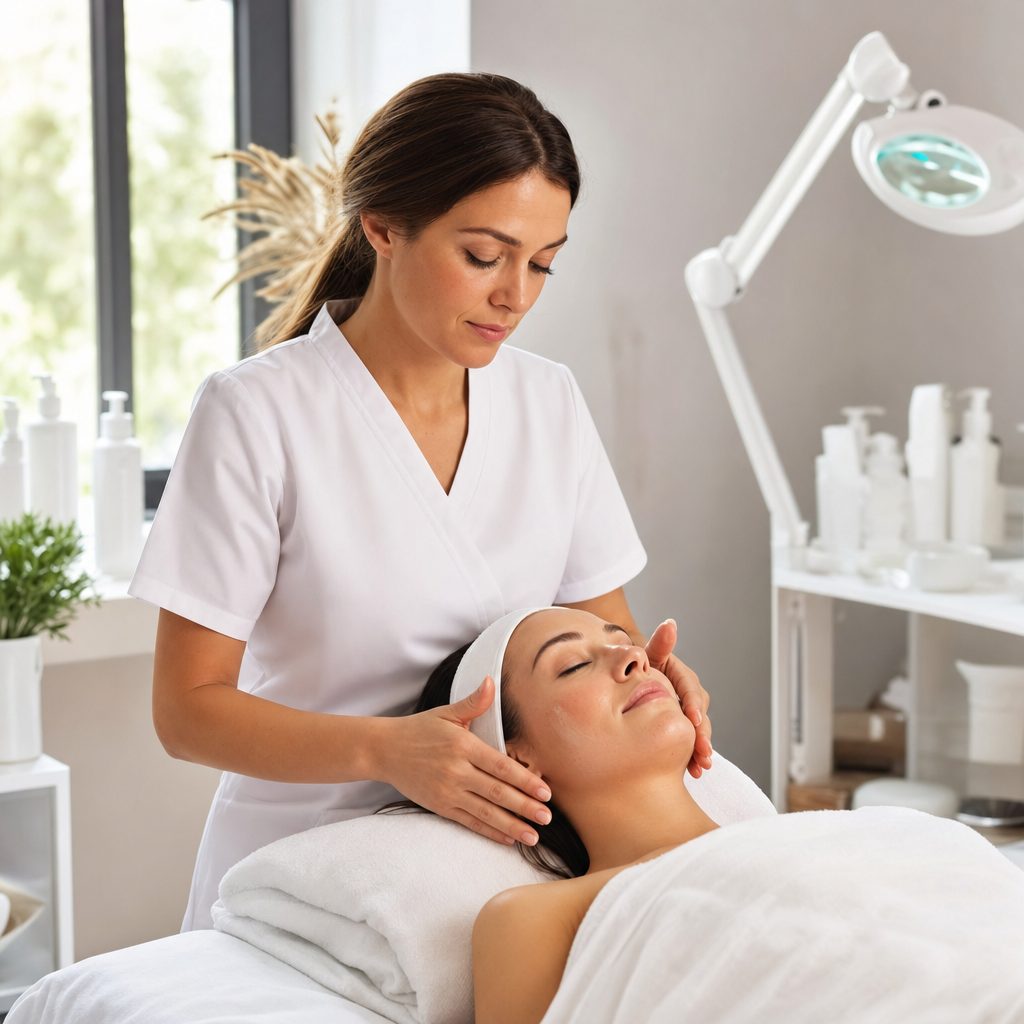
Estheticians work hands-on with the skin — facials, light chemical peels, microdermabrasion, dermaplaning, and extractions — and that direct contact is exactly where the financial risk lives. A standard general liability policy is built for premises accidents: a client who slips on a wet floor, a falling product display, a visitor tripping over a cord in your lobby. What it does not cover is harm caused by the service itself. If a glycolic peel is left on too long and leaves a chemical burn, if dermaplaning nicks and scars, or if an extraction introduces a bacterial infection, those are treatment claims — and they fall to professional liability, not general liability. This gap is the single most common reason a skincare claim gets denied.
The exposures are real and well documented. The U.S. Food and Drug Administration has warned that chemical peel products used without proper training can cause severe burns, infection, lasting skin-color changes, and disfiguring scars — the precise injuries that drive a treatment-liability claim against an esthetician. Hyperpigmentation, post-inflammatory scarring, allergic and contact-dermatitis reactions to acids or active ingredients, eye injury during a brow or lash service, and a "botched result" dispute are all everyday allegations in this profession, and each can produce defense costs and a settlement well into five or six figures.
It's also important to scope your work honestly. As a non-medical skincare professional licensed by your state board, your coverage is written around exfoliating and superficial treatments. The moment a service crosses into the medical realm — injectables, physician-supervised or medical-grade lasers, deep peels, microneedling, or body contouring — it belongs to a physician-supervised medical spa and a different policy and licensing structure. Right-sized commercial insurance programs keep your coverage aligned to your actual, non-medical scope so a claim isn't denied for an exposure your policy never contemplated.
- Chemical-peel burns and over-exfoliation — acids left on too long or applied at the wrong concentration causing first- or second-degree burns
- Post-treatment hyperpigmentation and scarring, often the most-litigated long-term skincare outcome
- Allergic and contact-dermatitis reactions to serums, acids, enzymes, or active ingredients
- Extraction-related infection or folliculitis from improper technique or contaminated tools
- Microdermabrasion abrasions and dermaplaning nicks, cuts, or scarring
- Eye and corneal injury during brow, lash, or peri-ocular treatments
- "Botched result" and unmet-expectation disputes that become professional-liability claims even without physical injury
Core Coverages for Estheticians
A complete esthetician program layers several coverages so that whether the harm comes from the treatment, the premises, a product, or your staff, something responds. The two non-negotiables are professional liability (also called treatment or malpractice liability), which covers injury and alleged negligence arising from a service you perform, and general liability, which covers third-party bodily injury and property damage on your premises. Together they close the gap between "the peel burned my client" and "a client tripped in the waiting room" — two very different claims that no single policy line covers alone.
From there, product liability protects you when retail skincare you sell or a professional product you apply causes a reaction or injury. Commercial property and equipment coverage protects your build-out, treatment beds, magnifying lamps, steamers, microdermabrasion and (non-medical) handheld devices, autoclave or sterilization equipment, and retail inventory against fire, theft, and damage. Workers' compensation covers your employees for chemical exposure, repetitive-strain injury, slips, and sharps incidents, and is mandatory for employers in nearly every state. A Business Owner's Policy (BOP) often bundles general liability with property at a better rate for a single-location spa, and a commercial umbrella adds limits above it all.
Two more lines matter for the modern facial spa. Cyber and PCI liability protects the client data and card information flowing through your online booking and point-of-sale system. And if you operate as a booth renter or independent contractor inside someone else's salon or spa, do not assume the owner's policy extends to you — it almost never covers your treatment work. Booth renters need their own individual professional and general liability policy. The Allen Thomas Group structures all of this through our broader commercial insurance programs.
- Professional (treatment) liability — burns, reactions, scarring, infection, and alleged negligence from facials, peels, extractions, and dermaplaning
- General liability — slip-and-fall, premises, and third-party property damage in your studio or lobby
- Product liability — reactions or injury from retail skincare sold and professional products applied
- Commercial property & equipment — treatment beds, lamps, steamers, sterilization gear, devices, and retail inventory
- Workers' compensation — employee chemical exposure, repetitive strain, slips, and sharps injuries
- Cyber/PCI and business interruption — booking-platform data, card security, and lost income after a covered shutdown
- Booth-renter individual policy and Business Owner's Policy (BOP) options sized to your operation
Licensing, Compliance & Regulatory Considerations for Estheticians
Estheticians are licensed and regulated at the state level, typically through a state board of cosmetology or a dedicated esthetician/skincare licensing board, and your scope of practice is defined by that board. Requirements — training hours, exams, and which advanced services (dermaplaning, certain exfoliation depths, lash and brow work) a basic versus advanced license may perform — vary meaningfully by state and change often. Associated Skin Care Professionals maintains a current, state-by-state breakdown of esthetician licensing requirements by state, and carriers will expect every operator in your facility to hold the proper license for the services they provide.
Insurers also look closely at chemical safety and infection control because those are where claims and regulatory citations originate. If your products contain or release formaldehyde or you handle other hazardous chemicals, OSHA's Hazard Communication and formaldehyde rules apply — the federal formaldehyde standard at 29 CFR 1910.1048 sets exposure limits, ventilation, PPE, and worker-training obligations. Cosmetics themselves are FDA-regulated rather than FDA-approved, meaning you, not the agency, carry legal responsibility for the safety of products you use and sell.
Sanitation, sterilization, and documentation round out compliance. Follow your state health department's sanitation rules for tools, surfaces, and single-use items; sterilize or single-use anything that breaks the skin barrier during extractions; and protect yourself with patch testing before introducing actives or peels, written informed-consent and treatment-history forms, and clear aftercare instructions. These records are not only good practice — they are often the difference between a defensible claim and an indefensible one.
- Maintain current state esthetician/cosmetology licensing for the owner and every operator, matched to each person's scope
- Confirm advanced services (dermaplaning, exfoliation depth, lash/brow) are within your state-defined scope before offering them
- Comply with OSHA Hazard Communication and formaldehyde standards for chemical storage, ventilation, SDS, and PPE
- Treat cosmetics and professional products as your safety responsibility — they are FDA-regulated, not FDA-approved
- Follow state health-department sanitation and disinfection protocols; sterilize or use single-use tools for extractions
- Run patch tests before peels and active ingredients and keep dated records of results
- Use written informed-consent, intake/treatment-history, and aftercare forms for every client and service
Why Estheticians Choose The Allen Thomas Group
The Allen Thomas Group is an independent, family-owned insurance agency founded in 2003 and licensed in 28 states. Because we are independent, we are not tied to one carrier — we represent more than 15 A-rated insurers and shop your risk across beauty- and personal-care-focused markets to find the right combination of coverage and price. For a skincare professional, that independence matters: the difference between a policy that explicitly covers treatment liability for peels and extractions and one that quietly excludes them is exactly what an experienced advocate is there to catch.
We work as advisors, not order-takers. We take the time to understand which services you actually perform, where your scope ends and the medical side begins, and whether you operate solo, employ staff, or rent booths to others — then we build coverage around that reality. We hold an A+ rating with the Better Business Bureau, conduct annual policy reviews as your services and revenue change, and stand with you as your advocate if a claim is ever filed.
Most importantly, we keep your program honest to your non-medical scope. When a client asks about injectables, medical-grade lasers, or deep peels, we help you understand where that work belongs and make sure your coverage isn't stretched to imply exposures you aren't licensed for — protecting both your business and your claims position.
- Independent and family-owned, founded in 2003 — advice aligned to you, not to one carrier
- Access to 15+ A-rated carriers, including beauty- and personal-care-focused markets
- Licensed across 28 states with an A+ Better Business Bureau rating
- Coverage matched to your real services and scope, not a generic salon template
- Clear handling of the non-medical vs. medical-spa boundary so your policy fits your license
- Annual reviews that adjust limits as your treatments, staff, and retail sales grow
- A genuine advocate at your side if a treatment or premises claim is ever filed
How Much Does Esthetician Insurance Cost?
There is no single price for esthetician insurance because premiums track your actual risk profile. The biggest driver is the services you perform: a studio offering only basic facials and brow work prices very differently from one doing aggressive chemical peels, dermaplaning, and extractions, because the treatment-liability exposure is higher. Payroll and staff count, the number of treatment rooms or operators, your claims history, your premises and location, and how much retail product you sell all feed into the rate as well.
As rough benchmarks, an individual or booth-renting esthetician can often secure a professional and general liability policy in the range of roughly $150 to $500 per year through an association or program market. A small facial spa carrying a Business Owner's Policy (general liability plus property) commonly runs about $500 to $1,800 per year, and a multi-room spa with employees, higher-risk treatments, retail, and the workers' compensation that staffing requires can run several thousand dollars annually once all lines are combined. Workers' comp is rated separately on payroll and class code.
These are general ranges, not quotes. The value of working with an independent agency is that we compare those 15+ A-rated carriers against your specific service menu and operation, then assemble the most cost-effective combination — rather than defaulting to one insurer's standard rate.
- Service menu and treatment risk — peels, dermaplaning, and extractions raise professional-liability cost
- Payroll, employee count, and number of treatment rooms or operators
- Claims and loss history for the business and individual practitioners
- Premises, location, building type, and whether property/equipment coverage is included
- Retail product sales volume, which increases product-liability exposure
- Coverage limits, deductibles, and whether a BOP or umbrella is added
- Solo vs. employer status — employees trigger workers' compensation rated on payroll and class code
Esthetician Risk Management & Coverage Considerations
The most effective way to control both claims and premiums is disciplined risk management. Sanitation and sterilization come first: follow a written protocol for cleaning and disinfecting tools and surfaces, sterilize or use single-use implements for anything that can break the skin during extractions, and never reuse single-use items. Pair that with patch testing before introducing peels or new active ingredients, and a signed informed-consent and treatment-history form for every client — documentation that proves you screened for contraindications and disclosed risks is your strongest defense if a reaction or burn is alleged.
Staff and scope discipline matter just as much. Verify that every operator holds a current state license for the exact services they provide, keep training current on new modalities and chemistry, and maintain your equipment — steamers, lamps, microdermabrasion units, and sterilization gear — on a documented schedule. If you rent booths or use independent contractors, require each of them to carry their own professional and general liability coverage and to name your business as an additional insured; without that, a renter's treatment claim can land squarely on you.
Finally, stay alert to emerging and boundary risks. Scope creep into medical-adjacent services (injectables, medical lasers, deep peels, microneedling, body contouring) is the fastest way to void coverage — keep that work, and its clients, routed to a physician-supervised medical spa. Watch your cyber and PCI exposure as online booking grows, and revisit limits whenever you add services, staff, or a second location.
- Maintain written sanitation, disinfection, and sterilization protocols; single-use or sterilize anything that breaks the skin
- Patch test before peels and new actives, and document results before treatment
- Use signed informed-consent, intake, and aftercare forms for every service
- Verify current state licensing for each operator and keep training current on new modalities
- Service and document maintenance on steamers, lamps, devices, and sterilization equipment
- Require booth renters and contractors to carry their own coverage and name you as additional insured
- Avoid scope creep into medical-spa services and revisit limits, cyber, and PCI as you grow
Frequently Asked Questions
Does general liability insurance cover an injury caused by a facial or peel?
No. General liability covers premises accidents like a slip-and-fall in your lobby or third-party property damage. An injury caused by the treatment itself — a chemical-peel burn, an allergic reaction, scarring, or an extraction infection — is a treatment claim that only professional liability covers. This is the most common gap that leads to a denied esthetician claim, which is why you need both coverages.
What coverage does an esthetician need at minimum?
At a minimum, an esthetician should carry professional (treatment) liability and general liability, ideally on a combined policy. Most facial spas also add product liability for retail and professional products, commercial property and equipment coverage, and workers' compensation if they have employees. A Business Owner's Policy can bundle general liability with property cost-effectively for a single location.
What is the difference between professional liability and general liability for estheticians?
Professional liability covers harm arising from the service you perform — burns, reactions, scarring, infection, or alleged negligence during a facial, peel, or extraction. General liability covers third-party bodily injury or property damage on your premises that is unrelated to the treatment, such as a client tripping in the waiting area. Estheticians need both because each covers a completely different type of claim.
Do I need workers' compensation insurance for my facial spa?
If you have any employees, workers' compensation is mandatory in nearly every state and protects staff against chemical exposure, repetitive-strain injuries, slips, and sharps incidents. If you are a true solo operator with no employees, it may not be legally required, though some clients and landlords request it. Booth renters and independent contractors generally need their own coverage rather than relying on yours.
What happens if a client has an allergic reaction or chemical burn from a treatment?
That is a professional (treatment) liability claim. If a client suffers an allergic reaction to a serum or active, a burn from a chemical peel, or hyperpigmentation or scarring afterward, your professional liability coverage responds to defense costs and any settlement or judgment. Strong documentation — a patch test, signed informed consent, and treatment history — significantly strengthens your defense.
Am I covered for the retail skincare products I sell?
Selling and applying products creates a product-liability exposure, since a client can react to or be injured by something you sold or used. Product liability coverage responds to those claims. Remember that cosmetics are FDA-regulated, not FDA-approved, so legal responsibility for product safety rests with you — making this coverage important for any spa with a retail shelf.
What drives the cost of esthetician insurance?
The largest factor is your service menu — higher-risk treatments like aggressive peels, dermaplaning, and extractions raise professional-liability cost. Payroll and staff size, number of treatment rooms, claims history, premises and location, retail sales volume, and chosen limits all factor in as well. An individual policy may run a few hundred dollars a year, while a multi-room spa with employees can run several thousand once all lines are combined.
What if I offer injectables, medical lasers, or microneedling — am I still covered as an esthetician?
Generally no. Those services are considered medical and belong to a physician-supervised medical spa with different licensing and a different policy structure. A standard non-medical esthetician policy is written for facials, light peels, microdermabrasion, dermaplaning, and extractions, and it typically excludes medical-grade procedures. If you plan to offer them, that work must be properly licensed and insured under a medical-spa program — keep your esthetician coverage scoped to non-medical services.
Protect Your Skincare Practice with Coverage Built Around Your Treatments
The Allen Thomas Group compares programs from 15+ A-rated carriers to match your professional liability, general liability, and property coverage to the exact services you perform. Call (440) 826-3676 to talk with a family-owned, independent advisor who understands the non-medical skincare risk model.