
Eyelash Extension Insurance
Lash artists work millimeters from the cornea with a cyanoacrylate adhesive that can burn, irritate, and trigger reactions, so a single mistake becomes a serious eye claim. The Allen Thomas Group helps classic, volume, hybrid, lift, and tint specialists pair professional (treatment) liability with general liability so both the service and the studio are protected. As an independent, family-owned agency, we compare programs from 15+ A-rated carriers to fit your exact risk.
Carriers We Represent
Why Lash Artists Need Specialized Insurance
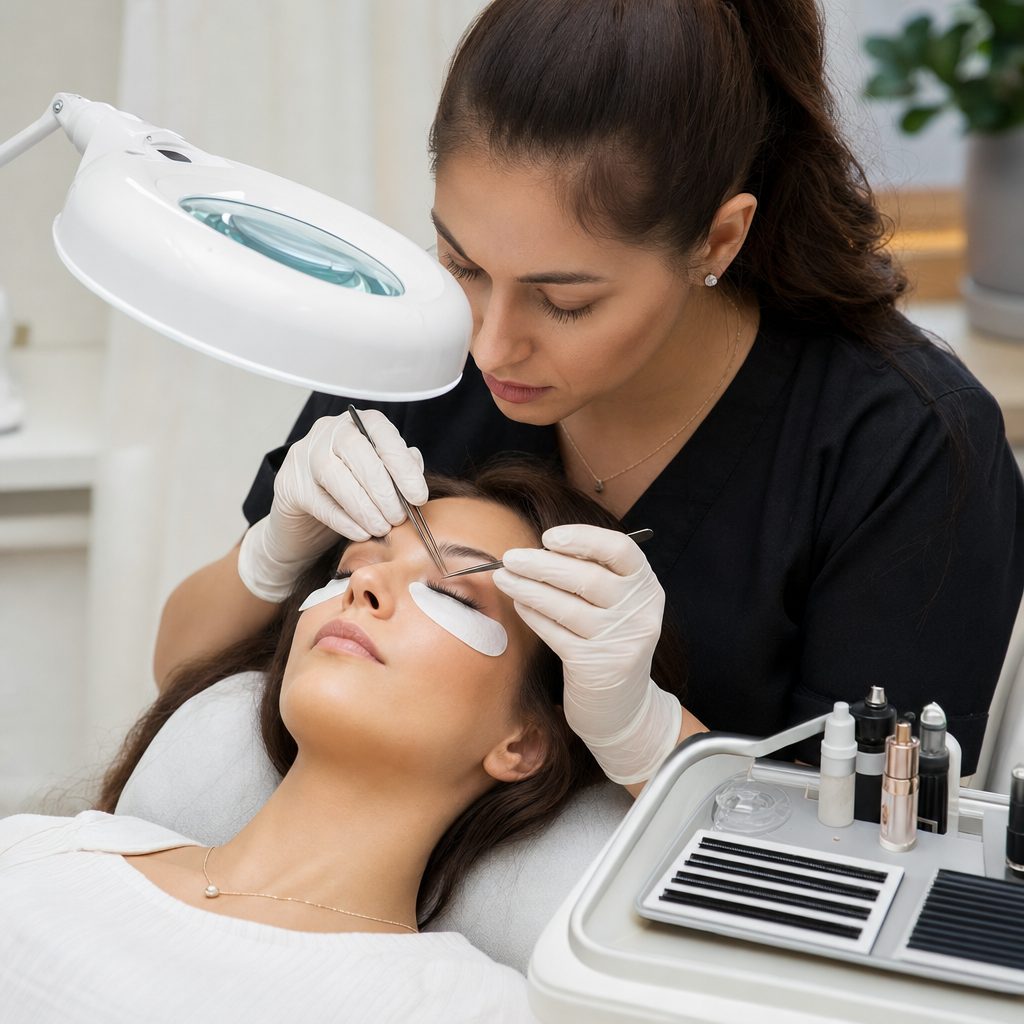
Eyelash extension work concentrates risk in the most fragile place on the body. Artists apply individual synthetic lashes with a cyanoacrylate adhesive a hair's breadth from the eye, and a slip of the tweezers, a drop of glue, or a fume cloud can produce a corneal abrasion, a chemical burn to the cornea or eyelid, conjunctivitis, or blepharitis. The U.S. Food and Drug Administration regulates lash adhesives as cosmetics and warns that allergic reactions, irritation, and injury in the eye area can be especially serious. When a client's eye is injured by the treatment itself, the liability lands squarely on the artist.
Here is the gap that surprises most lash pros: a standard general liability policy covers a client who slips on your studio floor, but it does NOT cover the injury caused by your service. The chemical burn, the adhesive allergy, the infection, the abrasion from an isolation error, the unhappy retention or fan-placement claim. Those are professional (treatment) liability exposures, and without professional liability you are personally exposed to the medical bills, the ophthalmology referrals, and the legal defense when a client says your application damaged their eye.
Booth renters and suite-based lash artists carry an extra trap. Many assume the salon's or studio's master policy protects them, but that policy almost always covers the entity, not the independent renter. Our commercial insurance programs are built so each lash artist carries professional and general liability in their own name, closing the gap before a claim ever tests it.
- Professional liability covers treatment-caused harm — chemical burns, allergic reactions to adhesive, infections, and corneal abrasions — that general liability excludes
- General liability handles slip-and-fall, premises, and bodily injury or property damage unrelated to the lash service itself
- Cyanoacrylate adhesive can cause cornea and eyelid chemical burns if liquid creeps or contacts the eye during application
- Allergic contact reactions to adhesive ingredients are among the most common and costly lash claims
- Isolation and tweezing errors can scratch the cornea or stick lashes together, leading to abrasion and infection claims
- Booth renters need their own policy — the studio's master policy typically does not extend to independent renters
- Adhesive fumes and formaldehyde by-products create both client-irritation and staff exposure liability
Core Coverages for Lash Artists and Lash Bars
A complete lash program layers several coverages so no single claim type is left exposed. Professional (treatment) liability is the centerpiece, responding to eye injuries, allergic reactions, burns, infections, and dissatisfied-result claims arising from classic, volume, hybrid, lift, and tint services. General liability sits beneath it for premises and non-treatment bodily injury, and the two are frequently bundled in a Business Owner's Policy (BOP) for a lash bar that also carries property and retail inventory.
Beyond the liability core, lash businesses should weigh product liability for adhesives, primers, lash serums, and aftercare retail sold to clients; commercial property and equipment coverage for lash beds, magnifying lamps, ring lights, tweezers, and inventory; and workers' compensation for any employed lash techs facing adhesive-fume exposure, repetitive-strain injury, and slips. Business interruption keeps income flowing if a fire, water loss, or covered event closes the studio. Because online booking systems and point-of-sale terminals store client and card data, cyber and PCI coverage is increasingly essential, and employee-dishonesty coverage protects against theft of retail or funds.
We tailor each program to how the business actually operates — solo suite, multi-chair lash bar, or mobile artist — and place it through the right beauty-friendly markets. Compare a full lash program with the rest of our commercial insurance options to see how the pieces fit together.
- Professional (treatment) liability for eye injuries, adhesive reactions, burns, infections, and botched-result claims
- General liability for slip-and-fall, premises, and non-treatment bodily injury or property damage
- Product liability for adhesives, primers, lash serums, and aftercare products sold or used on clients
- Commercial property and equipment for lash beds, lamps, ring lights, tools, and retail inventory
- Workers' compensation for employed lash techs exposed to fumes, repetitive strain, and slips
- Business interruption to replace lost income during a covered closure
- Cyber and PCI coverage for online booking platforms and card data, plus a BOP option for lash bars
Licensing, Compliance & Regulatory Considerations for Lash Artists
Eyelash extension licensing is set state by state, and the variation is dramatic. Most states require a cosmetology or esthetician license to perform lash extensions, some offer a dedicated lash or eyelash-extension specialty credential, and a handful require only training certificates or no license at all. Texas, for example, recognizes a specific eyelash-extension specialist license with its own defined scope of practice under the Texas Department of Licensing and Regulation, while neighboring states route the same service through cosmetology boards. Carriers expect proof that every artist holds the credential their state requires, and an uninsured or unlicensed practitioner can void coverage when a claim hits.
Compliance extends to sanitation and product safety. Adhesive fumes and the formaldehyde generated as cyanoacrylate cures fall under workplace chemical-safety expectations; OSHA's formaldehyde standard (1910.1048) sets exposure limits and labeling rules that make studio ventilation a real obligation, not a nicety. State health departments and cosmetology boards add rules on tool sterilization, single-use applicators, and station cleanliness.
Defensible documentation is your best friend in a dispute. Patch testing for adhesive sensitivity, written informed-consent and aftercare forms, contraindication screening for eye conditions, and a clean sanitation log all demonstrate the standard of care a professional-liability defense relies on.
- Licensing varies by state — cosmetology, esthetician, or a dedicated lash specialty credential, and a few states require none
- Carriers expect proof that every artist holds the credential their state mandates before binding coverage
- OSHA formaldehyde rules (1910.1048) govern adhesive-fume exposure and make studio ventilation a compliance issue
- State health departments and boards regulate tool sterilization, single-use applicators, and station sanitation
- Patch testing for adhesive sensitivity documents due diligence against allergic-reaction claims
- Written informed-consent and aftercare forms establish the standard of care for a defense
- Contraindication screening for blepharitis, dry eye, and recent eye surgery reduces avoidable injury claims
Why Lash Artists Choose The Allen Thomas Group
The Allen Thomas Group is an independent, family-owned insurance agency founded in 2003 and licensed in 28 states. We are not tied to any single insurer — we work for the lash artist, not the carrier, and that independence lets us shop your risk across 15+ A-rated companies to find the right professional-and-general-liability fit rather than the only one a captive agent can sell.
Beauty and personal-care insurance is a specialty, not a sideline, for us. We understand the difference between a solo lash suite, a multi-chair lash bar, and a mobile artist, and we know which carriers welcome cyanoacrylate-based eye-area work versus those that shy away from it. Our A+ BBB rating reflects how we advocate when a claim arises.
We also keep your coverage current. Lash businesses grow fast — adding techs, retail lines, a second location, or new services like lash lifts and tints — and our annual reviews make sure your limits and classifications keep pace so you are never under-covered when it counts.
- Independent and family-owned since 2003 — we represent the lash artist, never a single carrier
- Licensed in 28 states with access to 15+ A-rated insurance companies
- A+ BBB rating earned through real claims advocacy
- Beauty and personal-care insurance is a dedicated specialty, including eye-area treatment risk
- Programs tailored to solo suites, multi-chair lash bars, and mobile artists
- Access to carriers comfortable with cyanoacrylate adhesive and lash lift/tint chemistry
- Annual coverage reviews to match growth in staff, retail, locations, and services
How Much Does Eyelash Extension Insurance Cost?
Lash insurance is more affordable than most artists expect, because the policies are sized to a low-payroll, high-skill service business. A solo lash artist carrying combined professional and general liability often pays roughly $300 to $700 per year, and many beauty-program policies start near $25 to $40 per month for an individual practitioner. A lash bar with multiple chairs, employed techs, retail inventory, and a Business Owner's Policy will typically run higher — often $1,200 to $3,500 or more annually depending on payroll and property values.
Several factors move the premium. The services you offer matter — lifts and tints add chemical exposure on top of extensions — as do your number of chairs and operators, annual payroll, retail sales volume, claims history, and the condition and location of your premises. Higher liability limits, additional locations, and adding workers' compensation for employees all raise the figure, while clean claims history and strong documentation can lower it.
Because each carrier weighs these factors differently, the only reliable way to know your number is to compare. We quote your business across multiple A-rated markets so you see the actual range, not a single take-it-or-leave-it price.
- Solo lash artists often pay about $300–$700 per year for combined professional and general liability
- Individual beauty-program policies can start near $25–$40 per month
- Multi-chair lash bars with employees and retail commonly run $1,200–$3,500+ annually
- Services offered — adding lifts and tints increases chemical exposure and premium
- Number of chairs, operators, and annual payroll are primary rating factors
- Retail sales, claims history, premises condition, and chosen limits all affect cost
- Adding workers' comp and extra locations raises premium; clean records and documentation lower it
Eyelash Extension Risk Management & Coverage Considerations
The strongest defense against an eye claim is a disciplined treatment protocol. Patch-test new clients for adhesive sensitivity, screen for contraindications like active blepharitis, dry eye, conjunctivitis, or recent eye surgery, and refuse or modify service when the eye area is compromised. During application, careful isolation prevents lashes from sticking together and protects the cornea, while controlled adhesive amounts and proper under-eye padding reduce the risk of glue creep and chemical burns.
Sanitation and ventilation protect both clients and staff. Use single-use applicators, sterilize reusable tweezers, maintain a clean log, and ensure adequate airflow to keep adhesive fumes and formaldehyde by-products below irritating levels. Keep equipment — lamps, beds, and tools — maintained and documented, and store adhesives properly to preserve their integrity and safety.
Finally, manage the people around you. Any booth renter or independent contractor working in your space should carry their own professional and general liability and name your business as an additional insured, so their mistake does not become your claim. Keep informed-consent and aftercare forms on file for every client, train staff to current standards, and revisit emerging risks as new adhesives, serums, and techniques enter the market.
- Patch-test clients for adhesive sensitivity and screen for eye-condition contraindications before service
- Use careful isolation and controlled adhesive volume to prevent corneal abrasion and glue creep
- Apply under-eye padding and proper technique to keep adhesive away from the eye surface
- Maintain single-use applicators, sterilized tools, sanitation logs, and adequate ventilation for fumes
- Keep lamps, beds, and tools maintained and store adhesives to preserve safety and shelf life
- Require booth renters and contractors to carry their own coverage and name you as additional insured
- Keep informed-consent and aftercare forms on file and train staff to current safety standards
Frequently Asked Questions
Does general liability insurance cover an eye injury caused by an eyelash extension service?
No. General liability covers things like a client slipping in your studio, but it specifically excludes injuries caused by the lash service itself. A chemical burn, an adhesive allergy, an infection, or a corneal abrasion from your application is a treatment exposure that only professional (treatment) liability will cover. Carrying general liability alone leaves the biggest lash risk uninsured.
What coverage does a lash artist need at minimum?
At minimum, a lash artist should carry combined professional (treatment) liability and general liability. Professional liability responds to eye injuries, allergic reactions, burns, and botched-result claims from the service, while general liability covers premises and non-treatment incidents. From there, product liability, commercial property, workers' comp for employees, and cyber coverage are added based on how the business operates.
What is the difference between professional and general liability for lash businesses?
Professional liability covers harm caused by the lash service — a corneal abrasion, an adhesive allergic reaction, a chemical burn, or an infection. General liability covers harm unrelated to the service, such as a client tripping over a cord or a falling display. Lash artists need both because each one excludes what the other covers.
Do I need workers' compensation insurance for my lash studio?
If you employ lash techs or receptionists, most states require workers' compensation. It covers staff injuries such as adhesive-fume exposure, repetitive-strain from detailed close work, and slips. Solo artists with no employees generally are not required to carry it, though some choose a sole-proprietor option, and booth renters are typically responsible for their own coverage.
What happens if a client has an allergic reaction or chemical burn from the adhesive?
Allergic reactions and adhesive chemical burns are among the most common lash claims, and they fall under professional (treatment) liability. That coverage can respond to the client's medical costs and your legal defense if they pursue a claim. Patch testing, contraindication screening, and signed consent forms strengthen your defense and may reduce the severity of a claim.
Do I need product liability if I sell lash serums and aftercare products?
Yes. Once you sell adhesives, lash serums, cleansers, or aftercare retail to clients, you take on product liability for harm those products may cause. This is separate from the treatment exposure and is important for any lash bar with a retail shelf. It is often bundled into a Business Owner's Policy alongside property and general liability.
What drives the cost of eyelash extension insurance?
Premium is driven by the services you offer (lifts and tints add chemical exposure), your number of chairs and operators, annual payroll, retail sales, claims history, premises condition and location, and the liability limits you choose. Adding employees with workers' comp or a second location raises cost, while a clean claims record and strong documentation help lower it.
I rent a booth in a lash bar — am I covered under the studio's policy?
Usually not. A studio's master policy covers the business entity, not independent booth renters, so your service mistakes are not its responsibility. As a renter you should carry your own professional and general liability in your name. Many landlords also require you to name the studio as an additional insured, which a personal policy makes easy to arrange.
Protect Your Lash Business Before the Next Claim
Let The Allen Thomas Group compare eyelash extension insurance from 15+ A-rated carriers to match your exact services, studio, and team. Call us at (440) 826-3676 for an independent, no-pressure review of your professional and general liability coverage.