
Permanent Makeup & Microblading Insurance
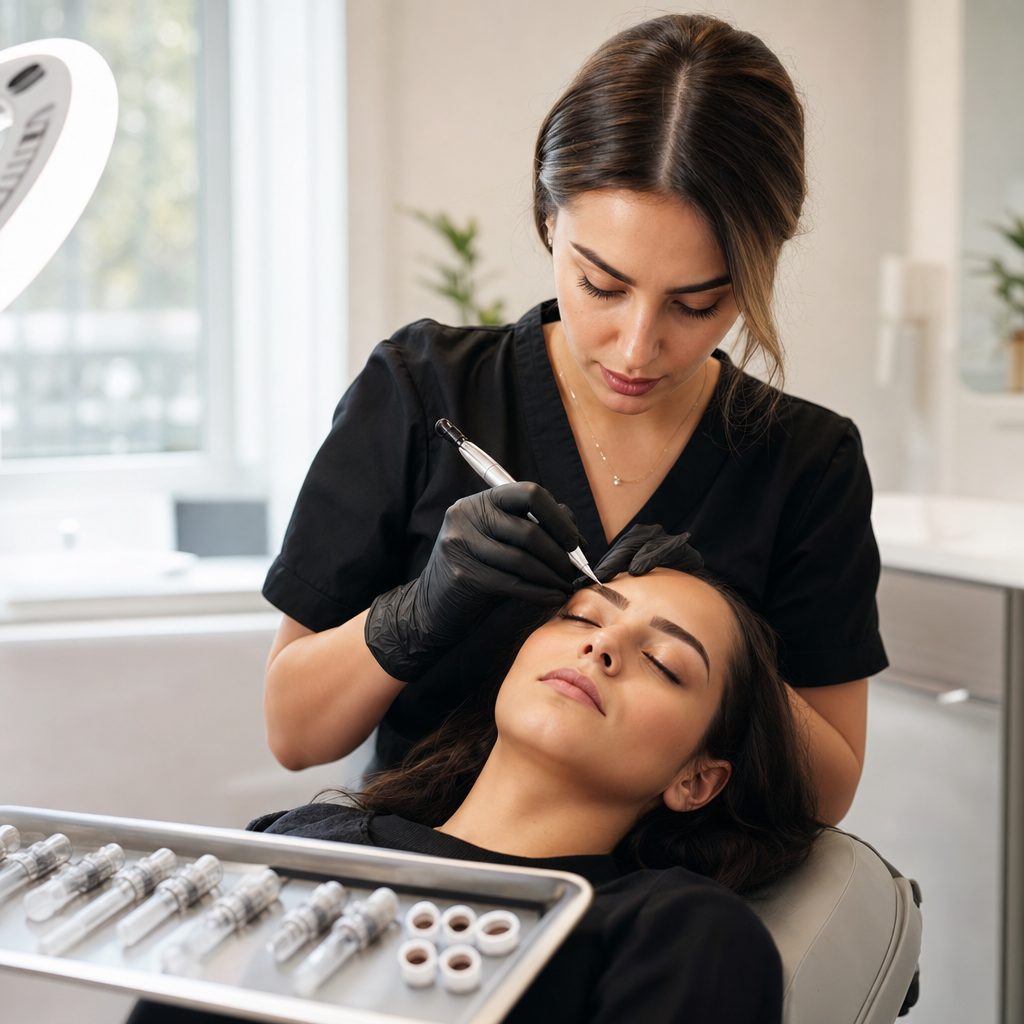
Microblading, powder brows, lip blush, and permanent eyeliner are cosmetic tattooing — and the standard salon or beauty policy most permanent makeup artists buy quietly excludes the very procedures they perform. We help PMU professionals build coverage that treats the needle, the pigment, and the result as the real exposures they are.
Carriers We Represent
Why Permanent Makeup Artists Need Specialized Insurance
Permanent makeup is not makeup — it is tattooing. Microblading, powder and ombré brows, lip blush, and permanent eyeliner all deposit pigment into the skin with a needle or blade, which means a PMU artist faces the same bloodborne and infection exposures as a body-art tattooist, not the exposures of a makeup counter. The single most dangerous assumption in this trade is that a general salon, esthetician, or beauty policy covers the work. A standard general liability policy responds when a client trips over a cord in your lobby; it almost never responds to an injury caused by the procedure itself — a cross-contamination infection, an allergic reaction to pigment, scarring or a keloid, a botched brow, or a regret claim. That treatment exposure is professional liability, and most generic beauty policies either exclude tattooing and permanent cosmetics outright or were never underwritten to cover an instrument that breaks the skin.
Because the work breaks the skin, OSHA treats a PMU studio with employees as an occupational-exposure workplace under the Bloodborne Pathogens standard, 29 CFR 1910.1030 — the same standard OSHA has formally confirmed applies to tattooing and, specifically, to reusable microblading tools — requiring an exposure control plan, hepatitis B vaccination offers, sharps handling, PPE, and annual training. The clinical risks are real and FDA-documented: infection, allergic and granulomatous reactions, scarring, keloid formation, and even swelling or burning during an MRI, as the FDA lists in its Tattoos & Permanent Makeup fact sheet. Any one of those outcomes can become a six-figure claim from a client whose face is the canvas.
The financial picture makes the gap urgent. Brow, lip, and eyeliner work sits on the most visible part of a person's body, so a poor result, a pigment migration, or a chemical-style reaction tends to produce high-severity claims — emotional-distress and corrective-procedure demands that dwarf the cost of the original service. PMU artists who rely on a borrowed salon policy or a thin add-on routinely discover the exclusion only after a claim is denied. We build coverage around purpose-built cosmetic-tattoo and permanent-cosmetics carriers, drawing on broad commercial insurance programs so the procedure itself, the pigment, and the premises are all actually insured.
- General liability covers a lobby slip-and-fall but typically excludes the procedure injury — infection, reaction, scarring — which is professional liability territory
- Microblading, powder/ombré brows, lip blush, and permanent eyeliner are intradermal tattooing, regulated as body art rather than as cosmetics
- Many generic salon, esthetician, and beauty policies explicitly exclude tattooing and permanent cosmetics
- Bloodborne pathogen exposure (HBV, HCV, HIV) from needles, blades, and sharps is a defining risk of the trade
- Botched-result and pigment-regret claims on a client's face carry high severity and emotional-distress demands
- FDA documents infection, allergic/granulomatous reaction, keloids, scarring, and MRI swelling/burning as recognized risks
- Booth renters and mobile PMU artists are usually not covered by the studio owner's policy and need their own
Core Coverages for Permanent Makeup & Microblading Artists
A defensible PMU program layers several coverages so no single claim type falls through. Professional liability (also called treatment or malpractice coverage) is the centerpiece — it responds to allegations that the procedure caused harm: a brow infection, an allergic or granulomatous reaction to pigment, asymmetry or a botched result, scarring, or a client's claim of negligent technique. General liability sits underneath it for third-party bodily injury and property damage on your premises, and the two are distinct policies for a reason. Product liability matters more than PMU artists expect, because you are introducing pigment into a client's body and frequently retail aftercare products; if a pigment is contaminated or a client reacts, product coverage and your professional liability work together. Carriers buy and sell these through standard commercial insurance structures, but the wording must be endorsed for cosmetic tattooing.
Commercial property and equipment coverage protects your studio build-out, pigments and inventory, machines, sterilization equipment such as an autoclave, furniture, and that expensive procedure chair and lighting. Workers' compensation is required in most states once you have employees and is the policy that answers a needlestick, a sharps injury, repetitive-strain from precision blade work, or a chemical exposure on your staff — it is not optional and is separate from your liability lines. Business interruption replaces income if a fire, water loss, or covered shutdown closes the studio. Cyber and PCI coverage addresses the booking platform and stored card data that every modern PMU studio runs on.
Several specials are specific to this trade. A bloodborne-pathogen / sharps endorsement and post-exposure response align your coverage with your OSHA obligations. Booth renters and independent PMU artists should carry their own individual professional and general liability rather than assuming the studio's policy extends to them — it almost never does. Where your services brush against the clinical line — saline or laser-style removal, scalp micropigmentation marketed as medical, or any physician-supervised procedure — those belong on a separate clinical policy, and we scope them out of the cosmetic program and point you to the right place.
- Professional / treatment liability for infection, reaction, scarring, asymmetry, and botched-result claims from the procedure itself
- General liability for third-party slip-and-fall, premises, and non-treatment bodily injury or property damage
- Product liability for pigments deposited in the skin and retailed aftercare products that trigger a reaction
- Commercial property & equipment for build-out, pigments, machines, autoclave, procedure chair, lighting, and inventory
- Workers' compensation for needlesticks, sharps injuries, repetitive strain, and chemical exposure once you have staff
- Business interruption, plus cyber/PCI for the online booking system and stored client card data
- Bloodborne-pathogen / sharps endorsement and individual booth-renter policies for independent PMU artists
Licensing, Compliance & Regulatory Considerations for Permanent Makeup Artists
The most important compliance distinction for PMU artists is who regulates them. Because permanent makeup is intradermal tattooing, it is most often governed by the state or local HEALTH DEPARTMENT under body-art and tattoo regulations — typically requiring a body-art practitioner permit and an inspected, permitted establishment — rather than by the cosmetology or esthetician board. A number of states do route PMU through the cosmetology or a tattoo-specific board, and a few split jurisdiction, so the exact permit, training hours, and bloodborne-pathogen certification depend entirely on where you operate. Treating PMU as "just esthetics" and skipping the body-art permit is one of the most common and costly compliance errors in the field.
On the federal side, the FDA classifies the inks used in permanent makeup as cosmetics and considers the pigments to be color additives — and notes that no color additives are currently approved for injection into the skin, while it has identified microbial contamination in a meaningful share of tattoo and PMU inks on the U.S. market. That regulatory reality elevates pigment sourcing, lot tracking, and recall awareness from a nicety to a documented risk-control practice. OSHA layers in the workplace obligations of the Bloodborne Pathogens standard for any studio with employees: a written exposure control plan, sharps containers, PPE, HBV vaccination, and annual training.
Operationally, sanitation and infection control are the backbone of both compliance and insurability. Single-use needles and cartridges, an autoclave or fully single-use workflow, surface decontamination between clients, and proper sharps disposal are expected by both regulators and carriers. Informed-consent forms, contraindication screening (pregnancy, blood thinners, keloid history, active skin conditions), and patch testing where indicated are documentation that protects you in a claim. The Society of Permanent Cosmetic Professionals (SPCP) is the recognized industry body whose CPCP certification and guidelines many carriers view favorably.
- PMU is usually regulated as TATTOOING by the state/local health department — a body-art permit, not the cosmetology board
- Some states route PMU through cosmetology or a tattoo-specific board; confirm your jurisdiction's exact requirements
- Health-department establishment permits and inspections apply to the studio, not only the practitioner
- FDA classifies PMU inks as cosmetics with color-additive pigments — none approved for injection into skin
- OSHA Bloodborne Pathogens standard requires an exposure control plan, sharps handling, PPE, HBV vaccine, and annual training
- Single-use needles/cartridges, autoclave or fully disposable workflow, and sharps disposal are baseline expectations
- SPCP / CPCP certification, informed-consent forms, contraindication screening, and patch testing support both compliance and claims defense
Why Permanent Makeup Artists Choose The Allen Thomas Group
The Allen Thomas Group is an independent, family-owned insurance agency founded in 2003, licensed in 28 states and built on an advisory relationship rather than a one-time transaction. We are not a captive of a single carrier, so our loyalty is to the PMU artist in front of us — we represent your interests when we shop the market and again when a claim is in dispute. For a trade where the wrong policy form silently excludes the actual work, that independence is the difference between a covered claim and a denied one.
Because we are independent, we compare 15+ A-rated carriers, including those that specifically underwrite cosmetic tattooing and permanent cosmetics, to find wording that actually names microblading, powder brows, lip blush, and permanent eyeliner as covered procedures. We read the exclusions, confirm the professional-liability trigger fits intradermal work, and make sure pigment and product exposures are addressed rather than assumed away. Our A+ BBB rating reflects how we handle the relationship after the policy is bound.
We also conduct annual reviews, because a PMU practice changes — you add lip blush, hire your first technician, bring on booth renters, open a second chair, or start retailing aftercare — and each change moves your risk. We adjust limits, add workers' compensation when you staff up, verify booth renters carry their own coverage and name you as additional insured, and keep your program aligned with how you actually operate.
- Independent and family-owned since 2003 — advocacy for the PMU artist, not allegiance to one carrier
- Licensed across 28 states with access to 15+ A-rated carriers, including cosmetic-tattoo and permanent-cosmetics markets
- We read the exclusions to confirm microblading, brows, lip blush, and eyeliner are named as covered procedures
- A+ BBB rating reflecting how we handle the relationship and stand with you on claims
- Annual policy reviews that track new services, new hires, booth renters, and new locations
- Help structuring booth-renter and contractor coverage with additional-insured status to protect the studio
- Plain-English guidance on where cosmetic work ends and clinical/medical coverage must take over
How Much Does Permanent Makeup & Microblading Insurance Cost?
Premiums vary with the risk you actually present, not a flat rate. The biggest driver is the menu of services: pure brow microblading sits at the lower end, while lip blush, permanent eyeliner near the eye, saline lightening, and any removal work raise the treatment exposure and the premium. Whether you operate solo, rent a booth, or employ technicians changes the picture significantly, because payroll and the number of operators or chairs drive both liability and workers' compensation. Claims history, your retail sales of aftercare products, your premises and location, and your limits round out the rating.
As general planning ranges, a solo PMU artist can often secure professional plus general liability for roughly $500 to $1,500 per year, with many individual permanent-cosmetics policies landing in the few-hundred-dollar range for entry-level brow-only practitioners. A studio with employees, retail, and a build-out is more commonly in the $1,500 to $4,000+ range once general liability, professional liability, property, and workers' compensation are combined, and a Business Owner's Policy can bundle property with liability efficiently. Workers' compensation is priced separately on payroll once you have staff. These are illustrative; your actual numbers depend on services, payroll, and history.
The goal is never the cheapest certificate — it is the policy that pays when a brow infection or a pigment-reaction claim lands. A slightly higher premium for a form that genuinely covers cosmetic tattooing is far cheaper than a denied six-figure claim on a policy that excluded the work. We quote across multiple carriers so you can see the real trade-off between price and the coverage that matters.
- Service menu is the top driver — brow microblading rates lower than lip, eyeliner, saline lightening, or removal
- Solo vs. booth renter vs. employer status shifts premium through payroll and number of operators/chairs
- Solo professional + general liability often runs roughly $500–$1,500/year; entry brow-only individual policies can be lower
- Studios with staff, retail, and build-out commonly run $1,500–$4,000+ once all lines are combined
- Workers' compensation is rated separately on payroll once you employ technicians
- Claims history, retail sales, premises, location, and chosen limits all affect the final number
- A BOP can bundle property and liability efficiently for a studio with a fixed location
Permanent Makeup Risk Management & Coverage Considerations
Strong risk management lowers both claims and premiums, and for PMU it starts at the needle. A fully single-use or properly autoclaved sterilization workflow, single-use cartridges and blades, surface decontamination between every client, and compliant sharps disposal are the practices that prevent the infection and cross-contamination claims carriers fear most. Documenting your bloodborne-pathogen protocol and aligning it with your OSHA exposure control plan is risk management and compliance in one motion.
The paper trail is just as protective as the sterile field. Thorough informed-consent forms, contraindication screening for pregnancy, blood thinners, keloid history, and active skin conditions, patch testing where indicated, and clear aftercare instructions are exactly what a defense attorney needs when a client alleges a botched result or a reaction. Sourcing pigment from reputable suppliers, tracking lot numbers, and monitoring FDA recall notices addresses the contamination and color-additive risk directly. Ongoing training, current licensing or body-art permits, and SPCP-aligned standards keep your technique — and your insurability — current.
Finally, manage the people around you. If you rent booths or use contract PMU artists, require each of them to carry their own professional and general liability and to name your business as an additional insured — without it, their mistake can become your claim. Watch the emerging risks too: marketing that drifts into medical or clinical promises, new modalities like scalp micropigmentation or saline removal, and the cyber exposure of online booking and stored payment data. We review these with you so coverage tracks the practice as it grows.
- Use single-use needles/cartridges/blades or a validated autoclave workflow with surface decontamination between clients
- Maintain a written OSHA exposure control plan, sharps disposal, PPE, and annual bloodborne-pathogen training
- Require informed-consent forms, contraindication screening (pregnancy, blood thinners, keloid history), and patch testing where indicated
- Source pigments from reputable suppliers, track lot numbers, and monitor FDA ink recalls
- Keep licensing, body-art permits, and SPCP-aligned training current; document continuing education
- Require booth renters and contract artists to carry their own coverage and name your studio as additional insured
- Manage emerging risks — medical-claim marketing creep, new modalities, and cyber/PCI exposure from booking and card data
Frequently Asked Questions
Does general liability cover a microblading or permanent makeup injury?
Usually not. General liability is designed for third-party incidents like a client slipping in your lobby. An injury caused by the procedure itself — an infection, an allergic or granulomatous reaction to pigment, scarring, or a botched brow — is a treatment claim that general liability typically excludes. That exposure belongs to professional liability, so PMU artists need both, and the professional policy must be endorsed for cosmetic tattooing.
What insurance does a permanent makeup artist need at minimum?
At a minimum, professional liability (for the procedure) and general liability (for premises and third-party incidents), and many carriers package them together. Add product liability because you deposit pigment into skin and may retail aftercare, commercial property for your equipment and studio, and workers' compensation once you have employees. Booth renters and mobile artists should carry their own individual policy rather than relying on a studio's coverage.
What is the difference between professional liability and general liability for PMU?
General liability covers bodily injury and property damage to third parties on your premises — the slip-and-fall, the damaged property. Professional liability, sometimes called treatment or malpractice coverage, responds to harm caused by the service you performed, such as an infection, a pigment reaction, scarring, or a claim that your technique produced a poor result. They are separate policies, and a permanent makeup artist genuinely needs both.
Do I need workers' compensation for my permanent makeup studio?
In most states, yes, once you have employees. Workers' compensation covers your staff for work injuries — a needlestick, a sharps injury, repetitive strain from precision blade work, or a chemical exposure — and is separate from your liability coverage. Requirements vary by state and by how workers are classified, so confirm your state's threshold; if you are solo with no employees, the rules differ but you still carry the bloodborne risk personally.
What happens if a client has an allergic reaction or infection from my work?
That is exactly the scenario professional liability is built for. If a client develops an infection, an allergic or granulomatous reaction to the pigment, or scarring and alleges your procedure caused it, your professional/treatment liability coverage responds to defense costs and damages. A general liability policy alone would likely deny it as a treatment claim, which is why the gap between the two matters so much for PMU artists.
Do I need product liability if I use and sell pigments and aftercare products?
Yes. Permanent makeup deposits pigment into a client's body, and the FDA has documented microbial contamination and unapproved color additives in tattoo and PMU inks. If a contaminated or reactive pigment causes harm, or a retailed aftercare product injures a client, product liability and your professional liability work together. Tracking lot numbers and monitoring FDA recalls strengthens both your safety and your claim position.
What drives the cost of permanent makeup insurance?
The main drivers are the services you offer (brow microblading rates lower than lip, eyeliner, saline lightening, or removal), whether you are solo, a booth renter, or an employer, your payroll and number of operators, your claims history, retail sales, premises, location, and chosen limits. A solo artist's professional plus general liability often runs roughly $500 to $1,500 per year, while a staffed studio with property and workers' comp typically runs higher.
Is permanent makeup regulated by the cosmetology board or the health department?
Most often by the state or local health department, because permanent makeup is intradermal tattooing and is regulated under body-art rules — typically requiring a body-art practitioner permit and a permitted, inspected establishment — rather than by the cosmetology or esthetician board. Some states route it through cosmetology or a tattoo-specific board, so requirements vary by jurisdiction. Assuming it is only esthetics and skipping the body-art permit is a common and costly mistake.
Protect the Work You Put on Someone's Face
Whether you specialize in microblading, powder brows, lip blush, or permanent eyeliner, we will compare 15+ A-rated carriers to find a policy that actually covers cosmetic tattooing instead of quietly excluding it. Call The Allen Thomas Group at (440) 826-3676 for an advisory review of your permanent makeup coverage.