
After-School Program Insurance
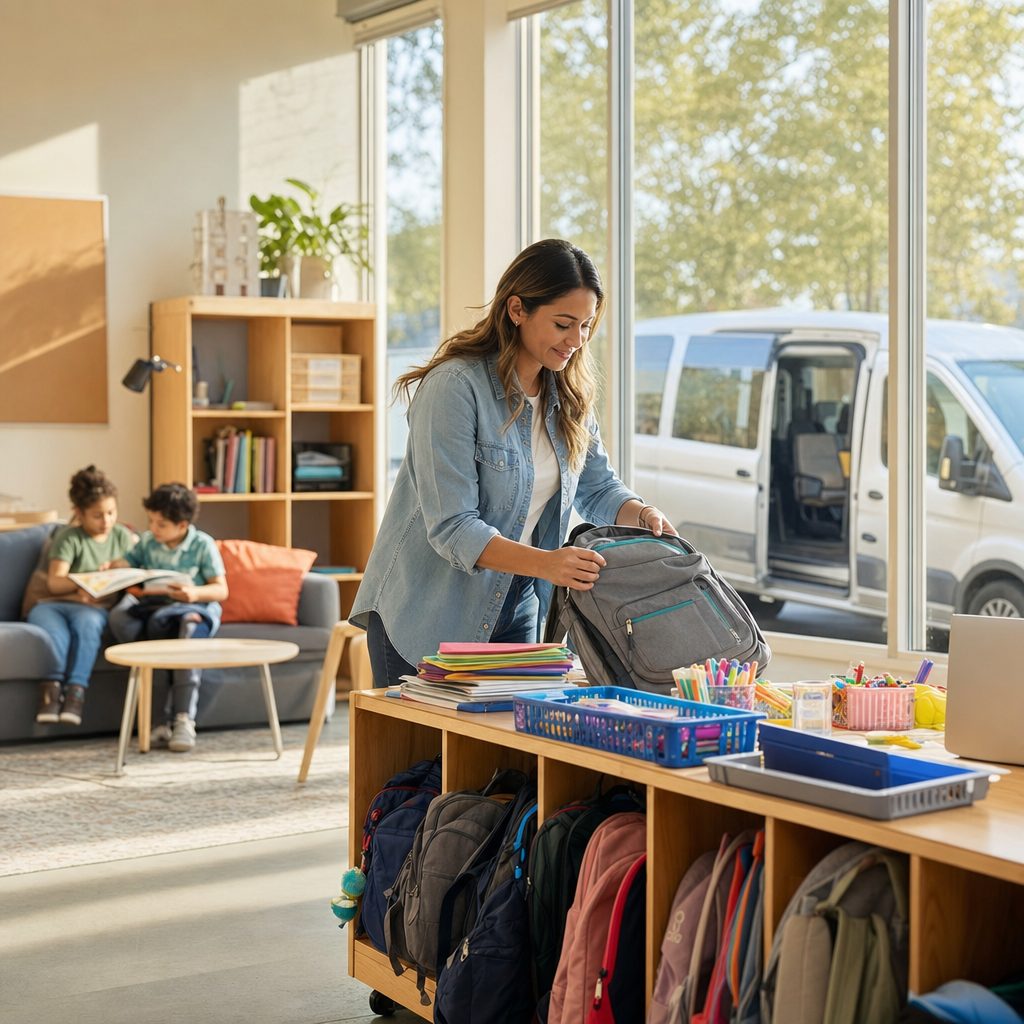
After-school programs live on the road as much as in the classroom shuttling kids from school campuses, ferrying them to fields, museums and parks, and supervising a rotating mix of homework help, sports and enrichment. That blend of transportation, minors and varied activity creates a risk profile that off-the-shelf general liability rarely covers in full. We build programs that close the auto, abuse and participant-injury gaps before a claim finds them.
Carriers We Represent
Why After-School Programs Need Specialized Insurance
An after-school program's single largest and most under-insured exposure is transportation. Programs routinely pick children up from one or several school campuses, transport them to a base site, and then move them again for field trips, sports practices and community outings. Whenever a staff member or volunteer uses a personal vehicle to move children for the program, their own auto policy typically excludes business use, leaving an uninsured gap that hired-and-non-owned auto (HNOA) coverage exists to fill, alongside any owned vans or buses the program operates. Field-trip days specifically concentrate this risk: more vehicles, more drivers, unfamiliar routes and a busload of minors.
Layered onto the auto exposure is the defining peril of any minors-facing program: abuse and molestation (A&M). Standard general liability and BOP forms frequently exclude A&M outright or sublimit it to as little as $25,000, which is not meaningful protection against the cost of defending and resolving a single allegation. Because after-school programs put adults in repeated, often one-on-one contact with children, dedicated A&M limits are effectively non-negotiable. The third pillar is participant injury across the program's varied activities sports, crafts, playground time, swim and field trips where base GL can dispute coverage for the very activities the program is built around. The right structure ties these together through tailored commercial insurance programs rather than a generic small-business package.
Compliance posture complicates underwriting further. Many states exempt school-age programs especially those operated on school property or under contract with an accredited school from the childcare licensing rules that govern daycare centers, per Childcare.gov. That exemption removes a regulatory floor that carriers often rely on for safety baselines, so insurers scrutinize a program's own background-check, supervision and transportation protocols more closely when no state agency is doing it for them.
- Hired-and-non-owned auto fills the gap when staff or volunteers drive personal vehicles to transport children for the program
- Field-trip days multiply auto risk with more drivers, unfamiliar routes and a vehicle full of minors
- Owned vans and buses require commercial auto with passenger-appropriate limits, not personal lines
- Abuse & molestation is frequently excluded or sublimited as low as $25,000 in base GL and BOP forms
- Repeated adult-child contact makes dedicated A&M limits effectively mandatory for any minors-facing program
- Participant injury across sports, crafts, playground and swim activities can be disputed under base general liability
- License-exempt school-age programs lose a regulatory safety floor, prompting tighter carrier scrutiny of internal protocols
Core Coverages for After-School Programs
Because transportation leads the risk profile, the program structure starts there. Commercial auto covers any owned vans or buses, while hired-and-non-owned auto extends liability protection to the personal and rented vehicles staff and volunteers use for pickups and field trips a coverage most programs assume they already have and usually do not. We size these limits to passenger counts and field-trip frequency, and pair them with umbrella capacity, since a single multi-child auto loss can exceed primary limits quickly.
Abuse and molestation coverage is written as a dedicated grant or endorsement with real limits, not the token sublimit buried in a packaged policy. Around it sits the broader stack: general liability for premises and third-party bodily injury; participant or named accident coverage so the program's own activities are clearly covered; commercial property for the facility, computers, sports gear and program equipment; and workers' compensation for paid staff. Programs operating as nonprofits or under a board should add directors & officers and employment practices liability, and any program collecting student records should consider cyber and student-data coverage. We assemble this through commercial insurance tailored to how the specific program actually operates.
Student accident coverage is a common add-on that pays medical costs regardless of fault a practical goodwill tool that also reduces liability friction with families. Business interruption can keep payroll and rent funded if a covered property loss closes the site, which matters for programs running on thin margins and grant cycles.
- Commercial auto for owned program vans and buses, sized to passenger capacity
- Hired-and-non-owned auto (HNOA) for staff and volunteer personal vehicles used on pickups and field trips
- Dedicated abuse & molestation limits rather than a packaged $25K sublimit
- General liability for premises, slip-and-fall and third-party bodily injury
- Participant / named accident coverage so the program's own sports and activities are covered
- Commercial property for the facility, computers, sports equipment and program supplies
- Workers' compensation, plus D&O, EPLI, cyber/student-data and an umbrella for total-program protection
Licensing, Compliance & Regulatory Considerations for After-School Programs
Whether an after-school program needs a childcare license depends heavily on the state and how the program is structured. Per Childcare.gov, some school-age programs must be licensed by the state childcare agency, while others are legally license-exempt because they are operated or monitored by a public school, a municipality, or another government body. For example, Texas exempts before- and after-school programs operated by an accredited educational facility or by an entity under contract with that facility, according to Texas Health and Human Services, and several states extend similar exemptions to programs run on school property for enrolled students.
Critically, license-exempt does not mean rule-free. Exempt programs are typically still expected or required to meet health-and-safety basics staff background checks, fire-safety compliance, sanitation and supervision standards even though no childcare agency inspects them. Programs operated under contract with a school district or receiving Child Care and Development Fund (CCDF) subsidies usually face affiliation-agreement requirements that name specific liability limits, A&M coverage and additional-insured status the district as a condition of operating on campus or accepting subsidized children.
From an underwriting standpoint, this matters because carriers calibrate to the safety floor a regulator would otherwise enforce. When a program is exempt, the program's own written policies become the de facto standard, and insurers reward documented background-check, two-adult-supervision and transportation protocols with better terms. We help programs map their licensing status, satisfy any district affiliation-agreement insurance mandates, and present their safety program to carriers in the way underwriters expect to see it.
- Licensing turns on state law and structure programs on school property or under school contract are often exempt
- Texas exempts before/after-school programs run by or contracted to accredited educational facilities
- Exempt programs still typically owe background checks, fire safety, sanitation and supervision standards
- District affiliation agreements commonly mandate specific liability limits, A&M coverage and additional-insured status
- CCDF-subsidized programs face added federal and state health-and-safety expectations
- Carriers calibrate pricing to the safety floor exemption removes, so internal policies become the standard
- We map licensing status and align coverage to any district contract and subsidy requirements
Why After-School Programs Choose The Allen Thomas Group
The Allen Thomas Group is an independent, family-owned insurance agency founded in 2003 and licensed in 28 states. We are not tied to a single carrier we represent more than 15 A-rated insurers, including markets that specialize in youth-serving and education risks, and we shop your program across them to assemble the right structure rather than the most convenient one. That independence matters most on the coverages after-school programs get wrong: hired-and-non-owned auto and meaningful abuse-and-molestation limits.
Our advisory model is built for organizations whose exposures shift with each enrollment period and field-trip calendar. We conduct annual coverage reviews to make sure your auto limits track your transportation volume, your A&M limits reflect current standards, and your participant coverage matches the activities you actually run. When a district affiliation agreement changes its insurance requirements, we adjust your program and issue the certificates without scrambling.
We hold an A+ rating with the Better Business Bureau, and we work as your advocate at claim time and renewal not as an order-taker. For an after-school program juggling transportation, minors and a tight budget, that hands-on, consultative relationship is the difference between a policy on paper and a program that actually responds when something goes wrong.
- Independent, family-owned agency founded in 2003, licensed in 28 states
- Access to 15+ A-rated carriers, including education and youth-serving specialty markets
- Deep focus on the coverages programs miss hired-and-non-owned auto and real A&M limits
- Annual reviews that track auto limits to transportation volume and coverage to actual activities
- Fast certificates and adjustments when a district affiliation agreement changes its requirements
- A+ BBB rating and a genuine advocacy relationship at renewal and claim time
- Consultative, never transactional advice built around how your program actually operates
How Much Does After-School Program Insurance Cost?
After-school program premiums are driven primarily by enrollment, the number of children transported, the vehicles in use and the mix of activities offered. A small site-based program of 30 to 50 children with no owned vehicles and homework-focused enrichment will sit at the low end. A larger multi-site program transporting hundreds of children daily, operating owned vans or buses, and running sports, swim and frequent field trips will pay considerably more because each of those factors adds exposure carriers price for.
As rough planning figures, a modest program might budget roughly $1,500 to $4,000 per year for general liability and core coverage, with dedicated abuse-and-molestation limits often adding several hundred to a few thousand dollars depending on limit size and enrollment. Commercial auto for an owned van or bus commonly runs $2,000 to $5,000+ per vehicle annually, and hired-and-non-owned auto is typically a modest add-on relative to the gap it closes. Workers' compensation tracks payroll. Actual numbers vary by state, claims history and limits, so treat these as ranges, not quotes.
The largest swing factors are transportation footprint and claims/abuse history. Owned vehicles and heavy field-trip schedules raise auto cost; any prior A&M or injury claim, or weak documented safety protocols, raises everything. Conversely, strong background-check, supervision and transportation policies frequently earn credits we work to capture.
- Enrollment and the number of children transported are primary premium drivers
- Owned vans and buses and field-trip frequency raise commercial auto cost the most
- Core GL and program coverage often ranges roughly $1,500-$4,000/year for a smaller program
- Dedicated A&M limits typically add several hundred to a few thousand dollars by limit and enrollment
- Commercial auto commonly runs $2,000-$5,000+ per owned vehicle per year
- Activity mix sports, swim and aquatics cost more than homework-only enrichment
- Documented background-check, supervision and transportation protocols can earn meaningful credits
After-School Program Risk Management & Coverage Considerations
The most important loss-prevention work in an after-school program is the abuse-prevention program behind the A&M coverage. Carriers expect and credit documented background checks for all staff and volunteers, two-adult rules that eliminate one-on-one unsupervised contact, clear reporting protocols and ongoing training. Because many programs are license-exempt and not inspected by a childcare agency, these written policies are what underwriters use to judge the risk make them real and make them documented.
Transportation safety is the second pillar, given the program's road exposure. That means verified driver records and license checks for anyone transporting children, defined supervision ratios on vehicles and at off-site destinations, signed parent permission and participation agreements for field trips, and clear emergency and head-count procedures. Waivers and participation agreements do not eliminate liability, but they document informed consent and reinforce the case that the program managed its activities responsibly.
Beyond people and vehicles, programs should maintain appropriate supervision ratios across all activities, vet and credential instructors for specialized programming (swim, sports, STEM), keep emergency action and medical-authorization plans current, and protect the student data they collect. As programs add online enrollment, parent apps and digital sign-in, FERPA-aligned data practices and cyber coverage become part of the risk picture rather than an afterthought.
- Background checks for all staff and volunteers, documented and refreshed on a set cycle
- Two-adult rules and supervision ratios that eliminate unsupervised one-on-one contact with children
- Verified driver records and license checks for everyone transporting children
- Signed parent permission and participation agreements for field trips and higher-risk activities
- Emergency action plans, head-count procedures and medical-authorization forms kept current
- Instructor credentialing for specialized activities such as swim, sports and STEM
- FERPA-aligned student-data handling and cyber coverage as enrollment and sign-in go digital
Frequently Asked Questions
Does general liability cover abuse or molestation claims at an after-school program?
Usually not in a meaningful way. Standard general liability and business owners policies frequently exclude abuse and molestation entirely or cap it at a sublimit as low as $25,000, which does not cover the real cost of defending a single allegation. Any program serving minors should carry dedicated abuse and molestation limits as a separate grant or endorsement, not rely on whatever token amount may be buried in a packaged policy.
Are staff and volunteers covered when they drive their own cars to transport kids?
Not automatically. Most personal auto policies exclude business use, so a staff member or volunteer driving children for the program may have no coverage in an accident. Hired-and-non-owned auto (HNOA) coverage is what fills that gap, providing liability protection for personal and rented vehicles used for program purposes. This is one of the most common and most dangerous coverage gaps for after-school programs.
Does my after-school program need a childcare license?
It depends on your state and how the program is structured. Many states exempt school-age programs from childcare licensing when they operate on school property, are run by a public school or municipality, or operate under contract with an accredited school. Even when exempt, programs are usually still expected to meet health-and-safety basics like background checks, fire safety and supervision. Check your specific state childcare licensing agency, because the rules vary widely.
What insurance is required for field trips?
Field trips concentrate transportation risk, so they hinge on your auto coverage. You need commercial auto for any owned vehicles and hired-and-non-owned auto for staff or volunteer vehicles, ideally backed by an umbrella because a multi-child accident can exceed primary limits. Beyond auto, signed parent permission and participation agreements, defined supervision ratios and clear head-count procedures both manage the risk and support your liability position.
What is the difference between general liability and participant accident coverage?
General liability responds when the program is alleged to be at fault for a third-party injury, such as a slip and fall on the premises. Participant or named accident coverage pays medical costs for a child injured during program activities regardless of fault. Because base GL can dispute coverage for injuries arising from the program's own sports and activities, participant coverage closes that gap and reduces friction with families.
Do I need workers' compensation for an after-school program?
If you have paid employees, almost every state requires workers' compensation. It covers medical care and lost wages for staff injured on the job, including injuries that happen while supervising children or during transportation. Requirements and thresholds vary by state, and how you classify and pay staff drives the premium, so it should be coordinated with the rest of your program.
What factors most affect my after-school program insurance cost?
The biggest drivers are enrollment, how many children you transport, the vehicles you operate, and your activity mix. Owned vans or buses and frequent field trips raise commercial auto cost the most, while sports, swim and aquatics cost more than homework-only enrichment. Prior abuse or injury claims and weak safety documentation raise premiums, while documented background-check, supervision and transportation protocols can earn credits.
If my program runs on school property and is license-exempt, why does the school still require insurance?
Districts almost always require an affiliation or facility-use agreement that mandates specific liability limits, abuse and molestation coverage, and naming the district as an additional insured as a condition of operating on campus. The licensing exemption only addresses childcare regulation; it does not remove the contractual insurance the school requires to manage its own exposure. We help align your program to those affiliation-agreement requirements and issue the certificates.
Protect Your After-School Program From the Road to the Classroom
Transportation, minors and varied activities create gaps that generic policies miss let us build coverage around how your program actually runs. We compare 15+ A-rated carriers to close the auto and abuse-and-molestation gaps; call The Allen Thomas Group at (440) 826-3676.