
Driving School Insurance
A driving school puts unlicensed teen and adult students behind the wheel of a moving vehicle every single hour you operate, and a personal auto policy will flatly deny a claim the moment a paying student is driving a training car. The right program starts with dual-control commercial auto written for student drivers, then layers in negligent-instruction E&O, abuse and molestation coverage for minor students, garagekeepers, and general liability. The Allen Thomas Group builds that stack around how your school actually trains.
Carriers We Represent
Why Driving Schools Need Specialized Insurance
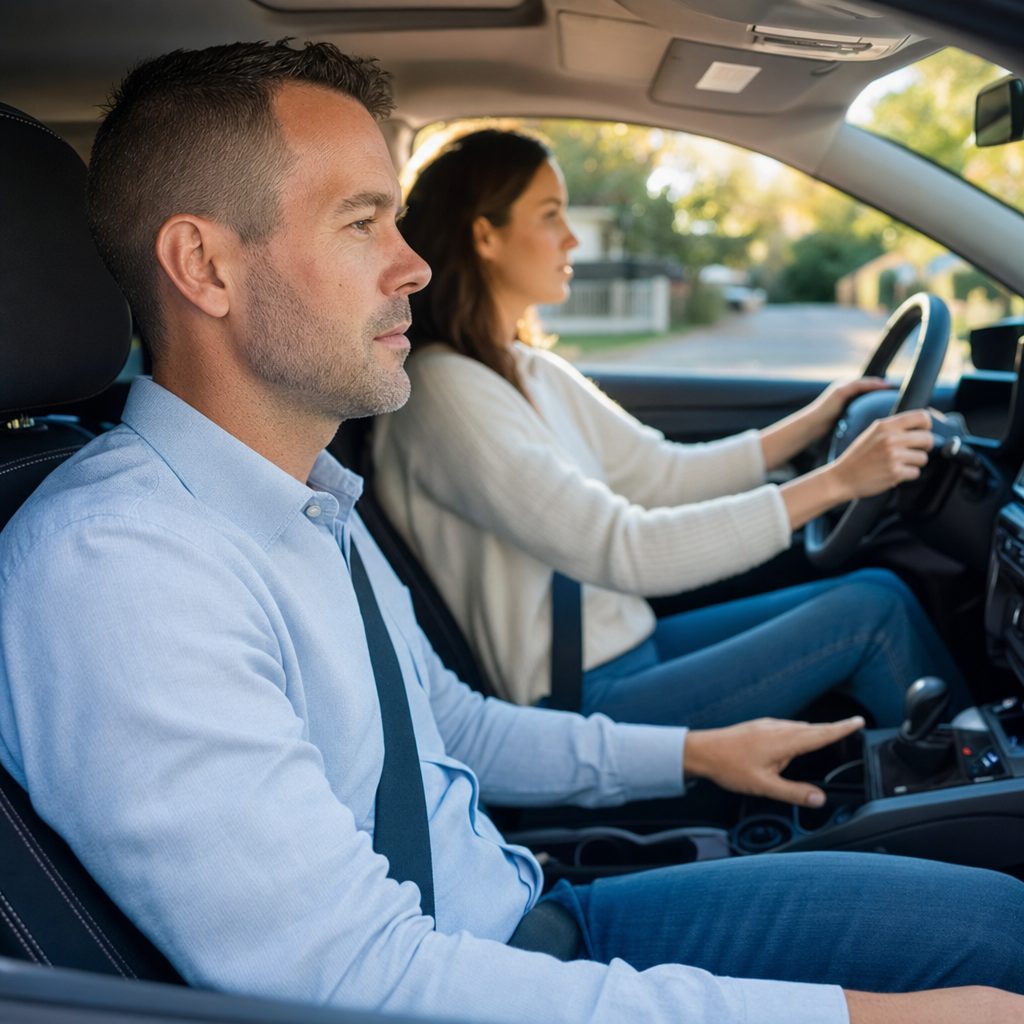
The defining exposure of a driving school is that your students are operating a motor vehicle while they are still learning to drive, and your instructor is in the passenger seat with a secondary brake instead of the wheel. When a student rear-ends a car, clips a cyclist, or misjudges an intersection, the personal auto policy on that training vehicle will not respond, because nearly every personal auto contract excludes vehicles used to carry persons for a fee and excludes commercial driver-training use. The school is left holding a third-party bodily injury and property damage claim with no coverage, which is precisely why dual-control commercial auto written specifically for student-driven training cars is the spine of any real driving school program.
Layered on top of the auto exposure is professional liability. A driving school sells an outcome and a duty of care: that you will competently instruct, that your dual controls and supervision will prevent foreseeable harm, and in many cases that a student is road-ready for a license test. Allegations of negligent instruction, inadequate supervision during behind-the-wheel hours, or a graduate who crashes shortly after certification flow through educators E&O, not general liability. Where your school enrolls teen students who are minors, abuse and molestation exposure also becomes material, since instruction is one-on-one in a closed vehicle, and that peril is frequently excluded or heavily sublimited on a base policy.
Building these layers correctly takes commercial insurance programs designed for driver-training risk rather than a generic small-business package. State regulators reinforce this: California, for example, licenses driving school owners, operators, and instructors and requires a surety bond through the DMV Occupational Licensing program, and most licensing states condition your authority to operate on maintaining specified vehicle liability limits.
- Personal auto policies exclude driver-training and fee-for-service use, leaving student-caused crashes uncovered without commercial dual-control auto
- Student drivers are, by definition, the least experienced operators on the road, concentrating crash frequency in your training cars
- Negligent-instruction and failure-to-prepare claims trigger educators E&O, a coverage most generic BOPs do not include
- Teen (minor) students create abuse and molestation exposure during one-on-one in-vehicle instruction
- Dual-control and secondary-brake equipment is itself a risk-management control that carriers expect to see
- State DMV licensing typically mandates a surety bond and minimum auto liability limits as a condition of operation
- Garagekeepers and hired-and-non-owned exposure arise as soon as you store, move, or borrow vehicles
Core Coverages for Driving Schools
The program leads with commercial auto on a dual-control basis, schedule by schedule, covering each training vehicle for liability, physical damage, and uninsured/underinsured motorist while a student is driving and supervised. Limits should be set to meet or exceed your state's mandated driver-training minimums, and many schools carry a commercial umbrella above the auto and general liability layers because a single student-caused multi-vehicle crash can exhaust primary limits quickly. Hired-and-non-owned auto extends protection to vehicles you rent or to staff cars used for school business such as ferrying students to a test site.
Around that auto core, the school needs professional liability (educators E&O) for negligent-instruction and failure-to-certify allegations, general liability for premises and slip-and-fall at your classroom or office, and commercial property for your building contents, training aids, simulators, and computers. Garagekeepers responds when a customer or student vehicle in your custody is damaged. For schools enrolling minors, abuse and molestation coverage should be endorsed at a meaningful limit rather than the token sublimit a base form provides, and workers' compensation covers instructors injured in a training-car crash. These coverages can be coordinated under one program built on the same advisory foundation as our broader commercial insurance practice.
Rounding out the stack, employment practices liability protects against instructor and staff employment claims, and cyber/data coverage matters more than owners expect because schools store student license numbers, dates of birth, payment data, and DMV-reportable records. The exact mix depends on whether you run a fixed classroom, a mobile behind-the-wheel-only model, or an online-plus-road hybrid.
- Dual-control commercial auto (liability, physical damage, UM/UIM) on each scheduled training vehicle while a student drives
- Negligent-instruction and failure-to-certify educators E&O / professional liability
- Abuse and molestation coverage endorsed at a real limit for schools enrolling teen students
- General liability for classroom/office premises, slips, and third-party bodily injury off the road
- Garagekeepers for customer or student vehicles in your custody, plus hired-and-non-owned auto
- Commercial property and equipment for building contents, simulators, training aids, and computers
- Workers' compensation, EPLI, commercial umbrella, and cyber/student-data coverage as the operation warrants
Licensing, Compliance & Regulatory Considerations for Driving Schools
Driving schools are regulated occupational businesses, and in most states the licensing authority is the Department of Motor Vehicles rather than the Department of Education. California is representative: the DMV separately licenses the driving school owner, the operator who manages the school, and each instructor, and it requires a surety bond plus proof of vehicle liability insurance before issuing a license, as detailed in the DMV driving school owner license requirements. Instructors typically must be at least 21, hold a valid driver's license, and pass background and competency screening.
Equipment and curriculum are regulated too. State vehicle codes generally require that training cars used for behind-the-wheel instruction be equipped with a functioning secondary brake (dual control), and they prescribe minimum behind-the-wheel and observation hours; California's framework, for instance, calls for at least six hours of behind-the-wheel instruction in a dual-control vehicle with a qualified instructor. These mandates are not just compliance items, they are the same controls underwriters price against, so keeping your bond, license, vehicle inspections, and instructor credentials current directly affects insurability.
Schools that train commercial-license students or contract with public school districts face additional layers, including FMCSA entry-level driver training standards for CDL applicants and district affiliation or insurance-certificate requirements. Maintaining certificates of insurance that name the DMV or a contracting district, at the limits they specify, is an ongoing obligation we help schools manage.
- State DMV occupational license for the school owner, operator, and each instructor, not a generic business license
- Surety bond and proof of minimum vehicle liability insurance required before a driving school license is issued
- Instructors generally must be 21+, properly licensed, and cleared through background screening
- Training vehicles must carry a functioning secondary brake (dual control) per state vehicle code
- Mandated minimum behind-the-wheel and observation hours per student under state driver-education rules
- FMCSA entry-level driver training standards apply to schools preparing CDL applicants
- Certificates of insurance for the DMV or contracting school districts must match required limits and stay current
Why Driving Schools Choose The Allen Thomas Group
The Allen Thomas Group is an independent, family-owned insurance agency founded in 2003, licensed in 28 states and backed by access to 15-plus A-rated carriers, with an A+ rating from the Better Business Bureau. Because we are independent, we are not tied to one company's appetite, so we can place dual-control commercial auto and educators E&O with carriers that genuinely understand driver-training risk rather than forcing your school into a standard auto box that excludes student operation.
Driving school owners work with us because we treat the program as a connected system. We make sure your commercial auto limits satisfy DMV and any district contract requirements, that your abuse and molestation limit is not quietly sublimited if you train minors, and that garagekeepers and hired-and-non-owned gaps are closed. We act as your advocate at renewal and at claim time, and we conduct annual reviews so your coverage tracks your fleet, enrollment, and any new locations or online offerings.
Our role is advisory, not transactional. We explain where personal auto leaves you exposed, where state mandates set your floor, and where prudent limits sit above that floor, then we compare the market on your behalf so you can make an informed decision.
- Independent, family-owned agency founded in 2003 with an A+ BBB rating
- Licensed in 28 states with access to 15+ A-rated carriers, including education and specialty markets
- Carrier relationships that write true dual-control commercial auto for student drivers, not excluded personal lines
- Coordinated placement of auto, E&O, abuse and molestation, garagekeepers, GL, and property under one program
- We verify your limits meet DMV and school-district certificate-of-insurance requirements
- Annual coverage reviews that track fleet size, enrollment, locations, and new online or CDL offerings
- Advocacy at renewal and at claim time, with plain-English guidance rather than a sales pitch
How Much Does Driving School Insurance Cost?
Premium for a driving school is driven first and foremost by the auto exposure: the number of training vehicles, the liability limits you carry, the mix of teen versus adult students, your loss history, and whether vehicles are owned, leased, or driven on a hired-and-non-owned basis. Because student drivers are the least experienced operators on the road, the auto line is the single largest cost in most programs, and limits set to satisfy state mandates plus a sensible umbrella will move the number meaningfully.
Secondary drivers of cost include payroll and number of instructors (workers' comp and E&O), enrollment volume and whether you train minors (abuse and molestation pricing), property values for your classroom and equipment, and any commercial or CDL training, which sits in a higher-hazard class. A very small mobile, behind-the-wheel-only school with one or two dual-control cars might see total program premiums in the low-to-mid four figures annually, while a multi-vehicle school with a classroom, teen enrollment, and meaningful umbrella limits more commonly lands in the mid-four-figure to low-five-figure range. Commercial auto alone frequently runs a few thousand dollars per training vehicle.
Because so much rides on fleet size, limits, and claims history, these are illustrative ranges rather than quotes. We build the actual number from your vehicle schedule, enrollment, and the limits your state and any district contracts require.
- Number of training vehicles and the auto liability limits carried are the largest single cost drivers
- Teen (minor) enrollment raises abuse and molestation pricing versus adult-only schools
- Instructor headcount and payroll drive workers' compensation and educators E&O premium
- Owned versus leased versus hired-and-non-owned vehicle arrangements change the auto rating
- Loss history, including any prior student-crash or abuse claims, strongly affects pricing
- Property values for classroom, simulators, and equipment, plus CDL/commercial training as a higher-hazard class
- Umbrella limits layered above auto and GL add cost but are often essential given crash severity potential
Driving School Risk Management & Coverage Considerations
The strongest risk-management lever a driving school has is its in-vehicle protocol. Maintaining functioning dual controls, inspecting and servicing training vehicles on a schedule, and documenting every behind-the-wheel session reduces both crash frequency and the negligent-instruction allegations that follow a crash. Written participation and instruction agreements, signed before the first lesson, set expectations and create a record of the duty of care you provided. For schools that train minors, background checks on every instructor, a clear conduct policy, and dashcam or in-car recording where law permits both deter and document against abuse allegations.
Credentialing and supervision matter to underwriters. Keeping instructor licenses, the school's DMV license, and the surety bond current, verifying that each instructor meets the state's age and licensing standard, and tracking required behind-the-wheel and observation hours per student all support insurability and defend against failure-to-train claims. Emergency procedures, a defined route and curriculum, and limits on lesson length reduce fatigue-related risk.
On the data side, schools hold student license numbers, dates of birth, and payment information, so reasonable cybersecurity and record-retention practices reduce breach exposure. Emerging risks worth planning for include simulator and ADAS-equipped training vehicles, online or hybrid instruction models that shift some liability to the digital classroom, and expanded CDL or motorcycle training that introduces higher-hazard exposures and additional federal standards.
- Inspect, service, and document dual-control equipment and training vehicles on a fixed schedule
- Use signed participation and instruction agreements before the first behind-the-wheel lesson
- Background-check every instructor and adopt conduct policies and in-car recording where lawful for minor students
- Keep instructor licenses, the DMV school license, and the surety bond continuously current
- Track required behind-the-wheel and observation hours per student to defend against failure-to-train claims
- Protect stored student license, DOB, and payment data with reasonable cyber and retention practices
- Plan for emerging risks: ADAS/simulator vehicles, online-hybrid models, and CDL or motorcycle training expansion
Frequently Asked Questions
Will my personal auto policy cover a crash when a student is driving my training car?
No. Personal auto policies exclude vehicles used for driver training and for carrying persons for a fee, so a personal policy will deny a claim once a paying student is behind the wheel. You need commercial auto written on a dual-control basis for student drivers, which is the foundation of any driving school program.
What is dual-control commercial auto and why does a driving school need it?
Dual-control commercial auto is liability and physical-damage coverage written specifically for training vehicles equipped with a secondary brake, while a student drives under instructor supervision. It responds to third-party bodily injury and property damage caused by your student, exposures that personal auto excludes and that general liability does not cover.
Does general liability cover negligent-instruction or failure-to-prepare claims?
No. General liability covers premises and slip-and-fall type injuries, not allegations that your instruction was negligent or that you failed to properly prepare a student to drive. Those claims fall under professional liability, also called educators errors and omissions, which a driving school should carry alongside its auto and GL.
Do I need abuse and molestation coverage if I train teenagers?
Yes, you should. Behind-the-wheel instruction is one-on-one in a closed vehicle, and any school enrolling minors carries real abuse and molestation exposure. This peril is frequently excluded or sublimited to a token amount on base policies, so it should be endorsed at a meaningful limit when you train teen students.
What auto liability limits does a driving school have to carry?
Limits are set by your state DMV as a condition of your driving school license, and any school district you contract with may require higher limits on its certificate of insurance. Because a single student-caused multi-vehicle crash can exhaust primary limits, many schools add a commercial umbrella above the auto and general liability layers.
Do I need workers' compensation for my instructors?
In most states, yes, once you have employees. Workers' compensation is especially important for driving schools because instructors ride in the passenger seat of student-driven cars and can be injured in a training crash. Coverage requirements depend on your state and whether instructors are employees or independent contractors.
What is garagekeepers coverage and does my school need it?
Garagekeepers coverage pays for damage to a customer's or student's vehicle while it is in your care, custody, or control, for example parked at your facility or being moved by staff. If students ever bring their own cars to your school, or you store or move vehicles, garagekeepers closes a gap that auto and general liability leave open.
What most affects the cost of driving school insurance?
The biggest driver is the auto exposure: how many training vehicles you run, the liability limits you carry, whether you train teens or adults, and your loss history. Instructor headcount and payroll, enrollment volume, property values, any CDL or commercial training, and prior claims also move the premium. We build the actual number from your vehicle schedule and required limits.
Insure Your Driving School Around the Risks That Actually Crash
From dual-control commercial auto for student drivers to instructor E&O and abuse coverage for teen students, The Allen Thomas Group compares 15+ A-rated carriers to build a program that fits how your school trains. Call (440) 826-3676 for an advisory review of your driving school coverage.