
Pet Grooming School Insurance
A pet grooming school's biggest exposure isn't the public buying a finished haircut—it's the live animals brought in for students to practice on, and the students learning to handle them. When a clipper, blade, or restraint goes wrong in a teaching environment, the school owns the loss. We build coverage around the animals in your care, your trainees, and the credentials you promise.
Carriers We Represent
Why Pet Grooming Schools Need Specialized Insurance
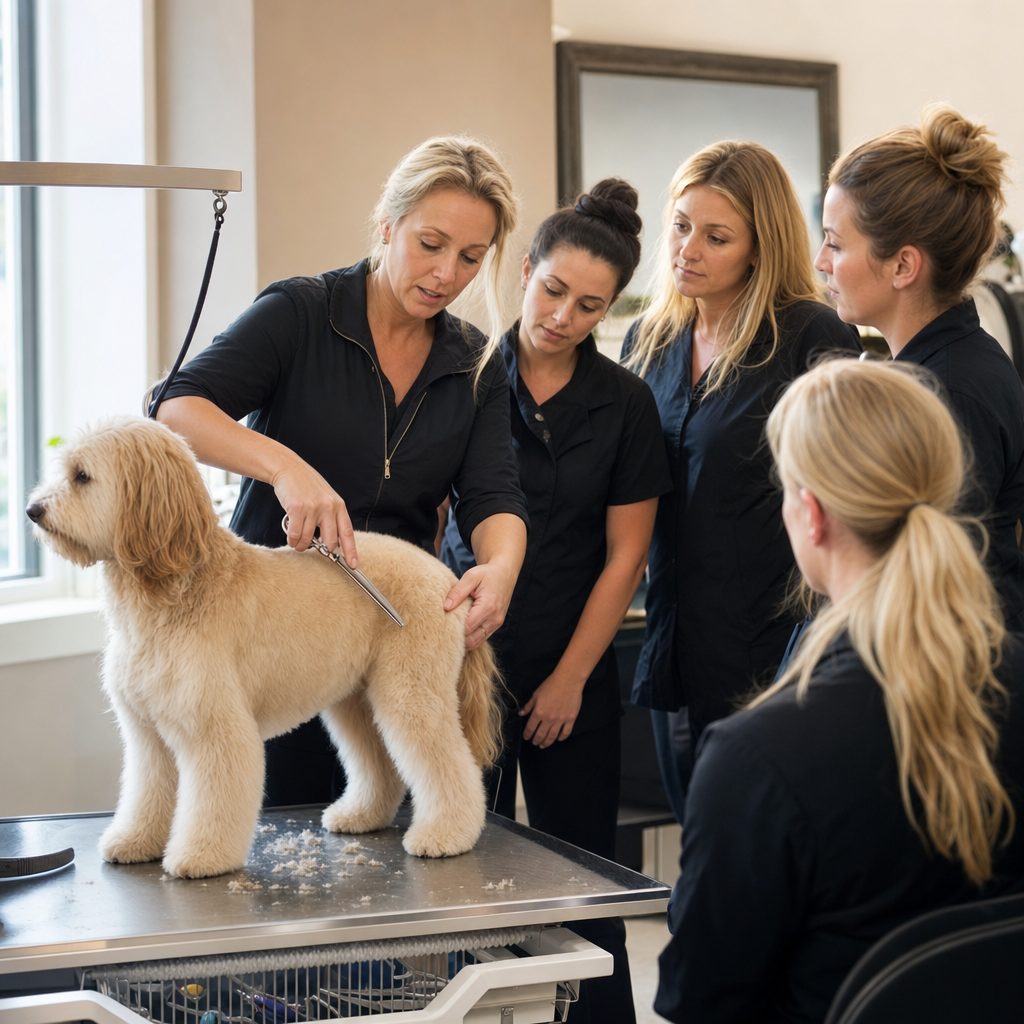
A pet grooming school's defining risk is the live animal placed in its care for students to practice on. The moment a client's dog or cat is checked in for a teaching session, the school assumes care, custody, and control of that animal—and a beginner's hand on a clipper, blade, dryer, or restraint loop can cause a quick, nicking, burn, anesthesia-free dental mishap, a fall from a grooming table, heatstroke from a cage dryer, or in the worst case the injury or death of a pet. Standard general liability treats the animal as property in your custody and frequently limits or excludes damage to it, which is why an animal bailee endorsement is the spine of a grooming-school program rather than an afterthought.
The second exposure is the student. Trainees learning to handle unfamiliar, frightened animals get bitten and scratched, suffer repetitive-strain and lifting injuries, and are exposed to clipper burns and chemicals—claims that flow through workers' compensation where students are treated as employees or are otherwise covered. The third is the promise the school makes: a failure-to-certify or failure-to-deliver dispute when a graduate doesn't pass a certification test or land placement, which lands as a professional liability (E&O) matter, not a slip-and-fall. Because pet grooming itself is largely unregulated, schools should build their own risk floor through proper coverage and well-documented intake and waiver practices. We assemble these protections through tailored commercial insurance programs designed for the teaching environment, not for a working salon.
It is worth drawing the line clearly: a grooming school trains future groomers, so its risk profile centers on students-in-training and the practice animals they work on—not on the general public buying a finished grooming service. Operating salons should look to our pet care resources; this page is built strictly for the instructional business.
- Animal bailee / care, custody & control exposure for every pet brought in for student practice—injury or death of a pet in the school's care is the lead peril
- Beginner handlers using sharp clippers, blades, scissors, and shears on live animals dramatically raise nick, quicking, and laceration frequency
- Cage and stand dryers create heatstroke and burn risk when supervised by inexperienced students
- Grooming-table falls and restraint accidents (slip-loops, grooming arms) can seriously injure or kill an animal
- Student bites, scratches, lifting strains, and chemical exposure drive workers' compensation claims
- Failure-to-certify and failure-to-deliver disputes from graduates trigger professional liability, not GL
- Largely unregulated industry means the school—not a licensing board—must establish its own safety and coverage floor
Core Coverages for Pet Grooming Schools
The lead coverage is animal bailee (care, custody, and control), which responds when a pet in the school's possession for a student practice session is injured, killed, becomes ill, or escapes. Because base general liability commonly excludes or sublimits damage to property in your custody, this endorsement is what actually pays a grieving owner's veterinary bills or the value of a lost animal. Pair it with general liability for premises, slip-and-fall, and third-party bodily injury and property damage in your facility, lobby, and any retail or boarding area.
Workers' compensation covers the bite, scratch, lifting, and chemical injuries students and instructors sustain handling animals, and is typically required wherever the school has employees. Commercial property and equipment coverage protects your building improvements, grooming tables and tubs, hydraulic lifts, clippers and blade inventory, dryers, kennels, and classroom computers; an equipment or inland-marine schedule keeps the expensive, theft-prone tools insured. Professional liability / educators E&O answers negligent-instruction and failure-to-certify allegations. Round the program out with directors & officers or EPLI exposure where the school is a corporation or nonprofit and as a hedge against student or staff employment disputes, plus cyber/student-data coverage for the enrollment, payment, and FERPA-style records you keep. We coordinate the full stack through commercial insurance tailored to a teaching kennel and classroom, and add a commercial umbrella for catastrophic animal-death or injury claims that pierce primary limits.
- Animal bailee / care, custody & control — the lead coverage for injury, illness, escape, or death of a pet in the school's care
- General liability — premises slip/fall and third-party bodily injury and property damage in the facility and lobby
- Workers' compensation — student and instructor bites, scratches, lifting strains, and chemical exposure
- Commercial property & equipment — tables, tubs, hydraulic lifts, clippers/blades, dryers, kennels, and classroom computers
- Professional liability / educators E&O — negligent instruction and failure-to-certify or failure-to-deliver claims
- Cyber / student-data and EPLI/D&O — enrollment and payment records, employment disputes, and corporate/nonprofit boards
- Commercial umbrella — excess limits over animal-death, injury, and liability claims that exceed primary coverage
Licensing, Compliance & Regulatory Considerations for Pet Grooming Schools
Pet grooming is one of the least-regulated animal-care fields in the country—there is no national license to groom dogs or cats, and only a handful of jurisdictions touch it at all (for example, Connecticut licenses grooming facilities and staff through its Department of Agriculture). The school side is different. Most states regulate proprietary, private, or postsecondary vocational schools through a dedicated body—such as the Arizona State Board for Private Postsecondary Education or equivalent boards in other states—which review curriculum, facilities, instructor qualifications, refund policies, and often require a surety bond before a school may enroll and charge tuition.
Schools that wish to offer federal student aid must additionally meet U.S. Department of Education requirements; the Federal Student Aid institutional eligibility rules require state authorization, accreditation, and Department certification before any Title IV funds flow. On the trade side, credentialing is voluntary and association-driven rather than governmental: the National Dog Groomers Association of America (NDGAA) administers the well-known National Certified Master Groomer (NCMG) testing that many schools build curriculum toward. Because grooming credentials are voluntary, the burden falls on the school to document curriculum, supervision ratios, and intake procedures.
Practically, compliance for a grooming school means three things: satisfy your state's proprietary-school board (including any required surety bond and tuition-refund protections), align curriculum to a recognized credential like NDGAA's NCMG so your placement and certification claims are defensible, and keep meticulous animal-intake, vaccination, and incident records that double as your liability defense file.
- Grooming itself is largely unlicensed nationally; only a few states (e.g., Connecticut) regulate grooming facilities or staff
- State proprietary/private-postsecondary boards license the school's curriculum, facility, instructors, and refund policies
- Many states require a surety bond and tuition-protection provisions before a school can enroll students
- Federal Title IV aid eligibility adds state-authorization, accreditation, and Department-certification requirements
- NDGAA's National Certified Master Groomer (NCMG) is a voluntary, association-administered credential—not a government license
- Curriculum aligned to a recognized credential makes certification and placement claims more defensible
- Detailed intake, vaccination, and incident records are both a compliance practice and a liability defense file
Why Pet Grooming Schools Choose The Allen Thomas Group
The Allen Thomas Group is an independent, family-owned insurance agency founded in 2003 and licensed in 28 states. We are not tied to one carrier—we place pet grooming schools with the right markets out of 15+ A-rated carriers, including specialty animal-care and education programs that understand animal bailee and educators E&O exposures rather than forcing a school into a generic salon or retail policy.
Independence means we work for the school, not the insurer. We read your animal-intake and waiver workflow, your student-handling supervision model, and your certification promises, then match coverage to the actual teaching kennel and classroom you run. Our A+ BBB rating reflects how we advocate at claim time—when a practice animal is injured or a graduate disputes a certification outcome, you have an advocate, not a call center.
We also stay with you. Schools grow—more students, more practice animals, a second location, a mobile-grooming teaching unit, a new boarding wing—so we conduct annual coverage reviews to keep animal bailee limits, payroll-based workers' comp, and professional liability aligned with how the school actually operates.
- Independent and family-owned (founded 2003)—never a single-carrier captive
- Licensed in 28 states with access to 15+ A-rated carriers, including specialty animal-care and education markets
- Coverage built around animal bailee and educators E&O—not a recycled salon or retail policy
- A+ BBB rating and hands-on claims advocacy when a practice animal or certification dispute arises
- Annual reviews that re-scale animal bailee limits, WC payroll, and E&O as enrollment grows
- Guidance on matching coverage to supervision ratios, intake practices, and added locations or mobile units
- Plain-language advisory approach—we explain the gaps before they become claims
How Much Does Pet Grooming School Insurance Cost?
Premiums track the school's size and the volume of live animals it handles. The biggest drivers are enrollment and the number of students practicing on animals, the count of instructors, total payroll (which sets the workers' compensation base), the number of practice animals on premises at a time, and the animal bailee limit you carry. Property values—your building improvements, tables, lifts, dryers, and clipper inventory—and any claims or animal-injury history round out the rating.
As rough planning ranges, a small grooming school carrying a business owner's policy (general liability plus property) with an animal bailee endorsement often runs roughly $1,500 to $4,000 per year. Workers' compensation is priced per $100 of payroll and varies by state and class code, frequently adding $1,500 to $5,000+ depending on staff and student wages. Educators E&O / professional liability typically adds a few hundred to a couple thousand dollars annually, and a commercial umbrella commonly starts around $500–$1,500. Schools handling many animals, running boarding, or with prior animal-death claims will price above these ranges—these are estimates, and we provide firm numbers by comparing 15+ carriers.
- Enrollment and number of students practicing on live animals
- Instructor count and total payroll (the workers' compensation base)
- Animal bailee limit and the number of practice animals on premises at once
- Property and equipment values—building improvements, tables, lifts, dryers, clippers
- Activities offered (boarding, mobile-grooming teaching unit, retail sales) and added locations
- Claims and animal-injury history—prior pet-death or bite claims raise rates
- Coverage limits and umbrella selected; final pricing comes from comparing 15+ A-rated carriers
Pet Grooming School Risk Management & Coverage Considerations
The single most effective control is a signed, animal-specific intake and liability agreement for every pet brought in for student practice—documenting the owner's acknowledgment of the teaching environment, current vaccinations, behavioral history, and existing health or skin conditions before a student ever touches the animal. Pair that with a written supervision model: instructor-to-student ratios that keep a credentialed groomer within reach during clipping, dental, and dryer work, and a rule that high-risk steps (sanitary trims, ear work, aggressive or senior animals) are instructor-led or instructor-supervised.
Operationally, never leave an animal unattended on a dryer or grooming arm, log every nick, bite, or incident immediately with photos and witness notes, maintain a clean equipment-sanitation protocol to prevent disease transmission between practice animals, and keep an emergency plan with a partner veterinarian on call. On the student side, treat bites and scratches as recordable workplace injuries, provide handling-safety and restraint training before live-animal work, and keep vaccination/health records for staff as appropriate.
Finally, protect the credibility of what you promise. Be precise in enrollment materials about what certification a graduate is prepared to attempt versus what is guaranteed, document curriculum alignment to a recognized credential, and secure student enrollment and payment data. Emerging exposures include mobile-grooming teaching units (commercial auto and bailee on the road), anesthesia-free dental instruction, and online or hybrid theory courses that add a student-data/cyber dimension.
- Signed, animal-specific intake and liability agreements capturing vaccination status, behavior, and health conditions
- Documented instructor-to-student supervision ratios with instructor-led high-risk steps (dental, sanitary, ear, aggressive/senior animals)
- A two-person/never-unattended rule on dryers and grooming arms to prevent falls and heatstroke
- Immediate incident logging with photos and witness notes—your animal bailee and E&O defense file
- Equipment sanitation protocol to prevent disease transmission between practice animals
- On-call partner veterinarian and a written animal-emergency plan
- Precise, defensible certification/placement language plus secured student enrollment and payment data
Frequently Asked Questions
What is animal bailee coverage and why does a grooming school need it?
Animal bailee, sometimes called care, custody, and control coverage, responds when a pet that is in your school's possession for a student practice session is injured, becomes ill, escapes, or dies. Standard general liability usually excludes or sharply limits damage to property in your custody, and the animals you take in for students to practice on are treated as property in your care. For a grooming school, animal bailee is the single most important coverage because beginner handlers raise the odds of a nick, burn, fall, or worse.
Does general liability cover injury or death of a pet in our care?
Usually not on its own. General liability covers third-party premises injuries like a slip and fall in your lobby, but most GL policies exclude or sublimit damage to property in your care, custody, and control, which is exactly how an animal in your possession is classified. To cover injury, illness, escape, or death of a practice animal you need an animal bailee endorsement layered onto or alongside the GL.
What is the difference between professional liability and general liability for our school?
General liability handles bodily injury and property damage to third parties on your premises, such as a visitor tripping in the lobby. Professional liability, also called educators errors and omissions, handles claims arising from the instruction itself, such as a graduate alleging negligent teaching or a failure to deliver a promised certification or placement outcome. A grooming school generally needs both because the two cover entirely different risks.
Does GL cover a failure-to-certify or failure-to-deliver claim from a graduate?
No. A dispute that a graduate did not receive promised training, did not pass a certification test, or was not placed in a job is a professional services allegation, which general liability does not address. Those claims fall under educators errors and omissions or professional liability coverage, so a grooming school that markets certification preparation or placement should carry it.
Do we need workers' compensation for students and instructors?
Workers' compensation is typically required wherever you have employees, and instructors clearly qualify. Students learning to handle animals frequently get bitten, scratched, or strained, and depending on your structure and state rules those injuries may also flow through workers' comp or a student-accident policy. We help you map which trainees and staff need coverage so an injury is not paid out of pocket.
Is a pet grooming school required to be licensed?
Grooming itself is largely unregulated nationally, with only a few states such as Connecticut licensing grooming facilities or staff. The school, however, is usually regulated as a proprietary or private postsecondary institution by a state board that reviews curriculum, facilities, refund policies, and often requires a surety bond. Schools offering federal student aid must also meet U.S. Department of Education Title IV requirements.
What does grooming school insurance typically cost?
Most small schools carrying general liability and property with an animal bailee endorsement run roughly fifteen hundred to four thousand dollars a year, with workers' compensation priced per hundred dollars of payroll often adding fifteen hundred to five thousand or more. Educators errors and omissions and an umbrella add a few hundred to a couple thousand each. The biggest cost drivers are enrollment, payroll, the number of practice animals, your animal bailee limit, and any prior animal-injury claims.
If our students train on dogs and cats, are we the same as a grooming salon for insurance?
No, and that distinction matters. A grooming school's risk centers on students in training and the practice animals brought in for them, plus the certification you promise, while a working salon's risk centers on the general public buying a finished grooming service. We scope your policy as the instructional business and point you to our pet care resources for the operating-salon side, so your coverage matches how the school actually runs.
Protect the Animals in Your Care and the Groomers You Train
Let's build a program around your practice animals, your students, and the certifications you promise, with the right animal bailee and educators E&O limits. We'll compare 15+ A-rated carriers and walk you through every gap—call (440) 826-3676 to get started.