
Propane & Heating Oil Dealer Insurance
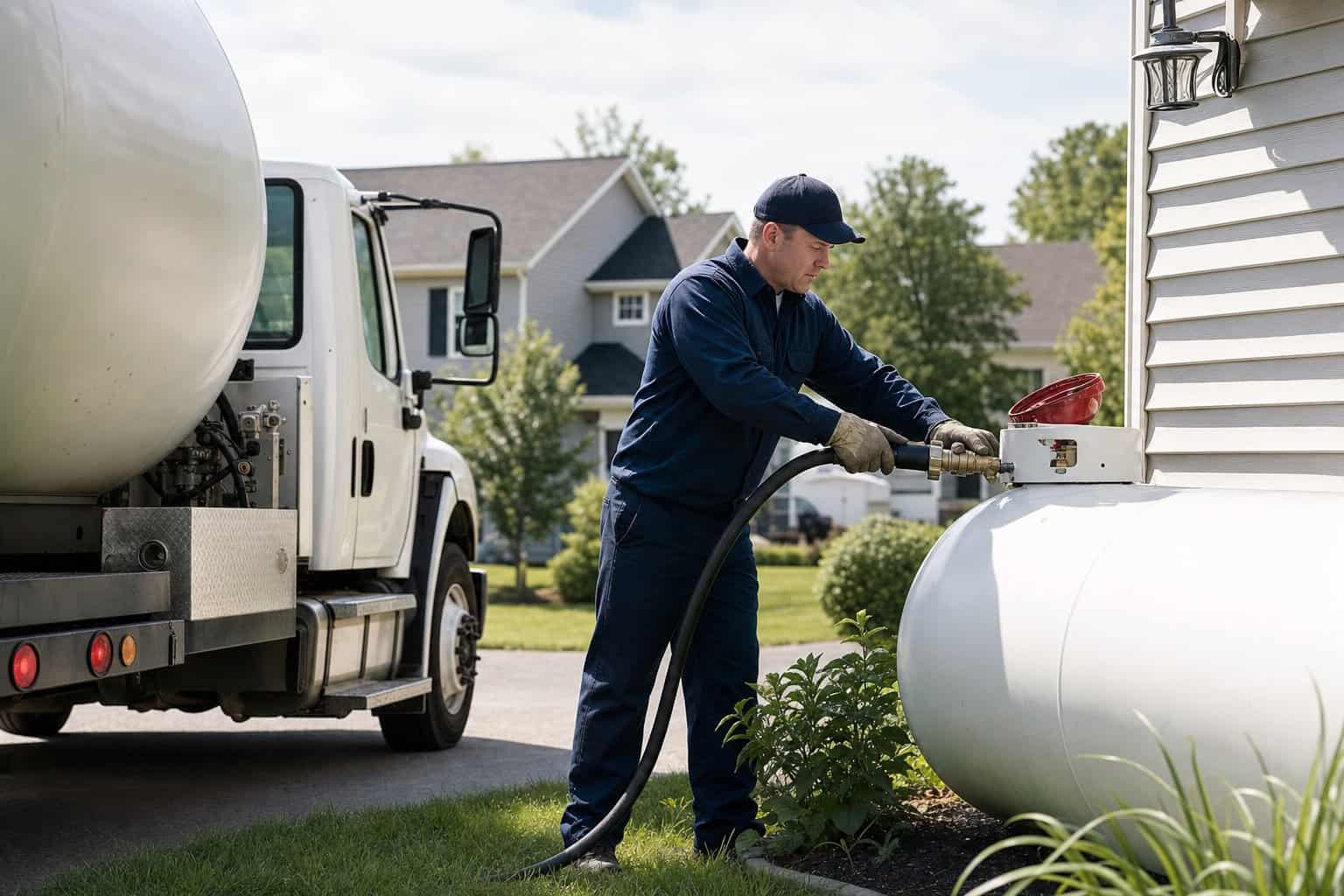
Propane and heating oil dealers deliver a product that keeps homes and businesses warm — and one that can turn a routine delivery or bulk-plant operation into a catastrophic fire or explosion loss in seconds. The Allen Thomas Group builds coverage programs around the real risks of fuel storage, delivery, and appliance service, not a generic fuel-distributor template.
✓ 15+ A-rated carriers
✓ A+ BBB rated
✓ Licensed in 28 states
Carriers We Represent
Why Propane & Heating Oil Dealers Need Specialized Insurance
Propane and heating oil dealers sit in a different risk category than most local delivery businesses because the product itself is the hazard. Propane is a flammable gas stored under pressure, and heating oil, while combustible rather than explosive, is still a petroleum product that can contaminate soil and groundwater if a tank or line fails. A single incident — a leaking bulk-plant valve, a truck rollover during a delivery run, or a customer-site fire traced back to a faulty regulator — can generate bodily injury, property damage, and environmental cleanup costs that dwarf what a standard contractor’s general liability policy is built to absorb.
Generic commercial policies are frequently written without any real understanding of NFPA 58 (the Liquefied Petroleum Gas Code), bulk-plant classifications, or the distinction between delivery-only operations and dealers who also install and service tanks and appliances. The Allen Thomas Group underwrites this class the way a fuel dealer actually operates — bulk storage, metered delivery trucks, customer tank ownership or lease arrangements, and in many cases, appliance and equipment service work inside customers’ homes and businesses.
- Catastrophic fire and explosion exposure
- Bulk storage and pipeline liability
- Hazardous cargo transportation risk
- Customer tank ownership complications
- Appliance service and installation liability
- Environmental contamination exposure
- Seasonal demand and inventory swings
Core Coverages for Propane & Heating Oil Dealers
A properly built program for a propane or heating oil dealer typically layers several coverage lines rather than relying on a single package policy. General liability addresses third-party bodily injury and property damage, but it needs to be paired with pollution liability, since standard GL policies broadly exclude fuel-related contamination and seepage. Commercial auto coverage has to be written specifically for bobtail and transport trucks hauling a hazardous, flammable product, not rated as ordinary cargo delivery.
Commercial property coverage needs to account for bulk plants, storage tanks, and dispensing equipment, and umbrella coverage is essential given the severity potential of a fire, explosion, or multi-vehicle accident involving a fuel truck. Dealers who also service furnaces, boilers, and propane appliances need products and completed operations coverage and, depending on staffing, workers’ compensation for technicians working inside customer homes.
- General liability
- Pollution and environmental liability
- Commercial auto for bobtail and transport trucks
- Commercial property for bulk plants and tanks
- Commercial umbrella / excess liability
- Products and completed operations
- Workers’ compensation
Licensing, Compliance & Regulatory Considerations for Propane & Heating Oil Dealers
Propane transportation and storage sit under federal hazardous materials rules enforced by the U.S. Department of Transportation’s Pipeline and Hazardous Materials Safety Administration (PHMSA), which classifies propane as a Class 2 flammable gas under 49 CFR Parts 171-180 and sets requirements for tank specifications, placarding, filling limits, and driver hazmat training. Dealers who store heating oil for resale (as opposed to on-site consumptive use only) generally fall under EPA underground storage tank requirements at 40 CFR Part 280 where tanks are underground, along with applicable state fire marshal and state environmental agency rules for above-ground bulk storage.
The National Propane Gas Association (NPGA) is the industry’s recognized trade body, working with standards organizations and federal regulators on the codes that govern container filling, bulk-plant design, and employee training, most notably NFPA 58. Insurance underwriters increasingly ask about NFPA 58 compliance, driver hazmat certification, and tank inspection and testing records when quoting this class, and a dealer’s documented compliance program can materially affect both pricing and available capacity.
- PHMSA hazmat transportation rules (49 CFR 171-180)
- NFPA 58 Liquefied Petroleum Gas Code
- EPA underground storage tank rules (40 CFR Part 280)
- State fire marshal bulk-plant regulations
- Driver hazmat endorsement and training
- NPGA industry safety standards
- Tank inspection and testing documentation
Why Propane & Heating Oil Dealers Choose The Allen Thomas Group
As an independent, family-owned agency founded in 2003, The Allen Thomas Group isn’t tied to a single carrier’s appetite for fuel-distribution risk. We shop your account across 15+ A-rated carriers to find markets that genuinely understand bulk storage, hazmat delivery fleets, and appliance service exposure, rather than declining or drastically overpricing the account because it falls outside a standard contractor template.
We also work with dealers on the practical side of the relationship — helping structure coverage around seasonal inventory swings, customer-owned versus company-owned tanks, and the mixed delivery-and-service operations common in this industry, so the policy actually matches how the business runs day to day.
- Independent agency, not a single-carrier captive
- 15+ A-rated carrier relationships
- Family-owned since 2003
- Licensed in 28 states
- A+ BBB rating
- Coverage built around real fuel-dealer operations
- Direct, responsive service — not a call center
How Much Does Propane & Heating Oil Dealer Insurance Cost?
Premiums for propane and heating oil dealers vary widely because the risk profile depends heavily on operational specifics: annual gallons delivered, number and size of delivery trucks, whether the dealer owns bulk storage or leases it, whether technicians perform appliance installation and service inside customer homes, claims history, and the states in which the dealer operates. A small heating-oil-only delivery operation with a single truck and no bulk plant will price very differently than a propane dealer that owns a bulk plant, operates multiple bobtail trucks, and services appliances.
Because of that range, we don’t publish a one-size-fits-all number — we quote based on your actual fleet, storage, and service operations across our carrier panel to find competitive pricing for your specific exposure.
- Annual gallons delivered
- Number and size of delivery trucks
- Owned vs. leased bulk storage
- Appliance installation and service work
- Claims history and loss runs
- States of operation
- Customer-owned vs. company-owned tanks
Propane & Heating Oil Dealer Risk Management & Coverage Considerations
Because fire and explosion severity — not frequency — is the defining exposure in this class, risk management matters as much as the policy itself. Regular tank and valve inspections, documented driver hazmat training, clear protocols for odorant checks and leak response, and up-to-date bulk-plant fire suppression equipment all reduce both the likelihood and severity of a loss, and underwriters take documented programs seriously when pricing coverage.
Dealers who also handle appliance service should pay particular attention to carbon monoxide exposure from furnace, boiler, and propane appliance work performed inside customer homes — improperly vented or serviced equipment is a recognized source of bodily injury claims distinct from the delivery side of the business, and it belongs squarely in your products and completed operations coverage discussion.
- Routine tank, valve, and line inspections
- Documented driver hazmat training records
- Leak response and odorant-check protocols
- Bulk-plant fire suppression readiness
- Carbon monoxide exposure from appliance service
- Written emergency response plan
- Regular review of coverage as gallons/fleet grow
Frequently Asked Questions
Do propane and heating oil dealers need different insurance than a general delivery business?
Yes. Standard delivery or trucking policies are not built for hazardous, flammable cargo or bulk fuel storage. Propane and heating oil dealer insurance layers in pollution liability, hazmat-rated commercial auto, and property coverage for storage tanks and bulk plants that a generic delivery policy doesn’t address.
Why do I need pollution liability if I already have general liability?
Standard general liability policies broadly exclude pollution, seepage, and contamination losses. Because propane and heating oil are petroleum-based fuels, a leak, spill, or tank failure is typically a pollution exposure, not a standard GL claim — a dedicated pollution liability policy is designed to respond to that gap.
Do I need special coverage for my delivery trucks?
Yes. Bobtail and transport trucks hauling propane or heating oil should be rated and insured specifically for hazardous cargo transportation, not as ordinary delivery vehicles. This affects both the auto liability rating and how a claim involving a fuel spill or fire would be handled.
What if I also install or service propane appliances and furnaces?
Dealers who install or service equipment inside customer homes — furnaces, boilers, propane appliances — need products and completed operations coverage in addition to delivery-related coverage, since faulty installation or servicing (including carbon monoxide exposure) creates a distinct liability source from the delivery side of the business.
Are underground heating oil storage tanks regulated?
Tanks storing heating oil for resale generally are not exempt from EPA underground storage tank rules under 40 CFR Part 280, even though tanks used solely for on-site heating are excluded. State fire marshal and environmental agencies may add further requirements, so compliance should be confirmed at both the federal and state level.
What is NFPA 58 and why does it matter for my insurance?
NFPA 58, the Liquefied Petroleum Gas Code, sets the safety standards for propane storage, handling, and transportation that most state regulators adopt. Underwriters frequently ask about NFPA 58 compliance, and a documented compliance program can improve both the pricing and availability of coverage.
How much does propane or heating oil dealer insurance cost?
Cost depends on annual gallons delivered, fleet size, whether you own bulk storage, whether you perform appliance service, claims history, and states of operation. Because the range is wide, we quote based on your actual operation across our carrier panel rather than a flat rate.
Why work with an independent agency instead of going direct to one carrier?
As an independent agency, The Allen Thomas Group can shop your account across 15+ A-rated carriers to find the markets that best understand fuel-dealer risk, rather than being limited to one company’s appetite and pricing for this specialized class.
Get a Propane & Heating Oil Dealer Insurance Quote Today
Talk to an independent agent who understands bulk storage, delivery fleets, and appliance service risk.