
Solar Installer Insurance
Solar installation combines roof work, high-voltage electrical work, and utility interconnection into one job — which means one bad claim can touch your general liability, your workers’ comp, and your completed-operations coverage all at once. The Allen Thomas Group builds solar installer insurance programs around the real risks of the trade, not a generic contractor template.
✓ 15+ A-rated carriers
✓ A+ BBB rated
✓ Licensed in 28 states
Carriers We Represent
Why Solar Installers Need Specialized Insurance
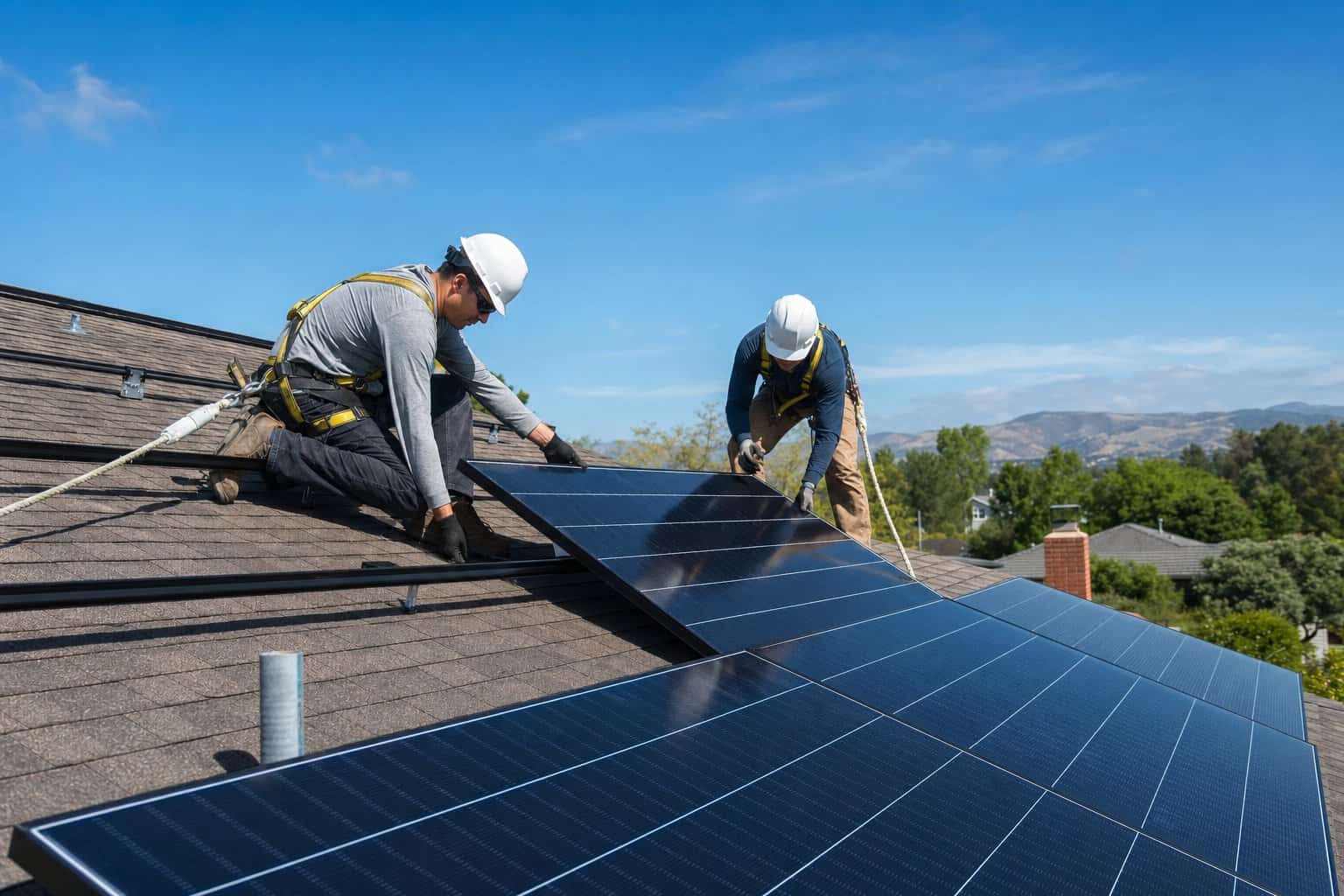
Solar installation sits at the intersection of three high-liability trades at once: roofing, electrical, and heavy equipment work. Your crews are on residential and commercial roofs drilling mounting hardware, running conduit and DC wiring at hundreds of volts, and tying finished systems into the utility grid. A standard contractor’s policy written for a generalist trade often doesn’t reflect how these exposures stack, and a gap in any one of them can leave you paying a claim out of pocket.
The financial exposure is also unusually long-tailed for this industry. A poorly sealed roof penetration might not leak for two years. A wiring defect inside a combiner box might not cause a fault until the system has been live for a full solar cycle of thermal expansion and contraction. Because solar systems are expected to perform for 20-25 years, your completed operations exposure follows every job you’ve ever finished, not just the ones on your current schedule.
We build coverage around how solar installers actually work — subcontracted roofing and electrical crews, rooftop and ground-mount systems, battery storage add-ons, and the commercial/utility-scale projects that carry seven-figure contract values.
- Roof-penetration and water-intrusion exposure
- High-voltage DC and grid interconnection risk
- Long-tail completed operations claims
- Subcontracted crew liability
- Equipment left on job sites overnight
- Utility interconnection agreement obligations
- Commercial and utility-scale contract requirements
Core Coverages for Solar Installers
General liability is the foundation, covering third-party bodily injury and property damage — including the water-intrusion and roof-damage claims that are the single most common source of disputes between installers and property owners. Because “was the leak pre-existing or installation-caused” is often a genuine gray area, carrying adequate limits and clean documentation practices matters as much as the policy itself.
Workers’ compensation is non-negotiable given the combination of fall risk, electrical shock hazard, and heavy panel handling your crews face daily. Commercial auto covers the trucks and trailers moving racking, panels, and inverters between job sites, and inland marine/equipment coverage protects tools, ladders, and lifts against theft and jobsite damage. For installers taking on commercial or larger residential contracts, an umbrella policy adds a layer of protection above your underlying limits — often a requirement in GC or utility contracts before you’re allowed to bid.
Completed operations coverage deserves special attention in solar: because system failures and roof leaks can surface years after a job is finished, the coverage that’s active on your policy the day a claim is filed — not the day the work was done — is what responds. Professional liability/errors and omissions can also matter for installers who design systems, size arrays, or advise on net-metering setups, since a design or output-estimate dispute is a services claim, not a property-damage claim.
- General liability
- Workers’ compensation
- Commercial auto
- Inland marine / tools & equipment
- Commercial umbrella
- Completed operations
- Professional liability / E&O
Licensing, Compliance & Regulatory Considerations for Solar Installers
Licensing for solar work varies significantly by state, and getting it wrong can void a claim or trigger a compliance dispute with a property owner or utility. A handful of states — including California (C-46), Florida (Certified Solar Contractor / CV), Arizona, Nevada, Hawaii, Louisiana, and Oregon — issue a dedicated solar contractor license classification. Many other states fold solar work into general electrical contractor licensing, meaning your installers may need to hold or work under a licensed electrician depending on the scope of the job and the jurisdiction. The Interstate Renewable Energy Council (IREC) maintains a national solar licensing database that tracks these state-by-state requirements.
NABCEP (the North American Board of Certified Energy Practitioners) certification — particularly the PV Installation Professional (PVIP) credential — is the industry’s recognized third-party benchmark for installer competency, and an increasing number of utilities, jurisdictions, and commercial customers treat it as an expected qualification even where it isn’t legally mandated. Carrying NABCEP-certified installers on staff can also factor into how a carrier underwrites your risk.
Beyond licensing, interconnection agreements with the local utility create their own set of contractual obligations — your firm may be named as a party responsible for correct system commissioning, and errors that affect grid stability or net-metering billing can create liability exposure separate from the physical installation itself.
- State-specific solar or electrical contractor license
- NABCEP PVIP certification for lead installers
- Utility interconnection agreement compliance
- Local building and fire code permitting
- National Electrical Code (NEC) compliance
- Net-metering documentation requirements
- Certificate of insurance requirements from GCs/utilities
Why Solar Installers Choose The Allen Thomas Group
We’re an independent, family-owned agency, not a captive agent tied to one carrier’s appetite. That matters in solar because underwriting appetite for this trade shifts often — some carriers are comfortable with residential rooftop work but shy away from utility-scale ground mount, others are the reverse. Shopping your risk across 15+ A-rated carriers lets us find the market that actually wants your specific mix of work, rather than forcing your business to fit whatever one insurer will offer.
We’ve been doing this since 2003, and we’re licensed across 28 states, which means we understand how licensing and code requirements shift as you expand into new territories. When you grow from a regional residential installer into commercial and utility-scale contracts, your coverage needs change too — and we build for that transition instead of leaving you underinsured as your contract sizes grow.
- Independent access to 15+ A-rated carriers
- Family-owned agency, not a call-center captive
- Licensed in 28 states
- Coverage built for growth into commercial/utility work
- Direct advocacy if a claim gets disputed
- Annual policy review as your business changes
How Much Does Solar Installer Insurance Cost?
Premiums for solar installer insurance vary based on payroll and revenue, the mix of residential versus commercial/utility-scale work, whether crews are employees or subcontractors, claims history, and the states you operate in. A small residential installer running a two- or three-person crew will pay considerably less than a firm bidding utility-scale ground-mount contracts with dozens of employees and heavy equipment on-site.
Workers’ compensation is typically the largest line item given the fall and electrical-shock exposure inherent to the work, followed by general liability. Firms that can document formal safety training, NABCEP-certified installers, and a clean claims history typically see better pricing, since carriers view those as real indicators of lower roof-penetration and rework risk.
Because there’s no flat “average” number that applies across a two-person residential crew and a 50-person commercial installer, the most accurate way to see where your business lands is to get a quote built around your actual payroll, contract mix, and claims history.
- Payroll and total revenue
- Residential vs. commercial/utility mix
- Employee vs. subcontractor crew structure
- Claims history
- States of operation
- Safety training and certification levels
- Equipment values on-site
Solar Installer Risk Management & Coverage Considerations
The single highest-value risk management step for a solar installer is documentation: photographing roof condition before and after every installation, keeping flashing and penetration-sealing records, and noting any pre-existing roof issues in writing before work begins. When a leak dispute happens years later, that paper trail is often the difference between a quick resolution and a drawn-out liability fight.
On the electrical side, following NEC requirements and maintaining current NABCEP certification for lead installers reduces both your accident risk and your underwriting risk. For interconnection work, keep utility agreements and commissioning paperwork on file — if a net-metering or grid-stability dispute arises, that documentation shows your firm met its contractual obligations.
Finally, review your completed operations and umbrella limits annually as your average contract size grows. A firm that was writing $15,000 residential jobs two years ago and is now bidding $500,000 commercial rooftop arrays needs materially different limits — and it’s far better to adjust that ahead of a claim than to discover the gap after one.
- Pre- and post-installation roof documentation
- Written pre-existing condition disclosures
- NEC-compliant electrical work
- Current NABCEP certification for lead crew
- Retained utility interconnection paperwork
- Annual limits review as contract size grows
- Formal jobsite safety training program
Frequently Asked Questions
Does my general liability policy cover a roof leak caused by our solar installation?
Typically yes, if the leak resulted from your installation work rather than a pre-existing roof condition. This is one of the most disputed claim types in the industry, which is why documenting roof condition before and after installation is critical — it’s often the deciding factor in how a claim is resolved.
Do I need a special license to install solar panels?
It depends on your state. Some states, including California, Florida, Arizona, Nevada, Hawaii, Louisiana, and Oregon, issue a dedicated solar contractor license. Many other states require solar work to be done under a licensed electrical contractor. Check your state’s requirements through the IREC solar licensing database before bidding work in a new territory.
Is NABCEP certification required to get insured?
NABCEP certification isn’t universally required by law, but it’s the industry-recognized credential for installer competency and can affect how a carrier views your risk. Firms with NABCEP-certified lead installers often see more favorable underwriting.
What happens if a system I installed years ago causes a fire?
This is a completed operations claim, and it’s covered by the completed operations portion of your general liability policy — but only if that coverage is active when the claim is filed, not when the work was done. This is why maintaining continuous coverage year over year matters so much in solar.
Do I need workers’ compensation if my crew is subcontracted?
In most states, yes — and even where it’s not strictly required for subcontractors, general contractors and commercial clients frequently require proof of workers’ comp before allowing subcontracted crews on site. Misclassifying employees as subcontractors to avoid this coverage is also a common source of compliance trouble.
Does my policy cover damage to panels and equipment left on a job site overnight?
General liability doesn’t cover your own equipment. Inland marine or contractor’s equipment coverage is what protects tools, panels, and inverters staged on-site against theft or damage before installation is complete.
Do utility interconnection agreements create additional liability?
Yes. Interconnection agreements often name your firm as responsible for correct system commissioning, and errors affecting grid stability or net-metering billing can create liability separate from the physical installation itself. Keeping thorough commissioning paperwork on file protects you if a dispute arises.
How much does solar installer insurance cost?
Cost depends on your payroll, revenue, mix of residential versus commercial/utility-scale work, whether your crew is employees or subcontractors, your claims history, and the states you operate in. Because these vary so widely between a small residential crew and a large commercial installer, the most accurate figure comes from a quote built around your actual business.
Get Solar Installer Insurance Built Around How You Actually Work
Talk to an independent agent who understands roof, electrical, and interconnection risk — not just a generic contractor template.