
Glass Manufacturing Insurance
A furnace that's shut down improperly can freeze solid with molten glass still inside, and a tempered panel can shatter months after installation with no warning at all. Glass manufacturing insurance protects your facility against the property, equipment, and product liability exposures unique to working with molten material at extreme temperatures and shipping a product that can fail in ways few other building materials do. The Allen Thomas Group structures a complete program so your operation is defended on every pour, not just the easy runs.
Carriers We Represent
Why Glass Manufacturers Need Specialized Insurance Coverage
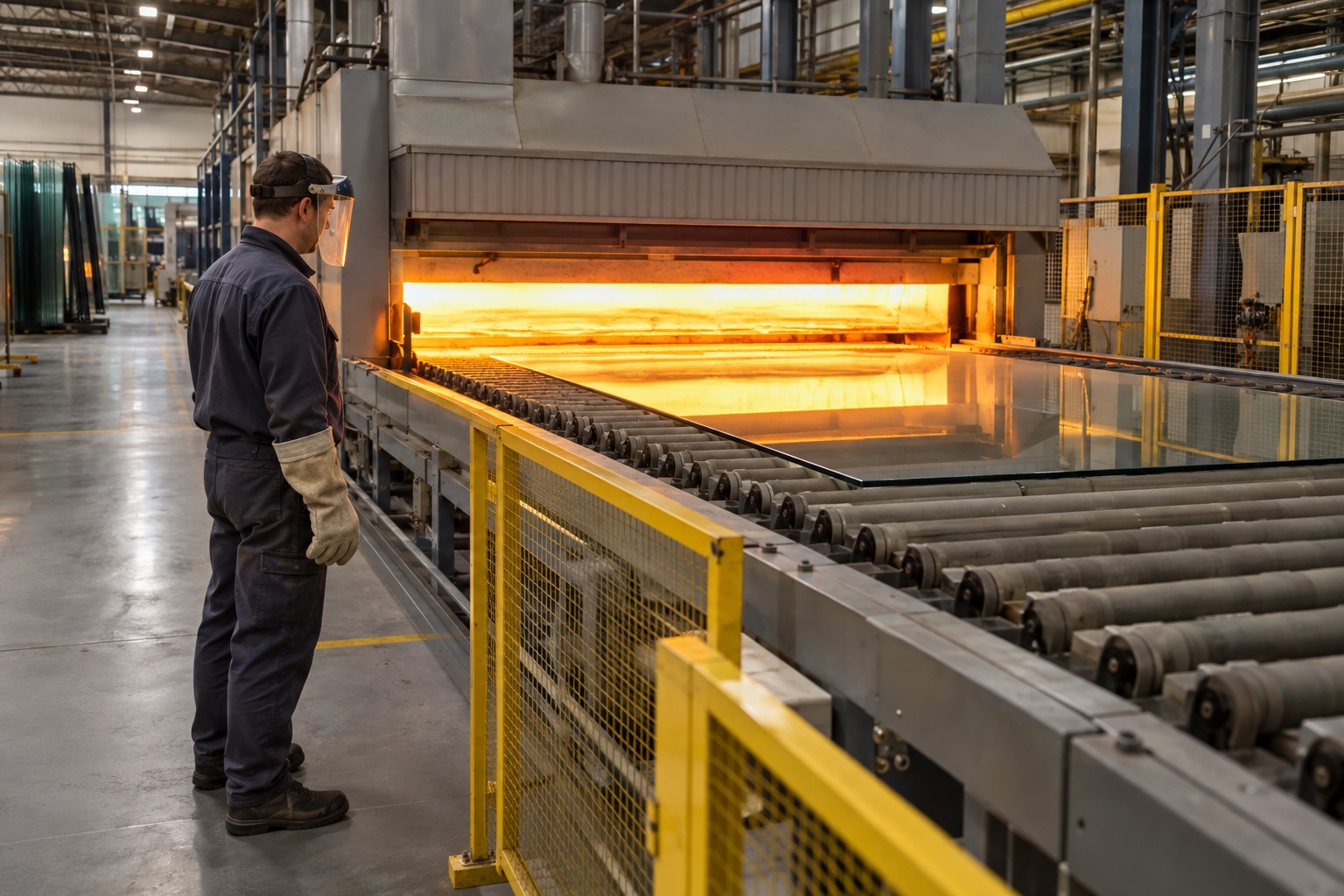
Glass manufacturing carries a genuinely unusual property exposure: the furnace itself. Industry trade publications describe the real operational risk of an improper furnace shutdown, where molten glass left inside is allowed to slowly freeze rather than being cooled and extracted under controlled conditions, a failure mode that can effectively destroy a continuously-operating furnace representing a massive capital investment. EPA's own technical documentation on furnace wall repairs independently confirms that uncontrolled molten-glass freezing is a recognized industrial failure mode, not a theoretical one.
The product side carries its own distinct, well-documented defect category. Spontaneous glass breakage, where a fully tempered glass panel shatters without any apparent external cause, is a real and extensively documented phenomenon in the architectural glass industry, caused by nickel sulfide (NiS) inclusions that expand over time inside the glass and trigger failure, sometimes months or years after installation. Both Vitro Architectural Glass and Saint-Gobain, major manufacturers in this space, publish technical material on the phenomenon, and heat-soak testing has become a recognized mitigation practice specifically because the defect cannot otherwise be detected before installation.
Workers' compensation exposure follows from the physical nature of the work: cuts and lacerations from glass handling, burns from furnace and forming operations, and repetitive-motion injuries in cutting and finishing lines are the recognized injury categories the Bureau of Labor Statistics tracks for this industry (NAICS 3272).
- Furnace "freeze" risk from improper shutdown is a real, documented property exposure
- Spontaneous glass breakage from nickel sulfide inclusions is a well-documented defect category
- Heat-soak testing exists specifically because this defect can't be detected before installation
- Cuts, burns, and repetitive-motion injuries are the BLS-tracked injury categories for this trade
- EPA NESHAP rules regulate furnace air emissions under the Clean Air Act
- ASTM standards (C1048, E1300) govern tempered and structural glass quality
- Continuously-operating furnaces represent major, hard-to-replace capital investment
Core Coverages for Flat, Container, and Specialty Glass Producers
A complete program layers coverage so each exposure has a clear home. Property and equipment breakdown coverage sits at the center for this trade specifically because of the furnace: a breakdown, an improper shutdown, or a controls failure can destroy equipment that takes significant time and cost to replace or rebuild, and business interruption coverage addresses the revenue lost while that happens. Products liability, including products-completed operations, responds to claims tied to spontaneous breakage or other defects that surface well after a glass panel has been installed, sometimes years later.
Workers compensation addresses the cut, burn, and repetitive-motion injury profile common to glass handling, forming, and finishing operations. General liability covers premises risk and third-party bodily injury or property damage, and environmental liability can matter given furnace emissions regulated under the Clean Air Act. Cargo and inland marine coverage protects finished glass products, which are themselves fragile and high-value, in transit between the plant and the installation site.
We assemble these from 15-plus A-rated carriers so the structure matches whether you produce flat architectural glass, container glass, fiberglass, or specialty/technical glass.
- Property and equipment breakdown for furnaces, forming lines, and finishing equipment
- Business interruption coverage for furnace downtime and controlled-shutdown events
- Products liability / products-completed operations for spontaneous breakage and defects
- Workers compensation for cut, burn, and repetitive-motion injury exposure
- Environmental liability for furnace emissions regulated under the Clean Air Act
- Cargo / inland marine for fragile, high-value finished glass product in transit
- General liability for premises and third-party bodily injury/property damage
Regulatory and Quality Standards for Glass Production
Glass furnace emissions fall under EPA's National Emission Standards for Hazardous Air Pollutants, with two specific rules applicable to this industry: the Glass Manufacturing Area Sources NESHAP governing general hazardous air pollutant emissions from area-source glass plants, and an older, more specific rule, the Inorganic Arsenic Emissions NESHAP, regulating arsenic emissions specifically from glass manufacturing furnaces under 40 CFR Part 61.
Product quality and liability exposure in architectural and flat glass is shaped directly by ASTM International standards. ASTM C1048 is the standard specification for heat-strengthened and fully tempered flat glass, and ASTM E1300 governs load-resistance determination for glass used in buildings, both directly relevant to how a products liability claim gets evaluated when a panel fails in service.
Workplace safety standards applicable to this trade include OSHA's general PPE requirements (29 CFR 1910.132-138) for burn and cut protection, along with specific provisions within OSHA's welding and cutting standard (1910.252) addressing protective glass/lens requirements. BLS publishes injury and illness data specifically for NAICS 3272 (Glass and Glass Product Manufacturing) under its broader Nonmetallic Mineral Product Manufacturing industry reporting.
- EPA's Glass Manufacturing Area Sources NESHAP governs general furnace HAP emissions
- A separate, older NESHAP (40 CFR Part 61) specifically regulates arsenic emissions
- ASTM C1048 specifies heat-strengthened and fully tempered flat glass requirements
- ASTM E1300 governs load-resistance standards for glass used in buildings
- OSHA general PPE standards (1910.132-138) apply to burn and cut protection
- BLS tracks injury/illness data specifically for NAICS 3272 glass manufacturing
- Confirm which NESHAP applies based on your furnace type and facility classification
Why Glass Producers Choose The Allen Thomas Group
The Allen Thomas Group is an independent, family-owned insurance agency founded in 2003 and licensed in 28 states. We are not tied to a single carrier, which means our advice is built around your facility's actual furnace type, production process, and product category, rather than a generic industrial manufacturing template.
Our advisors compare programs across 15-plus A-rated carriers and explain the trade-offs in plain language: how equipment breakdown coverage actually responds to a furnace shutdown event, why products-completed operations coverage matters for a defect that can surface years after installation, and which environmental endorsements matter given your facility's emissions profile. The agency holds an A+ rating with the Better Business Bureau, and we treat each renewal as a review rather than an auto-renewal, adjusting coverage as your production volume and product lines grow.
Above all, we act as your advocate. When a claim or an equipment loss arrives, you are dealing with people who understand how a glass furnace actually works, not a call-center queue.
- Independent, family-owned agency founded in 2003 and licensed in 28 states
- Access to 15-plus A-rated carriers for genuine program comparison
- A+ rating with the Better Business Bureau
- Advisory, consultative guidance built around your furnace type and production process
- Annual coverage reviews that scale with production volume and product lines
- Hands-on claims advocacy during an equipment loss or products liability event
- Deep experience structuring programs for high-value industrial equipment
How Much Does Glass Manufacturing Insurance Cost?
There is no single published rate for this category, because pricing depends heavily on furnace type and age, production volume, whether you produce flat, container, or specialty glass, claims history, and the business interruption exposure a furnace shutdown would create for your specific operation. Facilities with older or higher-value furnaces typically face different equipment breakdown underwriting than newer, more efficient installations.
Products liability pricing for architectural flat glass producers reflects the spontaneous-breakage risk profile specifically, which heat-soak testing practices can favorably affect. Environmental liability prices against your specific NESHAP classification and emissions controls. Because every variable shifts the total, the only accurate figure comes from comparing real quotes across carriers, which is the exercise our advisors run for each facility.
- Furnace type, age, and replacement value are major equipment breakdown pricing factors
- Product category (flat, container, fiberglass, specialty) affects products liability pricing
- Heat-soak testing practices can favorably affect spontaneous-breakage risk pricing
- Business interruption exposure scales with how a furnace shutdown affects your operation
- Environmental liability pricing reflects your specific NESHAP classification and controls
- Claims and defect history materially affect products liability renewal pricing
- Comparing real quotes across carriers is the only reliable way to see your actual number
Risk Management for Glass Production Facilities
Follow documented, controlled shutdown procedures for every furnace outage, planned or emergency, since an improperly managed shutdown is exactly the scenario that can freeze molten glass inside the furnace and destroy equipment that takes significant time to rebuild or replace. Maintain furnace monitoring and controls at a standard that gives operators real lead time to execute a controlled shutdown rather than reacting after a failure has already begun.
If you produce fully tempered architectural glass, consider heat-soak testing as a standard quality practice, since it remains the recognized method for reducing (not eliminating) the real risk of nickel sulfide-driven spontaneous breakage before product ships. Document that practice clearly, since it can meaningfully affect how a products liability claim is evaluated.
Finally, confirm your facility's NESHAP classification and emissions controls are current and properly documented, and reassess your equipment breakdown and business interruption limits whenever you add furnace capacity or change your production process.
- Follow documented, controlled shutdown procedures for every furnace outage
- Maintain furnace monitoring and controls that give operators real shutdown lead time
- Adopt heat-soak testing as standard practice for fully tempered architectural glass
- Document heat-soak testing practices to support products liability claim defense
- Confirm your NESHAP classification and emissions controls stay current
- Reassess equipment breakdown and business interruption limits with any furnace change
- Review the full program annually as production volume and product lines change
Frequently Asked Questions
Why is furnace equipment breakdown coverage so important for glass manufacturers?
An improperly managed furnace shutdown can leave molten glass inside to freeze solid, a real, documented failure mode that can effectively destroy a continuously-operating furnace representing major capital investment. Equipment breakdown coverage, paired with business interruption coverage, is built specifically for this kind of loss.
What is spontaneous glass breakage?
Spontaneous glass breakage is a real, well-documented phenomenon where fully tempered glass shatters without any apparent external cause, caused by nickel sulfide inclusions that expand inside the glass over time, sometimes failing months or years after installation. Heat-soak testing is the recognized mitigation practice.
Does glass manufacturing face specific environmental regulations?
Yes. Glass furnace emissions fall under EPA's Clean Air Act framework, including the Glass Manufacturing Area Sources NESHAP for general hazardous air pollutants and a separate, older NESHAP specifically regulating arsenic emissions from glass furnaces.
What ASTM standards apply to flat and architectural glass?
ASTM C1048 specifies requirements for heat-strengthened and fully tempered flat glass, and ASTM E1300 governs load-resistance determination for glass used in buildings. Both are directly relevant to how a products liability claim is evaluated when a glass panel fails in service.
What injuries are most common in glass manufacturing?
BLS tracks injury and illness data specifically for glass and glass product manufacturing (NAICS 3272). The recognized injury categories are cuts and lacerations from glass handling, burns from furnace and forming operations, and repetitive-motion injuries in cutting and finishing lines.
How much does glass manufacturing insurance cost?
There is no single published rate. Furnace type and age, production volume, product category, claims history, and business interruption exposure all affect pricing. Comparing real quotes across carriers is the only reliable way to see an accurate figure for your facility.
Protect Your Facility With a Program Built Around Your Risk
Our advisors compare programs across 15-plus A-rated carriers to structure equipment breakdown, products liability, and environmental coverage that fits your furnace and product mix. Call The Allen Thomas Group at (440) 826-3676 for a consultative review of your coverage.