
Packaging Manufacturing Insurance
A seal failure, a material-migration issue, or a mislabeled case can trigger a recall even when the product inside your customer's packaging was never the problem. Packaging manufacturing insurance protects contract packagers and co-packers against the product liability, automation, and regulatory exposures of running multi-material packaging lines for other brands. The Allen Thomas Group structures a complete program so your operation is defended on every run, not just the ones that go out the door clean.
Carriers We Represent
Why Packaging Manufacturers Need Specialized Insurance Coverage
Contract packagers and co-packers carry a distinctive liability profile: they're producing the container, not the product inside it, yet a packaging defect can trigger a recall of someone else's finished good. The Contract Packaging Association, the national trade organization for this sector, represents exactly this business model, companies that package, fill, and label products on behalf of other brands rather than manufacturing the product itself. That structural distinction, you made the box, not what's inside it, is exactly why a packaging-specific insurance program looks different from a generic product manufacturer's policy.
Products-completed operations coverage sits at the center of that program, because a packaging failure, a seal that doesn't hold, a material that migrates into food-contact product, inadequate tamper-evidence, typically doesn't surface until the packaged good has already shipped and reached a retailer or consumer. The products-completed operations concept in a standard commercial general liability policy, which carries its own separate aggregate limit, exists precisely for this kind of delayed-discovery claim.
Where a facility runs multiple packaging materials, corrugated, flexible film, rigid plastic, glass, or metal containers, under one roof, the equipment and automation risk compounds, and so does the regulatory footprint, particularly for any line touching food-contact packaging.
- Contract packaging/co-packing is a distinct business model from product manufacturing
- Products-completed operations coverage for packaging defects discovered after shipment
- FDA food-contact substance regulation for any line touching food packaging
- Packaging-line automation and robotics create real machine-guarding exposure
- Multi-material facilities (corrugated, film, rigid plastic, glass, metal) compound equipment risk
- State Extended Producer Responsibility (EPR) packaging laws are a growing compliance layer
- Client brand-protection and indemnification clauses are common in co-packing contracts
Core Coverages for Contract Packagers and Co-Packers
A complete program layers coverage so each exposure has a clear home. Products liability, including products-completed operations, responds to claims that a packaging defect, seal failure, or material migration caused harm or triggered a recall after the product shipped. General liability addresses premises risk and third-party bodily injury or property damage at the facility itself, distinct from the products-completed exposure.
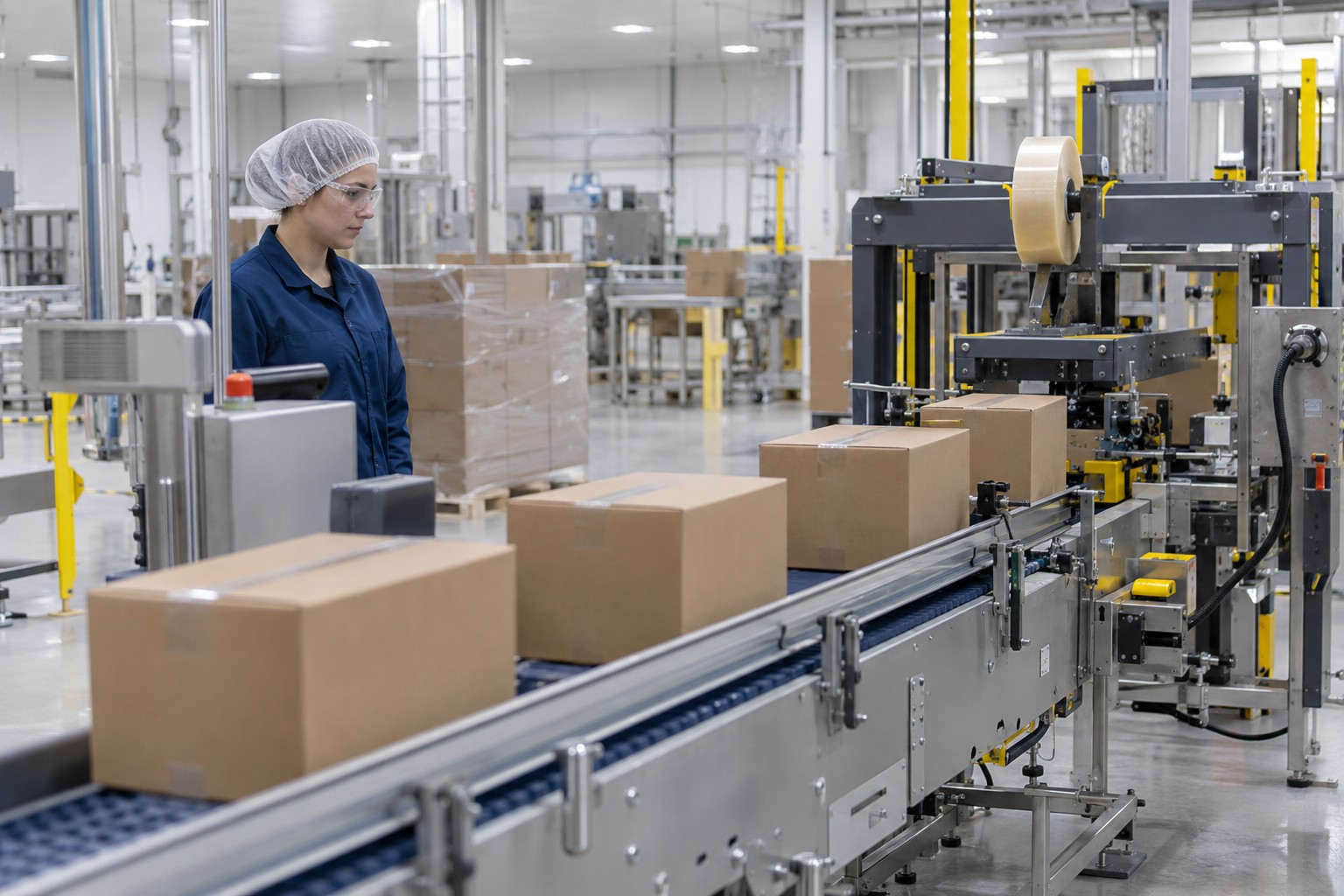
Equipment breakdown coverage matters acutely here, since packaging lines run case formers, fillers, cappers, labelers, and case sealers as integrated automated systems where a single component failure can halt an entire line. Workers compensation addresses the machine-guarding and material-handling injury exposure OSHA's general machinery standards are built to prevent, and cargo/inland marine coverage protects finished packaged goods and raw packaging materials in transit. For co-packers specifically, contractual liability review matters: client contracts often include indemnification and brand-protection clauses that should be checked against what your policy actually covers.
We assemble these from 15-plus A-rated carriers so the structure matches whether your facility runs a single material or a genuinely multi-material packaging operation.
- Products liability / products-completed operations for packaging-caused defects
- General liability for premises and third-party bodily injury/property damage
- Equipment breakdown for integrated filling, capping, labeling, and sealing lines
- Workers compensation for machine-guarding and material-handling injury exposure
- Cargo / inland marine for packaged goods and raw materials in transit
- Contractual liability review of client indemnification and brand-protection clauses
- Property coverage for multi-material inventory and finished-goods storage
Regulatory and Safety Standards for Packaging Operations
Any packaging line touching food-contact product falls under FDA's food-contact substance framework, 21 CFR Part 170 and the related indirect-food-additive regulations, which govern what materials and substances may legally contact food during packaging. FDA maintains a public Food Contact Notification inventory of authorized substances, and a packaging material that migrates into food outside its approved use can itself become a regulated safety failure, independent of whether the food product's own formulation was ever at fault.
Packaging and filling line equipment falls under OSHA's general machine-guarding standard, 29 CFR 1910.212, which requires guarding to protect operators from the hazards of power-driven machinery, directly applicable to case formers, fillers, and sealers running at production speed.
A newer and genuinely significant regulatory trend is Extended Producer Responsibility (EPR) packaging legislation. As of late 2025, seven states, California, Colorado, Maine, Maryland, Minnesota, Oregon, and Washington, have enacted packaging EPR laws, with Oregon the first to actively enforce its program. California's law requires producers to ensure all covered packaging is recyclable or compostable by 2032, with reporting obligations already underway. Packaging manufacturers and co-packers operating across state lines should expect this compliance layer to keep expanding.
- FDA 21 CFR Part 170 governs food-contact substances in packaging materials
- A packaging material migration issue can itself trigger a recall, independent of the product
- OSHA 29 CFR 1910.212 machine guarding applies directly to packaging/filling lines
- Seven states have enacted packaging EPR laws as of late 2025 (CA, CO, ME, MD, MN, OR, WA)
- Oregon is the first state actively enforcing its packaging EPR program
- California's EPR law requires fully recyclable/compostable covered packaging by 2032
- Confirm which EPR obligations apply in every state your packaged goods are sold
Why Packaging and Co-Packing Operations Choose The Allen Thomas Group
The Allen Thomas Group is an independent, family-owned insurance agency founded in 2003 and licensed in 28 states. We are not tied to a single carrier, which means our advice is built around your actual operation, whether you run a single-material line or a genuinely multi-material packaging facility, rather than a generic manufacturing template.
Our advisors compare programs across 15-plus A-rated carriers and explain the trade-offs in plain language: how products-completed operations coverage responds to a packaging-caused recall, where your general liability ends and your products liability begins, and which contractual indemnification terms in your client agreements actually match what your policy covers. The agency holds an A+ rating with the Better Business Bureau, and we treat each renewal as a review rather than an auto-renewal, adjusting coverage as your client roster and material mix grow.
Above all, we act as your advocate. When a claim or a recall arrives, you are dealing with people who understand the contract-packaging business model, not a call-center queue.
- Independent, family-owned agency founded in 2003 and licensed in 28 states
- Access to 15-plus A-rated carriers for genuine program comparison
- A+ rating with the Better Business Bureau
- Advisory, consultative guidance built around your facility's actual material mix
- Annual coverage reviews that scale with client roster and production volume
- Hands-on claims advocacy during a recall or products liability event
- Deep experience structuring programs for regulated manufacturing operations
How Much Does Packaging Manufacturing Insurance Cost?
There is no single published rate for this category, because pricing depends on the materials your facility runs, production volume, whether you handle food-contact packaging, your claims history, and the indemnification limits your client contracts require. A facility running flexible film or rigid plastic food-contact packaging typically faces different underwriting questions than one producing non-food corrugated shipping cartons.
Equipment breakdown coverage prices against the replacement value and complexity of your integrated packaging lines, and products-completed operations exposure scales with the number and reach of brands you package for. Because every variable shifts the total, the only accurate figure comes from comparing real quotes across carriers, which is the exercise our advisors run for each facility.
- Material mix (corrugated, film, rigid plastic, glass, metal) affects underwriting
- Food-contact packaging adds a distinct compliance and claims dimension
- Production volume and client count are significant premium drivers
- Claims and recall history materially affect products liability pricing
- Client contract indemnification requirements can set a required minimum limit
- Equipment breakdown pricing scales with line complexity and replacement value
- Comparing real quotes across carriers is the only reliable way to see your actual number
Risk Management for Multi-Material Packaging Facilities
Document your food-contact material compliance clearly for every packaging substrate you run, since the regulatory burden under FDA's food-contact framework applies per material, not per facility as a whole. Review client contracts for indemnification and brand-protection language before signing, since a co-packer that agrees to indemnify a client beyond what its policy covers has assumed uninsured risk.
Maintain OSHA-compliant machine guarding across every packaging line, particularly as automation and line speed increase, since the gap between a guarded and unguarded point of operation is exactly where injury claims originate. Track Extended Producer Responsibility obligations in every state your packaged goods reach, not just where your facility is physically located, since this is a genuinely expanding compliance area that varies state by state.
Finally, reassess your products-completed operations limits whenever you add a new client brand or a new packaging material to your line, since a limit set for your original client mix may no longer reflect your actual current exposure.
- Document food-contact material compliance separately for each packaging substrate
- Review client indemnification and brand-protection clauses before signing
- Maintain OSHA-compliant machine guarding across every automated packaging line
- Track EPR packaging obligations in every state your goods are sold, not just where you operate
- Reassess products-completed operations limits with every new client brand or material
- Coordinate tamper-evidence and seal-integrity testing as a documented quality practice
- Review the full program annually as client roster and material mix change
Frequently Asked Questions
What is a contract packager or co-packer?
A contract packager, or co-packer, is a company that packages, fills, and labels products on behalf of other brands rather than manufacturing the product itself. The Contract Packaging Association is the national trade organization representing this distinct business model.
Can a packaging defect trigger a recall even if the product inside is fine?
Yes. A seal failure, material migration into food-contact product, or inadequate tamper-evidence can itself be a regulated safety issue under FDA's food-contact substance framework, independent of whether the product's own formulation was ever at fault.
Does FDA regulate packaging materials that touch food?
Yes. 21 CFR Part 170 and related regulations govern food-contact substances, and FDA maintains a public inventory of authorized materials through its Food Contact Notification program. Any packaging line touching food product falls under this framework.
What are Extended Producer Responsibility (EPR) packaging laws?
EPR laws shift packaging waste-management responsibility onto producers. As of late 2025, seven states (California, Colorado, Maine, Maryland, Minnesota, Oregon, and Washington) have enacted packaging EPR laws, with Oregon the first to actively enforce its program and California requiring fully recyclable or compostable covered packaging by 2032.
Does OSHA regulate packaging and filling line equipment?
Yes. OSHA's general machine-guarding standard, 29 CFR 1910.212, requires guarding to protect operators from hazards created by power-driven machinery, which applies directly to case formers, fillers, cappers, labelers, and case sealers.
How much does packaging manufacturing insurance cost?
There is no single published rate. Material mix, production volume, whether you handle food-contact packaging, claims history, and client contract requirements all affect pricing. Comparing real quotes across carriers is the only reliable way to see an accurate figure for your facility.
Protect Your Facility With a Program Built Around Your Risk
Our advisors compare programs across 15-plus A-rated carriers to structure products liability, equipment breakdown, and general liability coverage that fits your actual material mix. Call The Allen Thomas Group at (440) 826-3676 for a consultative review of your coverage.