
Lead Abatement Contractor Insurance: Coverage Built for Lead Exposure Risk
The Allen Thomas Group is an independent, family-owned insurance agency, licensed since 2003, that builds lead abatement insurance programs around the real hazards of the trade: lead dust exposure, contamination cleanup costs, and flawed testing or remediation advice. We shop your coverage, contractors pollution liability, general liability, professional liability, workers compensation, and commercial auto, across 15+ A-rated carriers and specialized environmental underwriters, licensed in 28 states.
Carriers We Work With
Last Updated: September 29, 2026
What Is Lead Abatement Contractor Insurance?
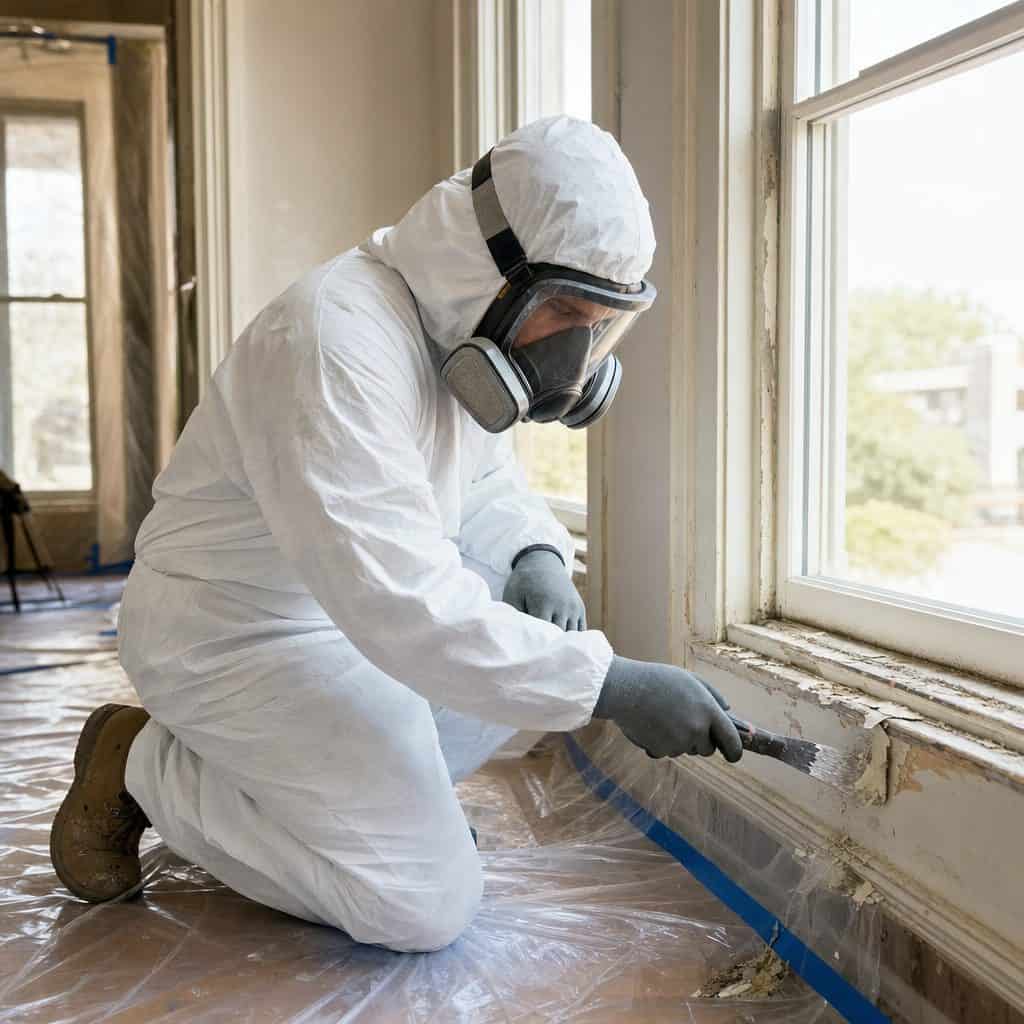
Lead abatement contractors need specialized insurance because standard general liability policies typically exclude lead-related health and contamination claims entirely. Contractors pollution liability covers bodily injury, property damage, and cleanup costs resulting from the escape of lead dust or toxic materials during abatement, transport, or disposal. A general liability policy still matters, but only for third-party accidents unrelated to pollution, such as a visitor tripping over equipment on site.
The right program depends on whether the business performs removal only, or also does lead testing, risk assessment, or remediation consulting, and whether projects are residential, commercial, or industrial. Work on pre-1978 housing and child-occupied facilities falls under EPA's Renovation, Repair, and Painting Rule, which requires firm and individual Lead-Safe certification regardless of what insurance is in place.
Why Lead Work Carries a Distinct Insurance Profile
Lead exposure illness can take years to surface after the actual exposure, and standard commercial policies were never built to price or cover that kind of long-tail environmental risk.
General Liability Explicitly Excludes Lead Poisoning Claims
Standard GL policies will explicitly exclude lead poisoning and contamination claims by name. Contractors pollution liability is the coverage written specifically to close this gap, and a lead abatement business operating without it has no real protection against its primary exposure.
Occurrence Coverage Matters More Here Than in Most Trades
An occurrence form covers claims for incidents that happened during the policy period, no matter when the claim is filed, generally superior to a claims-made policy for environmental risks like lead exposure that can take years to surface. Confirm which form your pollution liability policy uses before assuming your coverage extends as far as your real exposure.
Certification Is a Condition of Coverage, Not Just Compliance
Insurers often require proof of valid Lead-Safe Work Practices training certificates for the firm and individual workers before issuing coverage at all. Underwriters treat this the same way they treat operator certification in other high-hazard trades, as a real underwriting factor, not paperwork.
Core Insurance Coverages for This Trade
Contractor's Pollution Liability (CPL)
Contractors pollution liability covers bodily injury, property damage, and cleanup costs resulting from the escape of lead dust or toxic materials during abatement, transport, or disposal. Most contractors carry limits ranging from $1 million to $10 million depending on project requirements.
Commercial General Liability (GL)
General liability protects against third-party accidents, bodily injury, or property damage unrelated to pollution, such as a visitor tripping over equipment. Standard GL policies will explicitly exclude lead poisoning claims, so this coverage handles only the non-environmental side of the business.
Workers Compensation Insurance
Workers compensation covers medical care and wage replacement if employees suffer on-the-job injuries or lead exposure illnesses, both of which are real, regulated risks under OSHA's construction lead standard.
Professional Liability (E&O)
Professional liability protects the business if a client sues over alleged mistakes in lead testing, inspection, or remediation consulting, a professional-judgment exposure distinct from physical contamination.
Commercial Auto Insurance
Commercial auto covers company vehicles used to transport crew, tools, and hazardous waste to and from job sites, a distinct exposure from the pollution risk of the abatement work itself.
Excess / Umbrella Liability
For larger commercial or government projects requiring the upper end of the typical $1 million to $10 million pollution liability range, excess liability can extend limits above a primary contractors pollution liability policy.
How Much Does Lead Abatement Contractor Insurance Cost?
A small lead abatement operation typically pays $2,500 to $4,500 per year for general liability alone. A company carrying general liability, contractors pollution liability, professional liability, and workers compensation together can expect combined annual premiums of $18,000 to $30,000 or more, with contractors pollution liability limits commonly ranging from $1 million to $10 million depending on project requirements.
| Coverage | Avg Monthly Cost | Avg Annual Cost | Typical Limit |
|---|---|---|---|
| General Liability | $230 | $2,760 | $1M / $2M aggregate |
| Contractors Pollution Liability | $340 | $4,080 | $1M–$10M |
| Professional Liability (E&O) | $260 | $3,120 | $1M / $2M aggregate |
| Workers Compensation | $760 | $9,120 | Statutory |
| Commercial Auto | $260 | $3,120 | $1M CSL |
| Excess / Umbrella | $400 | $4,800 | $5M–$10M |
These are industry averages, not quotes. A company that performs testing or risk assessment in addition to removal, works on larger commercial or government projects, or has prior claims will pay more than the averages above.
Key factors that drive lead abatement premiums higher than the averages above:
- Removal-only work versus adding testing, risk assessment, or consulting services
- Project size and whether pollution liability limits need to reach $5 million to $10 million
- Payroll growth and crew size
- Commercial or government contracts requiring higher limits and specific endorsements
- Prior contamination, lead exposure, or professional liability claims in the last three to five years
How The Allen Thomas Group Can Help You
If you run a lead abatement business, whether you do removal only or also handle testing and risk assessment, The Allen Thomas Group shops your coverage across 15+ A-rated carriers and specialized environmental underwriters instead of presenting a single company's take-it-or-leave-it quote. We help you confirm your contractors pollution liability is written on an occurrence form and matched to your real project sizes.
Certifications and Requirements for This Trade
Work on pre-1978 housing and child-occupied facilities falls under EPA's Renovation, Repair, and Painting Rule, which requires firm-level and individual Lead-Safe certification for anyone paid to disturb painted surfaces in these settings, separate from any insurance requirement. Under OSHA's construction lead standard, employers must provide blood lead level testing and medical surveillance for workers exposed above the action level, with medical removal protection and continued wages if blood lead levels reach a regulated threshold.
Insurers often require proof of valid Lead-Safe Work Practices training certificates for the firm and individual workers before issuing coverage. Confirm your certifications are current before applying, since a lapse can delay or complicate underwriting.
Common Claims in This Trade and How Coverage Responds
Scenario 1: Lead Dust Escapes Containment During Removal
Lead dust escapes a containment area during paint removal, contaminating an occupied portion of a home and triggering testing and cleanup costs. Because this is a contamination claim, it falls to contractors pollution liability, not general liability.
Scenario 2: A Flawed Lead Risk Assessment
A property is cleared as lead-safe based on a risk assessment that is later found to be incomplete, and a child occupant is later diagnosed with elevated blood lead levels. Because this is a claim about professional judgment rather than physical contamination the contractor directly caused, it falls to professional liability.
Scenario 3: A Worker's Blood Lead Level Exceeds the Threshold
Routine medical surveillance shows a worker's blood lead level has reached the regulated removal threshold, requiring the employer to remove the worker from lead exposure while maintaining pay. Workers compensation covers the associated medical care, and the exposure illness itself is a real workers compensation claim, not just a workplace injury.
Scenario 4: A Company Vehicle Transporting Waste Is Involved in an Accident
A vehicle transporting sealed lead-contaminated waste is involved in an accident en route to a disposal facility. Commercial auto covers the liability and physical damage from the accident itself, provided the vehicle is properly titled and insured under the business.
Frequently Asked Questions
What kind of insurance does a lead abatement contractor need?
Most lead abatement contractors need contractors pollution liability as the core coverage, since standard general liability policies typically exclude lead-related health and contamination claims. General liability covers third-party accidents unrelated to pollution, professional liability covers mistakes in testing, inspection, or remediation consulting, workers compensation covers on-the-job injuries and lead exposure illnesses, and commercial auto covers vehicles transporting crew, tools, and hazardous waste.
How much does lead abatement contractor insurance cost?
A small lead abatement operation typically pays $2,500 to $4,500 per year for general liability alone. A company carrying general liability, contractors pollution liability, professional liability, and workers compensation together can expect combined annual premiums of $18,000 to $30,000 or more, with contractors pollution liability limits commonly ranging from $1 million to $10 million depending on project requirements.
What are the insurance requirements for lead abatement contractors?
Most states require a licensed lead abatement or renovation firm to carry general liability insurance, and residential work on pre-1978 housing falls under EPA's Renovation, Repair, and Painting Rule, which requires firm and individual Lead-Safe certification regardless of insurance. Commercial and government projects commonly require contractors pollution liability limits between $1 million and $10 million, and insurers themselves often require proof of valid Lead-Safe certification before issuing coverage.
Does general liability cover lead poisoning claims?
No. Standard commercial general liability policies explicitly exclude lead poisoning and lead-related contamination claims. Contractors pollution liability is a separate, specialized coverage written specifically to cover bodily injury, property damage, and cleanup costs resulting from the escape of lead dust or toxic materials during abatement, transport, or disposal.
What is the difference between occurrence and claims-made policies, and which is better for lead abatement?
An occurrence form covers claims for incidents that happened during the policy period, no matter when the claim is actually filed. A claims-made form only covers a claim if it is filed while the policy is active or during an extended reporting period. Because lead exposure illness can surface years after the actual exposure, an occurrence form is generally considered superior to a claims-made policy for this type of environmental risk.
What certifications do insurers require before writing lead abatement coverage?
Insurers commonly require proof of valid Lead-Safe Work Practices training certificates for both the firm and individual workers before issuing coverage, consistent with EPA's Renovation, Repair, and Painting Rule requirements for work on pre-1978 housing and child-occupied facilities. Underwriters treat this certification as a real factor in both eligibility and pricing, not a paperwork formality.
What makes one lead abatement contractor insurance policy or agency the best fit for my business?
The best fit includes contractors pollution liability on an occurrence form with limits matched to your actual project sizes, from $1 million on smaller residential jobs up to $10 million for larger commercial or government contracts, not just the cheapest general liability quote. An independent agency that shops multiple A-rated carriers and specialized environmental underwriters on your behalf is generally better positioned to find that fit.
Does ATG write lead abatement contractor insurance in Texas and other states?
The Allen Thomas Group is licensed in 28 states, including Texas, and writes lead abatement insurance programs for contractors performing removal, testing, and remediation consulting work on residential, commercial, and industrial projects. Call or request a quote to confirm current availability and carrier options for your specific state.
Does workers compensation cover lead exposure illness, not just injury?
Yes. Workers compensation covers medical care and wage replacement for employees who suffer lead exposure illness as well as on-the-job injuries. Employers are also required under OSHA's construction lead standard to provide blood lead level testing and medical surveillance for workers exposed above the action level, with medical removal protection and continued pay if blood lead levels reach a regulated threshold.
What professional liability coverage do lead inspectors and risk assessors need?
Lead inspectors and risk assessors who provide testing results or remediation recommendations need professional liability (errors and omissions) coverage, which protects the business if a client alleges a mistake in lead testing, inspection, or consulting advice. This is a claim about professional judgment, not physical contamination, which is why it is separate from contractors pollution liability.
Get Your Environmental Contractor Insurance Program
The Allen Thomas Group is an independent, family-owned broker licensed in 28 states with access to 15+ A-rated carriers and specialized environmental underwriters. One call gets you competitive rates from across the market, not a single carrier's take-it-or-leave-it quote. Certificates of insurance issued same day for active policies.