
Illinois Tree Service Insurance
The Allen Thomas Group is an independent, family-owned insurance agency, licensed since 2003, that builds tree service insurance programs for Illinois arborists and tree care contractors around the real hazards of the trade, including a Chicago municipal permit rule most out-of-state crews never expect. We shop your coverage, general liability, workers compensation, inland marine equipment coverage, commercial auto, and professional liability, across 15+ A-rated carriers, licensed in 28 states.
Carriers We Work With
Last Updated: September 29, 2026
What Is Tree Service Insurance in Illinois?
Illinois tree service insurance is the same core package described on our national tree service insurance page, general liability, workers compensation, commercial auto, inland marine equipment coverage, and professional liability, applied to a state where Chicago's own municipal code creates a permitting requirement most crews outside the city never encounter, on top of a real emerald ash borer history statewide.
The biggest state-specific difference is that Illinois splits into two very different regulatory pictures depending on where the work happens. A company working exclusively in unincorporated areas or smaller towns may never encounter anything like Chicago's parkway-tree permit system, while a company that also takes Chicago jobs needs a completely separate compliance habit just for that city.
Why Illinois Tree Care Companies Face a Different Risk Picture
Illinois's defining fact for this trade is municipal, not statewide: Chicago treats parkway trees as city property, and that changes the liability picture for any crew working there.
Chicago's Parkway Trees Are City Property, Not the Homeowner's
Chicago's Municipal Code, Chapter 10-32 (Trees, Plants and Shrubs), makes parkway trees, the trees planted in the strip between the sidewalk and the street, the property of the city rather than the adjoining homeowner. A permit from the City Forester is required before any removal, trimming, or protective work on a parkway tree, with real violation and penalty provisions for unpermitted work. This is a genuinely different liability structure than a typical residential-property tree job.
Illinois Has Its Own Distinct Emerald Ash Borer History
The Illinois Department of Agriculture confirms the emerald ash borer was first detected on June 9, 2006, in a subdivision called The Windings near Lily Lake in Kane County, west of Chicago, a homeowner discovery later confirmed by USDA APHIS. This gave Illinois its own removal and treatment demand curve distinct from Michigan's 2002 origin point or Indiana's 2004 detection.
Standard Private-Carrier Workers Compensation
Illinois uses the standard private-carrier workers compensation system, administered by the Illinois Workers' Compensation Commission, with tree pruning and removal filed under the same NCCI classification 0106 used nationally for the trade.
Core Insurance Coverages for Illinois Arborists
The coverage types match the national tree service program: general liability, workers compensation, commercial auto, inland marine, and professional liability, all shopped across our full carrier panel.
General Liability Insurance
General liability covers the property-damage exposure of removal and trimming work, including the added risk of performing unpermitted work on a Chicago parkway tree, which is legally city property.
Workers Compensation Insurance
Required for Illinois tree service crews under classification 0106, shopped across our full carrier panel.
Commercial Auto Insurance
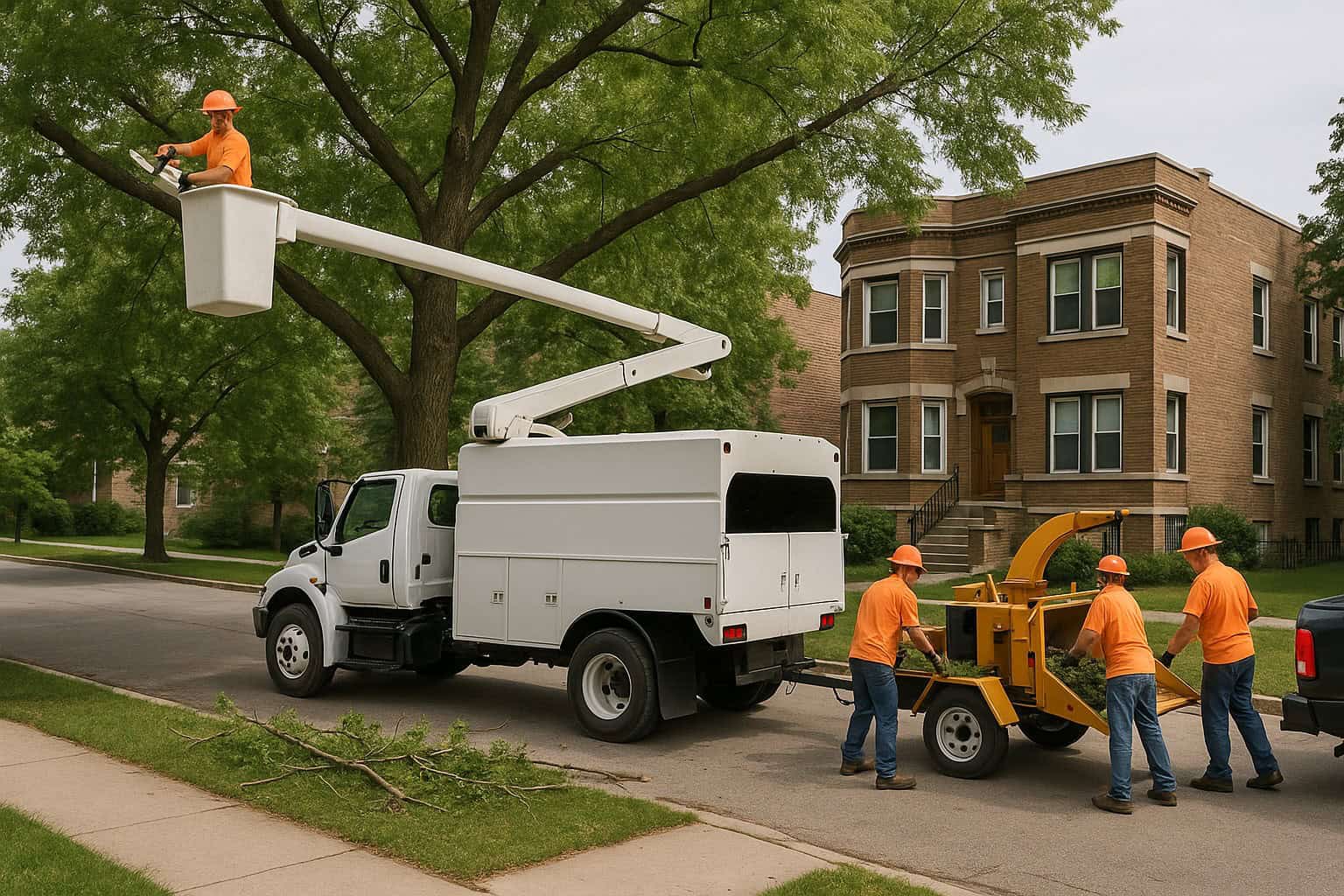
Commercial auto covers the trucks and chipper trailers your crews rely on to move between job sites across Chicago and the rest of the state.
Inland Marine (Tools and Equipment)
Chainsaws, stump grinders, and crane attachments are covered wherever they travel across the state, whether stolen from a truck overnight or damaged on a job site.
Professional Liability (E&O)
Illinois arborists who perform paid tree health assessments or municipal permit consulting should carry professional liability alongside general liability.
How Much Does Tree Service Insurance Cost in Illinois?
General liability pricing in Illinois falls in the same national range described on our tree service insurance page, roughly $750 to $2,300 per year for a small operation, driven by crew size, equipment, and whether crane-assisted removals are part of the regular work. Companies that regularly take on Chicago parkway-tree permit work should expect underwriters to ask about municipal-permit compliance history, since unpermitted work on city-owned trees can create a distinct liability exposure that carriers weigh alongside standard claims history. Workers compensation rates for the tree care classification vary by carrier, payroll, and claims history.
Key factors that drive Illinois tree service premiums:
- Volume of Chicago parkway-tree permit work
- Volume of ongoing ash removal and treatment work
- Payroll and crew size
- Prior claims history
- Municipal or utility contract requirements for higher limits
How The Allen Thomas Group Can Help You
We shop your general liability, workers compensation, commercial auto, inland marine, and professional liability across 15+ A-rated carriers, and we help Illinois tree service companies understand how Chicago's parkway-tree permit rule affects their coverage needs.
Licensing and Regulatory Notes for Illinois Tree Care Businesses
No state-level tree service or arborist license exists in Illinois; the Illinois Department of Financial and Professional Regulation's full list of regulated professions includes only "Landscape Architect," a design-focused credential not applicable to tree removal or trimming crews. Chicago's own Bureau of Forestry administers the city's parkway-tree permitting program under Municipal Code Chapter 10-32, requiring a permit from the City Forester before removal or trimming work on a parkway tree. Workers compensation runs through the standard private-carrier system administered by the Illinois Workers' Compensation Commission.
Companies that work in both Chicago and its suburbs should maintain two separate compliance checklists rather than one, since the city's parkway-tree permit system has no equivalent in most surrounding municipalities. Confirming which trees on a given job are legally city property, not the homeowner's, before starting work is worth building into every Chicago-area estimate.
Common Illinois Tree Service Claims and How Coverage Responds
Scenario 1: A Parkway Tree Removal Is Disputed by the City
A crew removes a parkway tree at a homeowner's request without pulling the required City Forester permit, and the city cites the contractor. This kind of regulatory-compliance dispute is the type of exposure professional liability is designed to help address.
Scenario 2: A Fence Is Damaged During a Suburban Removal
A crew removing an ash-borer-killed tree in a Chicago suburb misjudges the drop zone and damages a neighbor's fence. This falls under the general liability policy's property damage coverage.
Scenario 3: A Climber Is Injured During a Large Removal
A climber falls and is injured while removing a large tree. Workers compensation covers medical bills and a portion of lost wages.
Scenario 4: A Stump Grinder Is Stolen from a Job Site
A stump grinder is stolen overnight from a job site trailer in the Chicago metro area. This falls under inland marine (tools and equipment) coverage.
Frequently Asked Questions
Does Chicago require a permit to remove a parkway tree?
Yes. Chicago's Municipal Code (Chapter 10-32, Trees, Plants and Shrubs) makes parkway trees, the trees planted in the strip between the sidewalk and the street, the property of the city, and requires a permit from the City Forester before any removal, trimming, or protective work is performed on them. The City's Bureau of Forestry administers this permitting program directly.
What happens if a tree service works on a Chicago parkway tree without a permit?
Chicago's Municipal Code includes violation and penalty provisions for unpermitted work on parkway trees, since these trees are legally city property rather than the adjoining homeowner's. A tree service performing unpermitted parkway work takes on both a municipal-code liability exposure and a customer-facing risk if the work is later cited.
When was the emerald ash borer first found in Illinois?
The Illinois Department of Agriculture confirms the emerald ash borer was first detected on June 9, 2006, in a subdivision called The Windings near Lily Lake in Kane County, west of Chicago, a homeowner discovery later confirmed by USDA APHIS.
Does Illinois require workers compensation for tree service companies?
Yes, standard private-carrier workers compensation applies to Illinois tree service businesses, administered by the Illinois Workers' Compensation Commission, with tree pruning and removal work filed under the same NCCI classification 0106 used nationally for the trade.
What insurance does a tree service business need in Illinois?
Most Illinois tree service businesses need general liability as the foundation, workers compensation under classification 0106, inland marine for chainsaws and stump grinders, commercial auto for trucks and chipper trailers, and professional liability if they perform paid tree health assessments or consulting work.
How much does tree service insurance cost in Illinois?
General liability for a small Illinois tree service operation typically falls in the same $750 to $2,300 per year range seen nationally, driven by crew size, equipment, and whether crane-assisted removals are part of the regular work.
Does ATG write tree service insurance throughout Illinois?
Yes. The Allen Thomas Group writes tree service insurance programs for companies across Illinois, including Chicago and the surrounding suburbs. Call or request a quote to get started.
Get Your Illinois Tree Service Insurance Program
The Allen Thomas Group is an independent, family-owned agency with access to 15+ A-rated carriers. One call gets you competitive rates from across the market, not a single carrier's take-it-or-leave-it quote. Certificates of insurance issued same day for active policies.