
South Carolina Tree Service Insurance
The Allen Thomas Group is an independent, family-owned insurance agency, licensed since 2003, that builds tree service insurance programs for South Carolina arborists and tree care contractors around the real hazards of the trade, including one of the most devastating hurricanes in the state's recorded history. We shop your coverage, general liability, workers compensation, inland marine equipment coverage, commercial auto, and professional liability, across 15+ A-rated carriers, licensed in 28 states.
Carriers We Work With
Last Updated: September 30, 2026
What Is Tree Service Insurance in South Carolina?
South Carolina tree service insurance is the same core package described on our national tree service insurance page, general liability, workers compensation, commercial auto, inland marine equipment coverage, and professional liability, applied to a state whose own defining tree-damage disaster is a coastal, wind-driven hurricane rather than a mountain flood or tornado outbreak.
The biggest state-specific difference is seasonal concentration. South Carolina's coastal hurricane exposure means a large share of a tree company's annual claims activity, and its heaviest equipment use, can cluster into a handful of storm-response weeks each year, which is very different from a steady, evenly distributed workload most general liability rating assumes.
Why South Carolina Tree Care Companies Face a Different Risk Picture
South Carolina's defining fact for this trade is a single historic hurricane, verified directly against the National Weather Service's own record.
Hurricane Hugo Devastated the Coastal Forest Canopy
The National Weather Service's Charleston office confirms Hurricane Hugo made landfall as a Category 4 storm at Sullivan's Island on September 21-22, 1989, with sustained winds near 140 mph and peak gusts of 108 mph recorded in downtown Charleston, plus a storm surge of roughly 20 feet. Hugo is widely cited as one of the most devastating storms in South Carolina's history, causing catastrophic forest and tree damage across the coastal region, including the Francis Marion National Forest, and it remains South Carolina's own defining tree-damage disaster, distinct from the mountain-flooding and tornado-outbreak angles used in neighboring states.
No Tree Service License, But a Separate Licensed Foresters Board Exists
South Carolina's Department of Labor, Licensing and Regulation does not list a tree service or arborist license among its regulated professions. The state does license a separate Board of Registration for Foresters, but its scope is confined to professional forestry work for landowners and the timber industry, not urban tree removal or pruning companies, an important distinction for anyone comparing SC's regulatory landscape to a state with genuine tree-service licensure.
Standard Private-Carrier Workers Compensation
South Carolina uses the standard private-carrier workers compensation system, administered by the South Carolina Workers' Compensation Commission, with tree pruning and removal typically filed under NCCI classification 0106.
Core Insurance Coverages for South Carolina Arborists
The coverage types match the national tree service program: general liability, workers compensation, commercial auto, inland marine, and professional liability, all shopped across our full carrier panel.
General Liability Insurance
General liability covers the property-damage exposure that comes with hurricane-cleanup work along South Carolina's coast, the same region Hurricane Hugo devastated in 1989.
Workers Compensation Insurance
Required for South Carolina tree service crews under classification 0106, shopped across our full carrier panel.
Commercial Auto Insurance
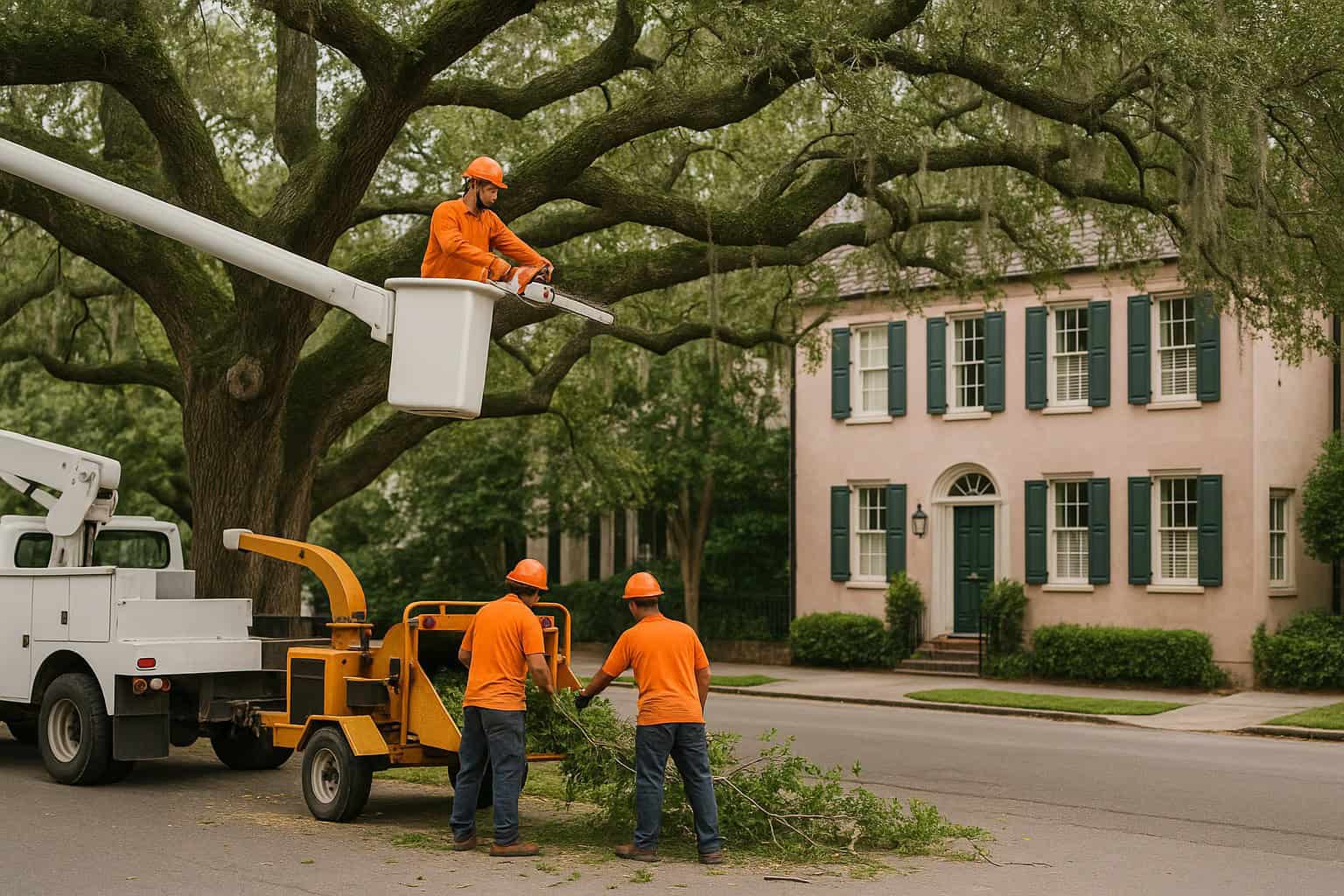
Commercial auto covers the trucks and chipper trailers your crews rely on to move between job sites across Charleston, Columbia, and the coastal Lowcountry.
Inland Marine (Tools and Equipment)
Chainsaws, stump grinders, and crane attachments are covered wherever they travel across the state, whether stolen from a truck overnight or damaged on a job site.
Professional Liability (E&O)
South Carolina arborists who perform paid tree health assessments or storm-risk consulting should carry professional liability alongside general liability.
How Much Does Tree Service Insurance Cost in South Carolina?
General liability pricing in South Carolina falls in the same national range described on our tree service insurance page, roughly $750 to $2,300 per year for a small operation, driven by crew size, equipment, and whether hurricane-cleanup and crane-assisted removals are part of the regular work. Because South Carolina has no state licensing bar for this trade, carriers underwriting a South Carolina tree service tend to weigh the company's own safety practices and claims history more heavily, and companies with a documented hurricane-response track record should expect underwriters to review storm-cleanup claims history closely.
Key factors that drive South Carolina tree service premiums:
- Volume of hurricane and coastal storm-cleanup work
- Documented safety training and equipment maintenance practices
- Payroll and crew size
- Prior claims history
- Municipal or utility contract requirements for higher limits
How The Allen Thomas Group Can Help You
We shop your general liability, workers compensation, commercial auto, inland marine, and professional liability across 15+ A-rated carriers, and we help South Carolina tree service companies structure coverage that holds up during high-volume hurricane-response periods.
Licensing and Regulatory Notes for South Carolina Tree Care Businesses
The National Weather Service's Charleston office documents Hurricane Hugo's 1989 landfall in full detail, including its Category 4 intensity and devastating coastal impact. On licensing, South Carolina's Department of Labor, Licensing and Regulation does not list a tree service or arborist license among its regulated professions, though it does maintain a separate Board of Registration for Foresters confined to professional forestry work. Workers compensation runs through the standard private-carrier system administered by the South Carolina Workers' Compensation Commission.
Because forestry licensure and tree service work are handled by entirely separate regulatory tracks in South Carolina, companies shouldn't assume a Registered Forester credential satisfies any tree-service-specific expectation a municipality or utility client might have. Confirming exactly what a given contract or municipality expects, rather than assuming reciprocity between the two tracks, is worth doing before bidding.
Common South Carolina Tree Service Claims and How Coverage Responds
Scenario 1: Storm Debris Removal Damages a Charleston-Area Home
A crew clearing hurricane debris near Charleston accidentally damages a homeowner's siding while removing a fallen tree. This falls under the general liability policy's property damage coverage.
Scenario 2: A Worker Is Injured During Storm Cleanup
A crew member is injured while removing a large storm-damaged tree along the coast. Workers compensation covers medical bills and a portion of lost wages.
Scenario 3: A Chainsaw Is Stolen During a Deployment
Equipment is stolen from a job site trailer while a crew is deployed for extended hurricane-cleanup work in the Lowcountry. This falls under inland marine (tools and equipment) coverage.
Scenario 4: A Tree Risk Assessment Is Disputed After a Failure
An arborist's paid risk assessment concludes a tree is stable ahead of hurricane season, and it later fails, damaging property. Because this is a professional-judgment claim, it falls to professional liability, not general liability.
Frequently Asked Questions
How severe was Hurricane Hugo for South Carolina's trees?
Extremely severe. The National Weather Service's Charleston office confirms Hurricane Hugo made landfall as a Category 4 storm at Sullivan's Island, South Carolina, on September 21-22, 1989, with sustained winds near 140 mph and peak gusts of 108 mph recorded in downtown Charleston, plus a storm surge of roughly 20 feet. Hugo is widely cited as one of the most devastating storms in South Carolina's history, causing catastrophic forest and tree damage across the coastal region, including the Francis Marion National Forest.
Does South Carolina require a license for tree service companies?
No. South Carolina's Department of Labor, Licensing and Regulation does not list a tree service or arborist license among its regulated professions. South Carolina does license a separate Board of Registration for Foresters, but its scope is confined to professional forestry work for landowners and the timber industry, not urban tree removal or pruning companies.
Does South Carolina require workers compensation for tree service companies?
Yes, standard private-carrier workers compensation applies to South Carolina tree service businesses, administered by the South Carolina Workers' Compensation Commission, with tree pruning and removal work typically filed under NCCI classification 0106.
What insurance does a tree service business need in South Carolina?
Most South Carolina tree service businesses need general liability as the foundation, workers compensation, inland marine for chainsaws and stump grinders, commercial auto for trucks and chipper trailers, and professional liability if they perform paid tree health assessments or consulting work.
How much does tree service insurance cost in South Carolina?
General liability for a small South Carolina tree service operation typically falls in the same $750 to $2,300 per year range seen nationally, driven by crew size, equipment, and whether hurricane-cleanup and crane-assisted removals are part of the regular work.
Does ATG write tree service insurance throughout South Carolina?
Yes. The Allen Thomas Group writes tree service insurance programs for companies across South Carolina, including Charleston, Columbia, and the coastal Lowcountry. Call or request a quote to get started.
Get Your South Carolina Tree Service Insurance Program
The Allen Thomas Group is an independent, family-owned agency with access to 15+ A-rated carriers. One call gets you competitive rates from across the market, not a single carrier's take-it-or-leave-it quote. Certificates of insurance issued same day for active policies.