
3D Printing & Additive Manufacturing Insurance
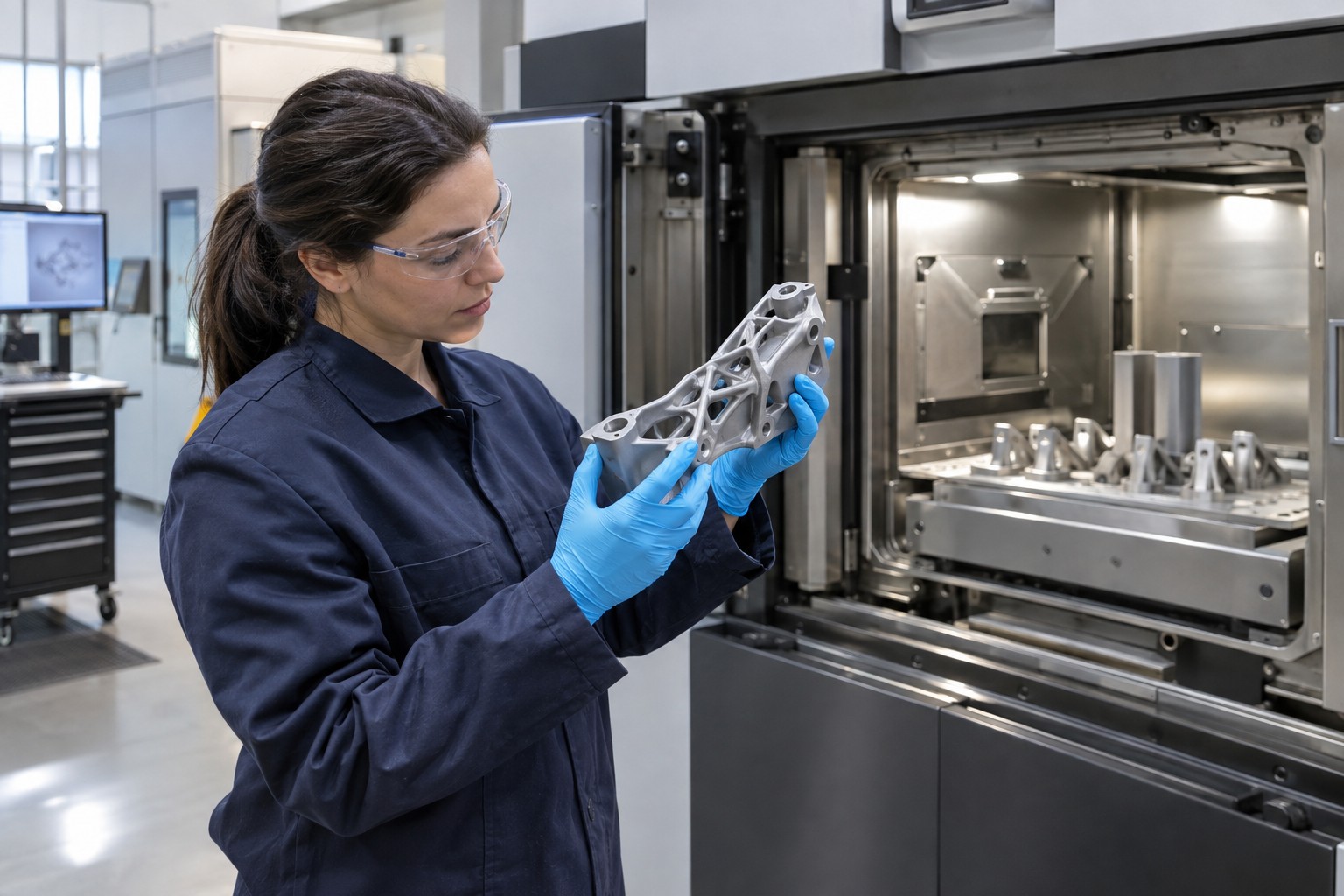
A metal powder bed fusion system handles combustible material most traditional shops never touch, and a part's mechanical properties can vary with print orientation in ways conventional manufacturing never has to explain to a client. 3D printing and additive manufacturing insurance protects your operation against the equipment, combustible-material, and product liability exposures unique to this still-maturing industrial process. The Allen Thomas Group structures a complete program so your facility is defended on every build, not just the ones that print cleanly.
Carriers We Represent
Why 3D Printing and Additive Manufacturing Operations Need Specialized Insurance Coverage
Additive manufacturing is formally distinct enough from traditional manufacturing that it has its own standards vocabulary: ISO/ASTM 52900, developed jointly by ISO/TC 261 and ASTM International's Committee F42 on Additive Manufacturing Technologies, defines the terminology and process categories, powder bed fusion, material extrusion, binder jetting, that separate this industry from subtractive and traditional manufacturing. That distinction matters for insurance because the risk profile genuinely differs, not just the marketing language.
Metal powder bed fusion processes introduce a hazard most traditional machine shops never encounter: combustible metal powder. NFPA 484, the Standard for Combustible Metals, was revised specifically to add chapters addressing nanometals and additive manufacturing, and NFPA's own guidance states plainly that powders used in industrial additive manufacturing must be tested for combustibility under this standard. OSHA's Technical Manual independently references NFPA 484 in its combustible dust chapter, confirming this is a recognized, documented hazard category, not an exaggerated one.
The product liability picture carries its own nuance. NIST's own published research on mechanical property variability shows that build orientation and layer adhesion in additive processes can affect a part's mechanical performance in ways traditional manufacturing doesn't experience the same way, which is exactly why ISO/ASTM 52909 exists specifically to standardize how mechanical properties of additively manufactured metal parts are measured and reported.
- ISO/ASTM 52900 defines formal terminology distinguishing additive from traditional manufacturing
- NFPA 484 governs combustible metal powder hazards specific to metal 3D printing
- OSHA's combustible dust guidance directly references additive manufacturing operations
- Mechanical properties can vary by print orientation and layer adhesion, a documented NIST finding
- Digital design files carry a distinct intellectual property exposure versus physical tooling
- FDA has dedicated technical guidance for additively manufactured medical devices
- Equipment represents significant capital investment with specialized breakdown risk
Core Coverages for Industrial 3D Printing Facilities
A complete program layers coverage so each exposure has a clear home. Property and equipment breakdown coverage protects industrial 3D printers, which represent significant capital investment, along with powder-handling and post-processing equipment. For metal powder bed fusion operations specifically, coverage should reflect the combustible-dust fire and explosion exposure NFPA 484 is built to address, distinct from a typical equipment breakdown scenario.
Products liability, including products-completed operations, responds to claims tied to a part's mechanical performance after it ships, particularly relevant given the orientation and layer-adhesion variability this process can introduce. Cyber and intellectual property liability matter in a way traditional manufacturing rarely emphasizes: digital design files can be copied far more easily than physical tooling or molds, a real, recognized risk the National Academy of Engineering has written about directly. General liability and workers compensation round out the program for premises risk and staff, and environmental/fire protection coverage should reflect your specific powder-handling and dust-collection systems.
We assemble these from 15-plus A-rated carriers so the structure matches your facility's specific processes, polymer extrusion, metal powder bed fusion, binder jetting, or a combination.
- Property and equipment breakdown for industrial printers and post-processing equipment
- Fire and explosion coverage reflecting NFPA 484 combustible-metal-powder exposure
- Products liability / products-completed operations for mechanical-performance claims
- Cyber and intellectual property liability for digital design file exposure
- General liability for premises and third-party bodily injury/property damage
- Workers compensation for operators and post-processing staff per state mandates
- Environmental coverage reflecting powder-handling and dust-collection systems
Standards and Compliance for This Emerging Manufacturing Process
ASTM International's Committee F42, formed in 2009, meets biannually to develop additive manufacturing standards in partnership with ISO/TC 261, producing the joint ISO/ASTM 52900 terminology standard that defines process categories across the industry. Facilities producing metal parts for mechanical applications should be familiar with ISO/ASTM 52909, which standardizes how mechanical properties of additively manufactured metal parts are measured and reported, a direct response to the orientation and layer-adhesion variability this process introduces.
For metal powder bed fusion operations, NFPA 484 is the governing consensus standard for combustible metal handling, and its current edition specifically addresses additive manufacturing powder hazards. OSHA's combustible dust guidance in its Technical Manual directly references this standard for operations handling metal powders. Facilities serving the medical device market should be aware FDA maintains dedicated technical guidance specifically for additively manufactured medical devices, addressing design, testing, and process-validation considerations that don't apply the same way to conventionally manufactured devices.
America Makes, the Department of Defense-sponsored National Additive Manufacturing Innovation Institute founded in 2012, functions as the national accelerator for this industry's standards development participation and workforce training, though it convenes and funds this work rather than issuing standards itself.
- ASTM F42 and ISO/TC 261 jointly maintain the ISO/ASTM 52900 terminology standard
- ISO/ASTM 52909 standardizes mechanical property measurement for metal AM parts
- NFPA 484 governs combustible metal powder hazards, with AM-specific chapters
- OSHA's combustible dust guidance directly references NFPA 484 for powder-handling operations
- FDA maintains dedicated technical guidance for additively manufactured medical devices
- America Makes drives standards participation and workforce training for this industry
- Confirm which process category and end-market standards apply to your specific operation
Why Industrial 3D Printing Operations Choose The Allen Thomas Group
The Allen Thomas Group is an independent, family-owned insurance agency founded in 2003 and licensed in 28 states. We are not tied to a single carrier, which means our advice is built around your facility's actual additive process, polymer, metal powder bed fusion, or binder jetting, rather than a generic industrial manufacturing template that doesn't account for this industry's distinct risk profile.
Our advisors compare programs across 15-plus A-rated carriers and explain the trade-offs in plain language: how combustible-dust fire exposure under NFPA 484 should shape your property coverage, where intellectual property exposure for digital design files needs its own endorsement, and which standards matter if you serve the medical device market specifically. The agency holds an A+ rating with the Better Business Bureau, and we treat each renewal as a review rather than an auto-renewal, adjusting coverage as your processes and end markets grow.
Above all, we act as your advocate. When a claim or an equipment loss arrives, you are dealing with people who understand how this still-maturing industry actually works, not a call-center queue.
- Independent, family-owned agency founded in 2003 and licensed in 28 states
- Access to 15-plus A-rated carriers for genuine program comparison
- A+ rating with the Better Business Bureau
- Advisory, consultative guidance built around your facility's specific additive process
- Annual coverage reviews that scale with processes and end markets served
- Hands-on claims advocacy during an equipment loss or products liability event
- Deep experience structuring programs for emerging and specialized manufacturing
How Much Does 3D Printing and Additive Manufacturing Insurance Cost?
There is no single published rate for this category, because pricing depends heavily on your specific process (polymer extrusion carries a different risk profile than metal powder bed fusion), equipment value, whether you handle combustible metal powders, end markets served (medical device applications carry added regulatory complexity), and claims history. A facility running metal powder bed fusion systems typically faces a more involved underwriting conversation around fire and explosion risk than a polymer-only operation.
Products liability pricing reflects how much of your output serves mechanically demanding or regulated applications versus prototyping and low-stakes parts. Intellectual property and cyber coverage scale with how much proprietary or client design data your systems hold. Because every variable shifts the total, the only accurate figure comes from comparing real quotes across carriers, which is the exercise our advisors run for each facility.
- Process type (polymer, metal powder bed fusion, binder jetting) drives underwriting
- Combustible metal powder handling adds meaningful fire/explosion risk pricing
- End markets served (medical device, aerospace, general industrial) affect products liability pricing
- Equipment value and replacement cost are significant property pricing factors
- Claims and defect history materially affect renewal pricing
- Intellectual property/cyber coverage scales with proprietary design data held
- Comparing real quotes across carriers is the only reliable way to see your actual number
Risk Management for Powder Bed Fusion and Polymer Printing Facilities
If your facility runs metal powder bed fusion, confirm your powder handling, storage, and dust-collection systems meet NFPA 484's current requirements, since combustible metal powder fire and explosion risk is a genuine, documented hazard this standard exists specifically to address. Maintain documented process controls for build orientation and parameters on mechanically critical parts, since this directly affects both part performance and your ability to defend a products liability claim if one arises.
Protect digital design files with the same seriousness you'd protect physical tooling or proprietary formulas, since the National Academy of Engineering has written directly about how easily 3D printing design files can be copied compared to traditional manufacturing assets. If you serve the medical device market, build your quality and validation processes around FDA's dedicated additive manufacturing guidance rather than assuming standard device-manufacturing practices fully apply.
Finally, reassess your coverage whenever you add a new process type, a new combustible material, or a new regulated end market, since a program built for your original process mix may not reflect your current actual exposure.
- Confirm powder handling and dust-collection systems meet current NFPA 484 requirements
- Maintain documented process controls for build orientation on mechanically critical parts
- Protect digital design files with the same rigor as physical proprietary assets
- Build medical device quality processes around FDA's dedicated AM guidance, not generic practices
- Reassess coverage whenever you add a new process type or combustible material
- Document process-validation records to support any future products liability defense
- Review the full program annually as processes and end markets served change
Frequently Asked Questions
What makes additive manufacturing insurance different from traditional manufacturing coverage?
Additive manufacturing carries distinct exposures formal standards bodies have recognized directly: combustible metal powder hazards in metal processes (governed by NFPA 484), mechanical property variability tied to build orientation, and heightened intellectual property risk for digital design files compared to physical tooling.
Why does metal 3D printing involve a fire or explosion risk?
Metal powder bed fusion processes use fine metal powders that must be tested for combustibility under NFPA 484, the Standard for Combustible Metals. OSHA's own combustible dust guidance directly references this standard for operations handling metal powders used in additive manufacturing.
Can a 3D-printed part's mechanical properties really vary from one build to the next?
Yes. NIST's own published research confirms build orientation and layer adhesion affect mechanical performance in additive manufacturing in ways traditional manufacturing doesn't experience the same way, which is why ISO/ASTM 52909 was developed specifically to standardize how these properties are measured and reported.
Is intellectual property risk really different for 3D printing versus traditional manufacturing?
Yes. The National Academy of Engineering has written directly about this: with 3D printing, copying a design file can be nearly costless and instantaneous, unlike physical tooling or molds, which creates a recognized, distinct IP exposure for this industry.
Does FDA have specific rules for 3D-printed medical devices?
Yes. FDA maintains dedicated technical guidance specifically for additively manufactured medical devices, addressing design, testing, and process-validation considerations distinct from conventionally manufactured devices.
How much does 3D printing and additive manufacturing insurance cost?
There is no single published rate. Process type, equipment value, whether you handle combustible metal powders, end markets served, and claims history all affect pricing. Comparing real quotes across carriers is the only reliable way to see an accurate figure for your facility.
Protect Your Facility With a Program Built Around Your Risk
Our advisors compare programs across 15-plus A-rated carriers to structure property, fire/explosion, products liability, and IP coverage that fits your specific additive process. Call The Allen Thomas Group at (440) 826-3676 for a consultative review of your coverage.