
New York Commercial Cleaning and Janitorial Business Insurance
The Allen Thomas Group is an independent, family-owned insurance agency that shops 15+ A-rated carriers to build coverage for commercial cleaning and janitorial companies across New York, not a single-carrier captive agent locked into one company’s rates and terms. We work with New York cleaning businesses of every size, from a single owner-operator to established janitorial companies running multiple crews across New York City, Buffalo, and Rochester. Most quotes are ready within 1-3 business days. Click the button below to start your free quote, or call (440) 826-3676 to speak with a licensed agent directly.
Carriers We Represent


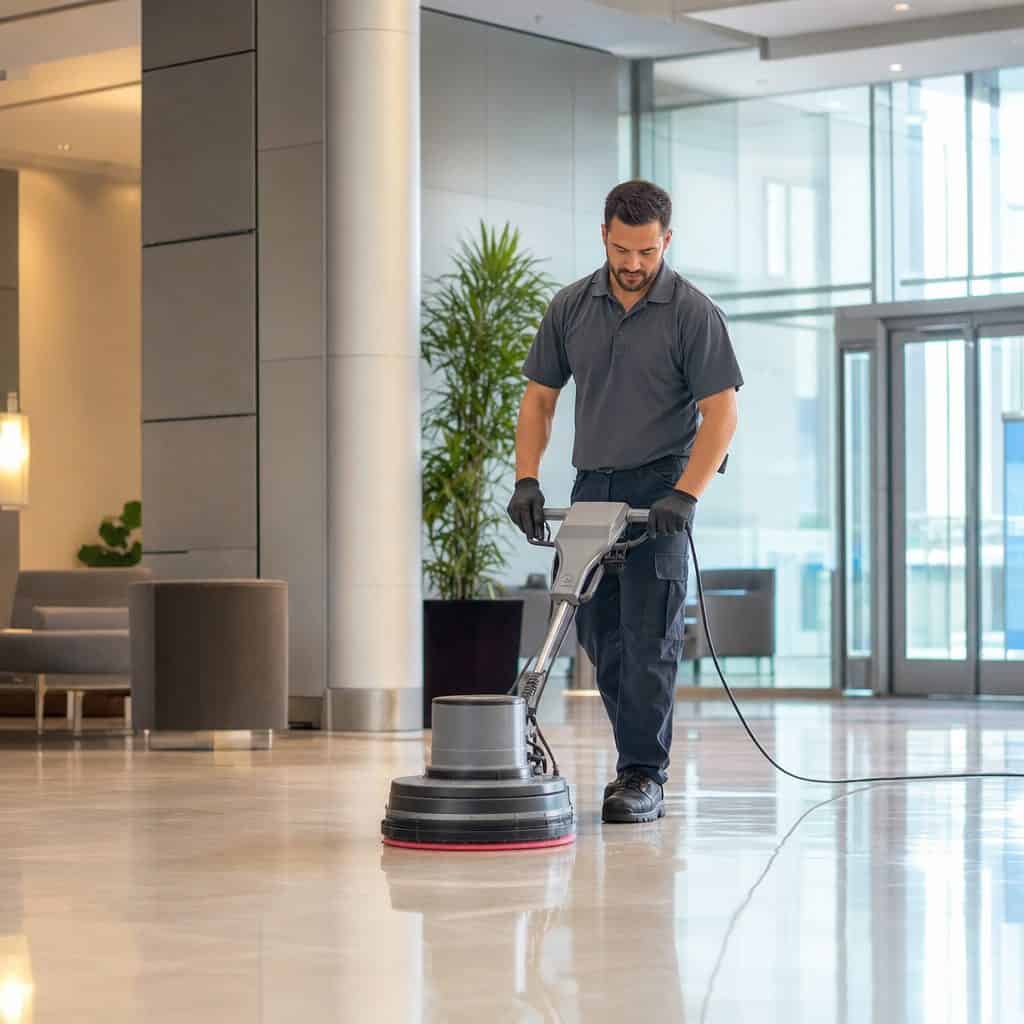
Commercial cleaning insurance in New York is a specialized bundle of coverage, typically general liability, a janitorial bond, and workers’ compensation, built around the specific risk of sending employees into other people’s offices and businesses across New York City, Buffalo, and Rochester.
Why Commercial Cleaning Companies in New York Need Specialized Coverage
New York’s commercial cleaning industry is anchored by the state’s dense office and commercial real estate markets: New York City, with its concentration of high-rise office towers, retail space, and mixed-use buildings across the five boroughs, is by far the largest source of commercial cleaning contracts in the state. Outside the city, Erie County (Buffalo) and Monroe County (Rochester) support their own base of office parks, medical buildings, and retail centers that keep local cleaning crews busy year-round. Crews in these markets routinely work inside occupied buildings after hours, alongside tenants, security staff, and other contractors, which raises the stakes on any mistake.
A cleaning crew working a Manhattan office suite overnight can trip a smoke detector or accidentally set off a sprinkler system while operating equipment, triggering a costly water-damage claim from the building owner. A janitorial worker in Rochester can slip on a freshly mopped floor or strain a back lifting a commercial vacuum, resulting in a workers’ compensation claim. A crew servicing a retail plaza in Buffalo can be handed keys or an access fob to a tenant space, and a misplaced set can mean rekeying locks or reprogramming security systems for an entire building. None of these scenarios are covered by a generic business owner’s policy that was not written with cleaning operations in mind.
New York-Specific Coverage Considerations for Commercial Cleaning Companies
New York does not require a state-level business license specifically for commercial cleaning or janitorial services. A cleaning company forms and registers its business entity through the New York Department of State, Division of Corporations, the same office that handles business formation for most industries in the state. Companies operating inside New York City should also check with the city’s Department of Consumer and Worker Protection, since certain services regulated at the city level carry their own registration or permit rules, but there is no separate statewide cleaning-industry license to obtain.
As of January 1, 2026, New York’s minimum wage is $17.00 an hour in New York City, Long Island, and Westchester County, and $16.00 an hour in the remainder of the state, according to the New York State Department of Labor. Because workers’ compensation premiums for cleaning companies are calculated primarily on payroll, a higher regional minimum wage directly increases the payroll base a policy is rated on, and downstate crews paying the $17.00 rate will typically see a higher premium than an otherwise identical crew paid the $16.00 rate upstate. Cleaning companies that track payroll accurately by location and job classification put themselves in a better position to avoid overpaying on their workers’ compensation audit.
- New York’s workers’ compensation coverage is written through the private insurance market rather than a monopolistic state fund, so cleaning companies can shop coverage across competing private carriers (including the New York State Insurance Fund as one competitive option) based on classification code and experience modifier.
- No separate state-level license is required to operate a commercial cleaning business, though companies working inside New York City should confirm whether any city-level registration applies to their specific services.
- Many New York cleaning contractors handle a mix of commercial office space and residential or multi-family properties, and each type of work carries different liability exposures that a policy needs to address.
- Winter weather across the state, especially in Buffalo, Rochester, and other upstate markets, drives seasonal demand for salt and snow-melt floor care to prevent slip-and-fall claims in building lobbies and entryways.
- Contracts on larger commercial buildings frequently require proof of subcontractor insurance before a cleaning company can bring in extra help for a job, making subcontractor verification part of routine contract compliance.
- Commercial-grade equipment such as floor buffers, carpet extractors, and pressure washers represents a real investment that a standard property policy may not adequately cover if it is damaged, stolen, or lost in a fire.
- Crews working in New York City’s high-rise office towers and downstate commercial buildings are frequently trusted with master keys, fobs, or access codes, and a lost or stolen set can trigger an expensive building-wide rekeying or security reprogramming bill.
Coverage Types for Commercial Cleaning & Janitorial Companies
Here’s what each policy actually covers, in plain terms, along with a link to the full coverage page where one exists:
General Liability Insurance
Covers third-party bodily injury and property damage your business causes while on a client’s premises.
Such as a client slipping on a wet floor after mopping, or a spilled chemical that damages a carpet. This is the coverage most commercial clients in New York require before signing a cleaning contract.
Janitorial Bond
A surety bond, not insurance, that reimburses a client if an employee steals money or property while cleaning their home or business.
It covers theft specifically, not accidental damage, and helps establish trust with New York clients who won’t hire an unbonded cleaning company.
Workers’ Compensation Insurance
Required in New York once a cleaning company has any employees, part-time or full-time.
Coverage is shopped across competing private carriers based on your classification code, payroll, and claims history.
Commercial Auto Insurance
Required for vehicles owned by the business, covering property damage and medical bills from an accident.
Used to transport crews, equipment, or industrial chemicals between job sites across New York.
Inland Marine (Tools & Equipment) Insurance
Covers cleaning equipment, such as floor buffers, carpet extraction machines, and ladders, while it’s in transit or on-site.
Commercial auto insurance covers the vehicle itself, not the equipment riding inside it, which is exactly the gap this coverage closes.
Business Owner’s Policy (BOP)
Bundles general liability with commercial property insurance into a single, typically lower-cost policy.
If you lease or own an office or storage space for your supplies, small, low-risk cleaning businesses are usually eligible.
Commercial Umbrella Insurance
Adds additional liability limits on top of general liability, commercial auto, and employer’s liability coverage.
Cleaning companies bidding on larger New York commercial contracts often need this to meet a client’s required liability limit.
Lost Key Coverage
Reimburses a commercial property for the cost of rekeying locks and reissuing keycard systems if your employee loses master keys.
Larger commercial and multi-tenant properties in New York City, Buffalo, and Rochester increasingly ask about this coverage specifically before signing a contract.
Why Bonding and Insurance Matter for New York Cleaning Companies
Commercial cleaning crews are given access to offices, retail spaces, and sometimes homes across New York, often unsupervised and after hours. Property managers, business owners, and hosts of short-term rentals routinely require proof of both insurance and bonding before signing a contract or handing over keys and access codes. Being able to produce a certificate of insurance and proof of a janitorial bond on request is now a standard part of winning and keeping commercial cleaning contracts in New York, not an optional extra.
Related Coverage
New York Commercial Cleaning and Janitorial Business Insurance FAQs
Does New York require a special license for commercial cleaning businesses?
No. New York does not have a state-level license specifically for cleaning or janitorial services. Businesses register their entity through the New York Department of State, Division of Corporations, and companies working inside New York City should check with the city’s Department of Consumer and Worker Protection for any local registration that may apply to their specific services.
How does workers’ compensation work for a cleaning company in New York?
New York is not a monopolistic workers’ compensation state. Cleaning companies buy coverage on the private insurance market, choosing among competing carriers (including the New York State Insurance Fund as one option) based on their classification code, payroll, and experience modifier, rather than being required to buy from a single state fund.
Which New York cities have the most demand for commercial cleaning contracts?
New York City is by far the largest market, given its concentration of office towers, retail space, and mixed-use commercial buildings across the five boroughs. Outside the city, Erie County (Buffalo) and Monroe County (Rochester) support steady commercial cleaning demand from their own office and retail base.
What insurance does a commercial janitorial or cleaning company actually need?
Most commercial cleaning companies need four core policies: general liability insurance, workers’ compensation if you have employees, commercial auto insurance if crews drive between job sites, and a janitorial bond to reimburse clients for employee theft. Companies that lease office or storage space, carry expensive equipment, or bid on larger commercial contracts often add a business owner’s policy, inland marine coverage, and commercial umbrella insurance on top of those four.
What is a janitorial bond, and is it the same thing as insurance?
A janitorial bond, also called a fidelity bond or business service bond, is a type of surety bond, not insurance. It reimburses a client if one of your employees steals money or property while cleaning their home or business. Unlike an insurance claim, a surety company that pays out on a bond claim expects your business to reimburse it afterward, so it protects your client’s trust in you more than it protects your own bottom line.
Does my cleaning company’s insurance cover damage to a client’s property, or only theft?
General liability insurance covers accidental property damage, like a spilled cleaning chemical that ruins a client’s carpet. A janitorial bond covers something different: theft or dishonest acts by an employee. Most commercial cleaning companies need both, since they protect against two different kinds of loss.
Will my commercial auto insurance cover cleaning equipment I carry between job sites?
Not automatically. A standard commercial auto policy covers the vehicle itself and injuries or damage from an accident, not the buffers, vacuums, or extraction machines you’re transporting. Inland marine insurance is the coverage built specifically to protect cleaning equipment while it’s in transit or on a job site away from your main location.
How do I get in touch with a licensed agent about coverage for my cleaning company?
Call (440) 826-3676 to speak directly with a licensed agent, or request a free quote online and a licensed agent will follow up to go over the specific coverage your New York cleaning business needs.
Get Coverage Built for Your New York Cleaning Business
Talk to a licensed agent who will shop 15+ A-rated carriers to find coverage that actually fits your crews, equipment, and contracts.