
Illinois Commercial Cleaning and Janitorial Business Insurance
The Allen Thomas Group is an independent, family-owned insurance agency that shops 15+ A-rated carriers to build coverage for commercial cleaning and janitorial companies across Illinois, not a single-carrier captive agent locked into one company’s rates and terms. We work with Illinois cleaning businesses of every size, from a single owner-operator to established janitorial companies running multiple crews across Chicago, Naperville, and Peoria. Most quotes are ready within 1-3 business days. Click the button below to start your free quote, or call (440) 826-3676 to speak with a licensed agent directly.
Carriers We Represent



Commercial cleaning insurance in Illinois is a specialized bundle of coverage, typically general liability, a janitorial bond, and workers’ compensation, built around the specific risk of sending employees into other people’s offices and businesses across Chicago, Naperville, and Peoria.
Why Commercial Cleaning Companies in Illinois Need Specialized Coverage
Illinois’ commercial cleaning industry is concentrated around its largest office and commercial markets: Cook County (Chicago), DuPage County (Naperville and the Oak Brook office corridor), and Peoria County (Peoria). Crews working across these counties clean everything from downtown Loop high-rises and medical office buildings to suburban corporate campuses and industrial parks, often carrying commercial cleaning chemicals, floor equipment, and keys or access codes for multiple properties in the same day.
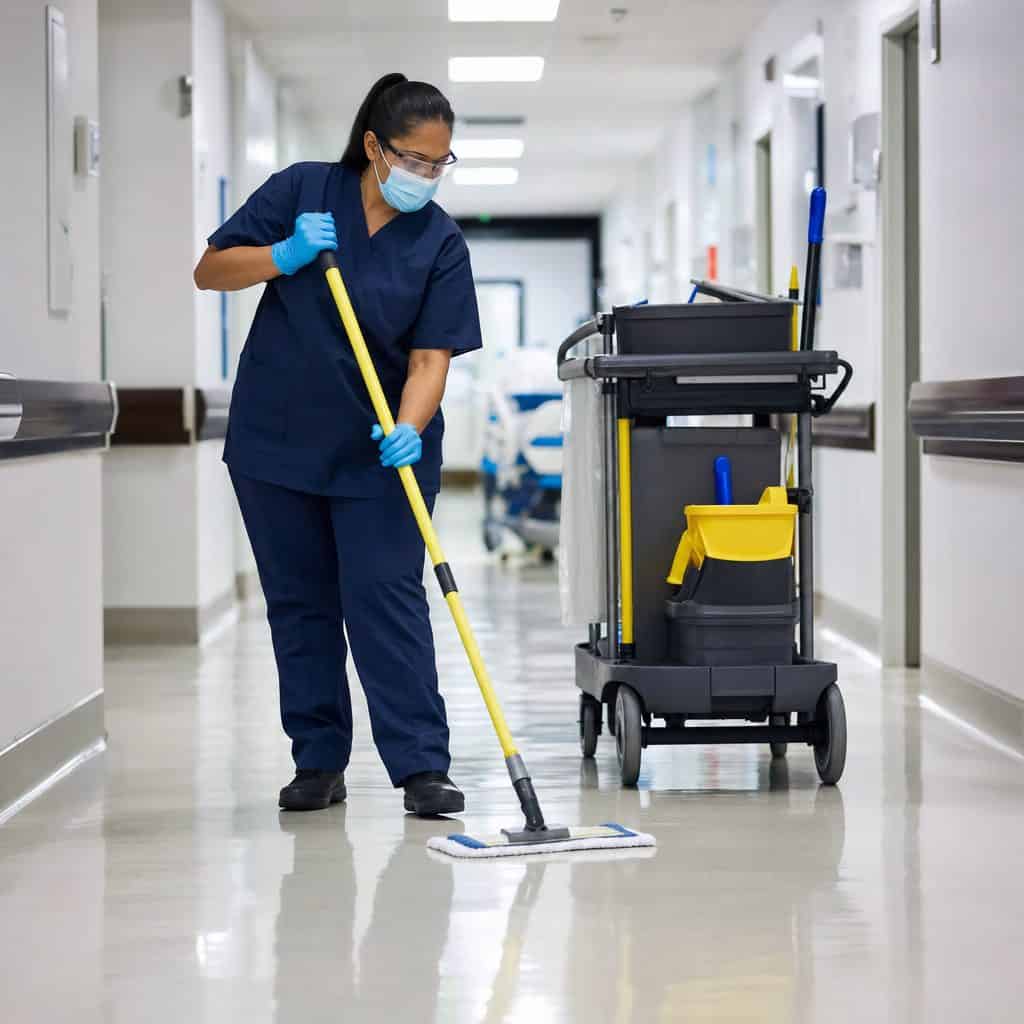
A floor buffer that gouges polished stone in a Loop office lobby can trigger a property damage claim that outpaces a standard policy’s limits. A spilled disinfectant that damages carpet in a Naperville medical suite, or an employee slipping on a freshly mopped floor in a Peoria warehouse and filing a workers’ compensation claim, are the kinds of everyday incidents standard business insurance often misses entirely. A lost master key at a multi-tenant Chicago office tower can also mean a full rekeying bill the cleaning company is expected to cover.
Illinois-Specific Coverage Considerations for Commercial Cleaning Companies
Illinois does not require a state-level business license specifically for commercial cleaning or janitorial services. Cleaning companies register their business entity with the Illinois Secretary of State, and if the business sells cleaning supplies or equipment directly to clients, it generally needs to register with the Illinois Department of Revenue to collect and remit sales tax. Beyond that, requirements are the same as any other Illinois small business, though individual cities such as Chicago may layer on their own local business license.
Illinois’ statewide minimum wage is $15.00 an hour for workers 18 and older, according to the Illinois Department of Labor, a rate that has held since it finished phasing in on January 1, 2025. Chicago and Cook County set their own higher local minimum wages that apply within those boundaries, so a cleaning company operating crews both inside and outside the city needs to track pay differently by job site. Because workers’ compensation premiums are calculated directly from total payroll, any of these wage floors are a real cost driver behind an Illinois cleaning company’s coverage costs, and the state runs workers’ comp through the private insurance market, so companies shop their coverage across competing carriers based on their classification code and experience modifier rather than through a state fund.
- Illinois runs workers’ compensation through the private insurance market, so cleaning companies shop coverage across competing carriers based on manual classification code and experience modifier, rather than through a state fund
- No special state cleaning license is required, just standard Illinois Secretary of State business registration and Department of Revenue tax registration if you sell supplies directly
- Mixed commercial, medical office, and multi-tenant work across Chicago, Naperville, and Peoria often requires higher liability limits and additional insured endorsements that smaller residential jobs don’t
- Seasonal demand shifts as Illinois winters track snow, ice melt, and salt indoors, increasing floor-care equipment use and slip-and-fall exposure during the coldest months
- Subcontractor requirements help you verify that companies you hire for specialized floor care or window washing carry adequate insurance of their own
- Equipment coverage protects floor buffers, extraction machines, and vacuums against mechanical failure or theft between job sites
- Lost key and rekeying exposure is a real, recurring cost for crews servicing downtown Chicago high-rises and multi-tenant suburban office buildings
Coverage Types for Commercial Cleaning & Janitorial Companies
Here’s what each policy actually covers, in plain terms, along with a link to the full coverage page where one exists:
General Liability Insurance
Covers third-party bodily injury and property damage your business causes while on a client’s premises.
Such as a client slipping on a wet floor after mopping, or a spilled chemical that damages a carpet. This is the coverage most commercial clients in Illinois require before signing a cleaning contract.
Janitorial Bond
A surety bond, not insurance, that reimburses a client if an employee steals money or property while cleaning their home or business.
It covers theft specifically, not accidental damage, and helps establish trust with Illinois clients who won’t hire an unbonded cleaning company.
Workers’ Compensation Insurance
Required in Illinois once a cleaning company has any employees, part-time or full-time.
Coverage is shopped across competing private carriers based on your classification code, payroll, and claims history.
Commercial Auto Insurance
Required for vehicles owned by the business, covering property damage and medical bills from an accident.
Used to transport crews, equipment, or industrial chemicals between job sites across Illinois.
Inland Marine (Tools & Equipment) Insurance
Covers cleaning equipment, such as floor buffers, carpet extraction machines, and ladders, while it’s in transit or on-site.
Commercial auto insurance covers the vehicle itself, not the equipment riding inside it, which is exactly the gap this coverage closes.
Business Owner’s Policy (BOP)
Bundles general liability with commercial property insurance into a single, typically lower-cost policy.
If you lease or own an office or storage space for your supplies, small, low-risk cleaning businesses are usually eligible.
Commercial Umbrella Insurance
Adds additional liability limits on top of general liability, commercial auto, and employer’s liability coverage.
Cleaning companies bidding on larger Illinois commercial contracts often need this to meet a client’s required liability limit.
Lost Key Coverage
Reimburses a commercial property for the cost of rekeying locks and reissuing keycard systems if your employee loses master keys.
Larger commercial and multi-tenant properties in Chicago, Naperville, and Peoria increasingly ask about this coverage specifically before signing a contract.
Why Bonding and Insurance Matter for Illinois Cleaning Companies
Commercial cleaning crews are given access to offices, retail spaces, and sometimes homes across Illinois, often unsupervised and after hours. Property managers, business owners, and hosts of short-term rentals routinely require proof of both insurance and bonding before signing a contract or handing over keys and access codes. Being able to produce a certificate of insurance and proof of a janitorial bond on request is now a standard part of winning and keeping commercial cleaning contracts in Illinois, not an optional extra.
Related Coverage
Illinois Commercial Cleaning and Janitorial Business Insurance FAQs
Does Illinois require a special license to start a commercial cleaning business?
No. Illinois does not require a state-level business license specifically for cleaning or janitorial services. You register your business with the Illinois Secretary of State, and if you sell cleaning supplies or equipment directly, you generally need to register with the Illinois Department of Revenue to collect sales tax. Some cities, including Chicago, require their own local business license on top of that.
How does Illinois workers’ compensation work for cleaning companies?
Illinois requires workers’ compensation coverage as soon as a cleaning company has any employees, and unlike a handful of states that run a state monopoly fund, Illinois businesses buy this coverage on the private insurance market. That means a cleaning company can shop its workers’ comp across competing carriers based on its classification code, payroll, and experience modifier to find the best rate.
Which Illinois cities have the most demand for commercial cleaning contracts?
Chicago and the surrounding Cook County market are Illinois’ largest concentration of office towers, medical facilities, and retail space needing regular commercial cleaning contracts. DuPage County suburbs such as Naperville and Oak Brook add a dense corporate office park market, while Peoria anchors central Illinois demand, and each market can affect the liability limits a client’s contract requires.
What insurance does a commercial janitorial or cleaning company actually need?
Most commercial cleaning companies need four core policies: general liability insurance, workers’ compensation if you have employees, commercial auto insurance if crews drive between job sites, and a janitorial bond to reimburse clients for employee theft. Companies that lease office or storage space, carry expensive equipment, or bid on larger commercial contracts often add a business owner’s policy, inland marine coverage, and commercial umbrella insurance on top of those four.
What is a janitorial bond, and is it the same thing as insurance?
A janitorial bond, also called a fidelity bond or business service bond, is a type of surety bond, not insurance. It reimburses a client if one of your employees steals money or property while cleaning their home or business. Unlike an insurance claim, a surety company that pays out on a bond claim expects your business to reimburse it afterward, so it protects your client’s trust in you more than it protects your own bottom line.
Does my cleaning company’s insurance cover damage to a client’s property, or only theft?
General liability insurance covers accidental property damage, like a spilled cleaning chemical that ruins a client’s carpet. A janitorial bond covers something different: theft or dishonest acts by an employee. Most commercial cleaning companies need both, since they protect against two different kinds of loss.
Will my commercial auto insurance cover cleaning equipment I carry between job sites?
Not automatically. A standard commercial auto policy covers the vehicle itself and injuries or damage from an accident, not the buffers, vacuums, or extraction machines you’re transporting. Inland marine insurance is the coverage built specifically to protect cleaning equipment while it’s in transit or on a job site away from your main location.
How do I get in touch with a licensed agent about coverage for my cleaning company?
Call (440) 826-3676 to speak directly with a licensed agent, or request a free quote online and a licensed agent will follow up to go over the specific coverage your Illinois cleaning business needs.
Get Coverage Built for Your Illinois Cleaning Business
Talk to a licensed agent who will shop 15+ A-rated carriers to find coverage that actually fits your crews, equipment, and contracts.