
Ohio Tree Service Insurance
The Allen Thomas Group is an independent, family-owned insurance agency headquartered in Akron, licensed since 2003, that builds tree service insurance programs for Ohio arborists and tree care contractors around the real hazards of the trade: falling limbs, aerial work, and the large-scale ash removal work that has reshaped this trade statewide. We shop your coverage, general liability, inland marine equipment coverage, commercial auto, and professional liability, across 15+ A-rated carriers, and help you navigate Ohio's state-administered workers' compensation system.
Carriers We Work With
Last Updated: September 29, 2026
What Is Tree Service Insurance in Ohio?
Ohio tree service insurance is the same core package described on our national tree service insurance page, general liability, workers compensation, commercial auto, inland marine equipment coverage, and professional liability, applied to a state with two real, distinct drivers of demand and risk: severe weather storm cleanup and a two-decade surge in ash tree removal from the emerald ash borer. The Allen Thomas Group is headquartered in Akron, so this is our home market, not a template we run for every state.
The biggest state-specific difference isn't in the coverage types themselves, it's in how workers compensation is purchased. Ohio does not allow tree service companies to buy workers' comp from a private carrier at all.
Why Ohio Tree Care Companies Face a Different Risk Picture
Two things separate Ohio from most other states for this trade: a genuinely unusual workers' compensation system, and a real, measurable surge in high-risk removal work driven by an invasive pest.
Ohio Is a Monopolistic Workers' Compensation State
Ohio is one of only four states where employers cannot purchase workers' compensation from a private insurance carrier. Coverage must be purchased directly through the Ohio Bureau of Workers' Compensation (BWC), the state's exclusive provider. BWC classifies tree care work under class code 0106, Tree Pruning, Spraying, Repairing, All Operations and Drivers, and sets a base rate for that classification that it adjusts annually, then layers an experience modification factor based on your own payroll and claims history.
The Emerald Ash Borer Created a Real, Sustained Surge in Removal Work
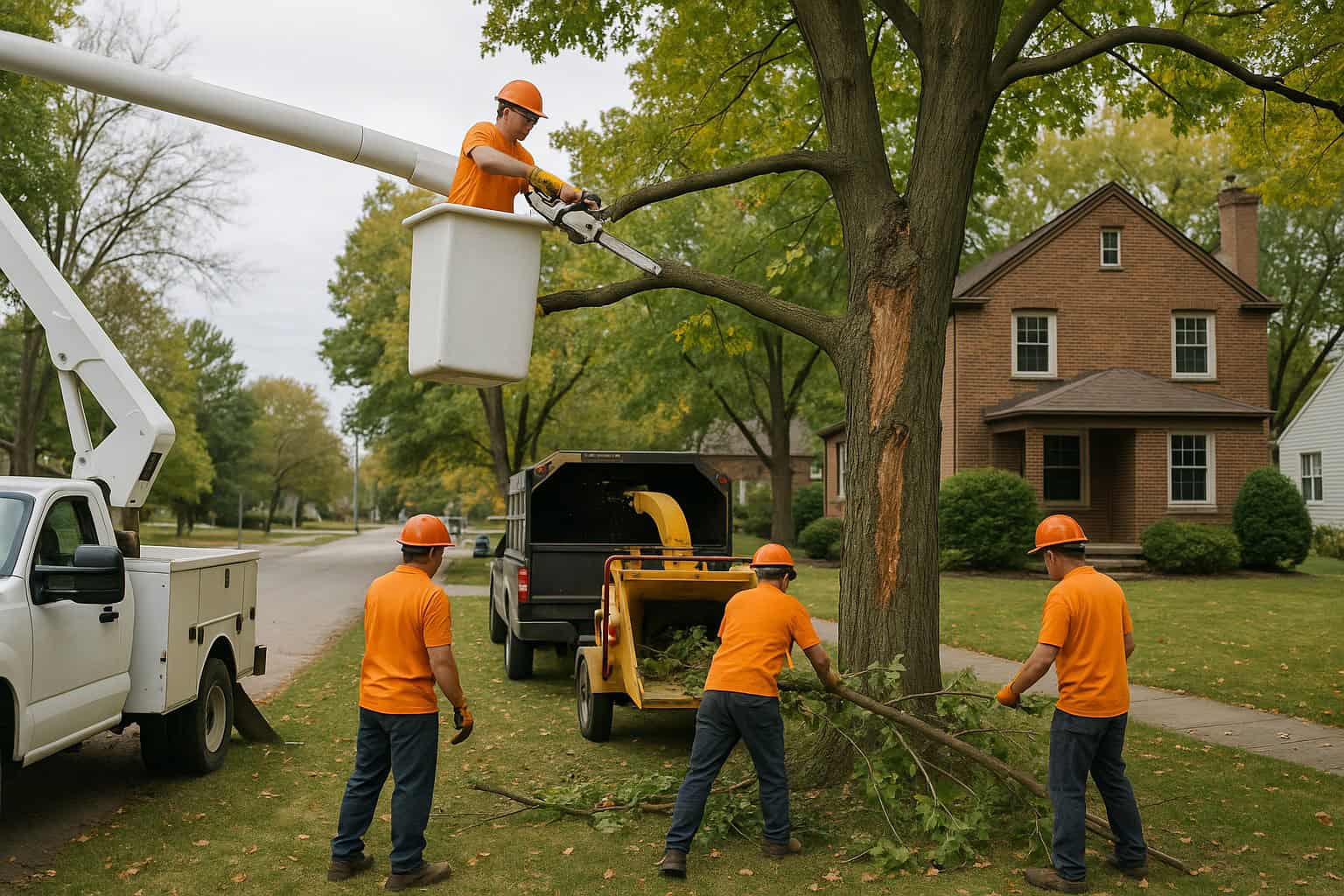
Published research in ISA's Arboriculture and Urban Forestry journal put statewide ash street tree removal costs at $67 to $157 million, with park tree removal adding $20 million or more. That's not a one-time event, it reflects a two-decade wave of large, dead, structurally compromised ash trees coming down near homes, streets, and utility lines across Ohio, which is exactly the kind of high-consequence removal work that drives real general liability exposure.
Severe Weather Drives Real Seasonal Demand
Ice storms across Northeast Ohio and severe thunderstorms and occasional tornadoes across the state generate real, recurring storm-cleanup work, often on an emergency timeline with less time to plan a safe removal than a routine job. Insurers price this seasonal volatility into general liability and workers compensation experience over time.
Core Insurance Coverages for Ohio Arborists
The coverage types themselves match the national tree service program: general liability, workers compensation, commercial auto, inland marine, and professional liability. Two things work differently in Ohio specifically.
General Liability Insurance
General liability is shopped across our full carrier panel exactly like every other state, and covers the falling-limb and property-damage exposure that comes with the volume of ash removal and storm cleanup work happening across Ohio.
Ohio BWC Workers' Compensation
This is the one coverage we cannot shop across private carriers in Ohio. We help you understand class code 0106, your base rate, and how BWC's experience modification system affects your premium, and coordinate the rest of your program around it.
Commercial Auto Insurance
Commercial auto covers the trucks and chipper trailers your crews rely on to move between job sites across Ohio's counties, shopped across our full carrier panel like every other state.
Inland Marine (Tools and Equipment)
Chainsaws, stump grinders, and crane attachments are covered wherever they travel across the state, whether stolen from a truck overnight or damaged on a job site.
Professional Liability (E&O)
Ohio arborists who perform paid tree health assessments, including ash-decline evaluations, or municipal tree inventory consulting, should carry professional liability alongside general liability.
How Much Does Tree Service Insurance Cost in Ohio?
General liability pricing in Ohio falls in the same national range described on our tree service insurance page, roughly $750 to $2,300 per year for a small operation, driven by crew size, equipment, and whether crane-assisted removals are part of the regular work. Workers compensation is priced differently: it runs through Ohio BWC's own base rate for class code 0106, adjusted by your experience modification factor, rather than through a private carrier's own underwriting.
Key factors that drive Ohio tree service premiums:
- Volume of ash removal and other high-altitude or crane-assisted removal work
- Payroll and crew size, which directly affects your BWC-administered workers' comp premium
- Prior claims history, both general liability and BWC experience modification
- Municipal or utility contract requirements for additional insured status and higher limits
- Seasonal storm-response work versus routine, scheduled trimming
How The Allen Thomas Group Can Help You
We're based right here in Akron, so Ohio tree service companies aren't a market we're trying to break into, it's where we started. We shop your general liability, commercial auto, inland marine, and professional liability across 15+ A-rated carriers, and help you make sense of BWC's class code 0106 and experience modification system so your workers' comp costs aren't a mystery.
Licensing and Regulatory Notes for Ohio Tree Care Businesses
Ohio does not license tree service or arborist businesses at the state level the way it licenses some other contracting trades. Requirements are more commonly imposed at the municipal level, particularly for work in the public right-of-way or on street trees in cities like Cleveland, Columbus, Cincinnati, and Akron. Individual technicians commonly hold the ISA Certified Arborist credential even though it isn't a state licensing mandate, and it can matter to municipal and utility clients evaluating bids.
On the emerald ash borer specifically: the federal domestic quarantine on moving ash wood was removed in 2021, so there is no current federal restriction on transporting ash material across state lines. Businesses handling large volumes of ash removal and disposal should still check with the Ohio Department of Agriculture for any current state or local guidance before assuming no rules apply.
Common Ohio Tree Service Claims and How Coverage Responds
Scenario 1: A Dead Ash Tree Damages a Cleveland-Area Home
A crew removing a large, ash-borer-killed tree misjudges the drop zone, and a section damages a customer's roof and fence. This falls under the general liability policy's property damage coverage.
Scenario 2: A Climber Is Injured During Emergency Ice Storm Cleanup
A crew member is injured during rushed post-ice-storm cleanup work in Summit County. Because Ohio requires this coverage through BWC exclusively, the claim is filed and administered through the state fund rather than a private workers' comp carrier.
Scenario 3: A Municipal Tree Inventory Assessment Is Later Disputed
An arborist consulting on a municipal ash-tree inventory project has a risk assessment later disputed by the city. Because this is a professional-judgment claim, it falls to professional liability, not general liability.
Scenario 4: A Chipper Is Stolen from a Job Site
A wood chipper is stolen overnight from a job site trailer in Columbus. This falls under inland marine (tools and equipment) coverage, since the equipment was away from the business's fixed location.
Frequently Asked Questions
Does Ohio require tree service companies to carry workers compensation?
Yes, and Ohio handles it differently than most states. Ohio is one of only four monopolistic workers' compensation states, meaning employers cannot buy workers' comp from a private insurance carrier at all. Coverage must be purchased directly through the Ohio Bureau of Workers' Compensation (BWC), the state's exclusive provider, rather than shopped across carriers the way general liability or commercial auto can be.
What is Ohio's workers' compensation classification code for tree care work?
Ohio BWC uses class code 0106, Tree Pruning, Spraying, Repairing, All Operations and Drivers, for tree care work. BWC sets a base rate for this classification and adjusts it annually, then applies an experience modification factor based on an individual employer's payroll and claims history.
How has the emerald ash borer affected tree service demand and risk in Ohio?
The emerald ash borer has driven a sustained, statewide surge in tree removal work across Ohio since the mid-2000s. Published research in ISA's Arboriculture and Urban Forestry journal estimated statewide ash street tree removal costs alone at $67 to $157 million, with park tree removal adding $20 million or more. That volume of removal work, much of it involving large, dead, structurally compromised ash trees near homes and roadways, is a real driver of both revenue and risk for Ohio tree service companies.
Do Ohio tree service companies need a special state license?
Ohio does not license tree service or arborist businesses at the state level the way it licenses some other contracting trades. Requirements are more commonly imposed at the municipal level, particularly for work in the public right-of-way or on street trees, and individual technicians commonly hold the ISA Certified Arborist credential even though it is not a state licensing requirement.
What insurance does a tree service business need in Ohio?
Most Ohio tree service businesses need general liability as the foundation, workers compensation through the Ohio BWC if they have employees, inland marine for chainsaws and stump grinders, commercial auto for trucks and chipper trailers, and professional liability if they perform paid tree health assessments or consulting work.
How much does tree service insurance cost in Ohio?
General liability for a small Ohio tree service operation typically falls in the same $750 to $2,300 per year range seen nationally, with the exact premium driven by crew size, equipment, and whether the work includes crane-assisted removals. Ohio's BWC-administered workers' compensation premium under class code 0106 is calculated separately from private-market general liability pricing, using the state's own base rate and experience modification system.
Does ATG write tree service insurance throughout Ohio?
Yes. The Allen Thomas Group is based in Akron, Ohio, and writes tree service insurance programs for companies across the state, from Cleveland and Akron to Columbus and Cincinnati. Call or request a quote to get started.
What happens if a tree service job causes property damage in Ohio?
A general liability claim in Ohio follows the same process as anywhere else: report the incident to your carrier promptly, document the damage, and let the insurer investigate and respond up to your policy limits. Given the volume of large ash removal work happening near homes and roadways statewide, Ohio tree service companies should carry limits that reflect the real property values at risk on a typical job, not just a state minimum.
Get Your Ohio Tree Service Insurance Program
The Allen Thomas Group is headquartered in Akron, Ohio, with access to 15+ A-rated carriers. One call gets you competitive rates from across the market, not a single carrier's take-it-or-leave-it quote. Certificates of insurance issued same day for active policies.