
West Virginia Commercial Cleaning and Janitorial Business Insurance
The Allen Thomas Group is an independent, family-owned insurance agency that shops 15+ A-rated carriers to build coverage for commercial cleaning and janitorial companies across West Virginia, not a single-carrier captive agent locked into one company’s rates and terms. We work with West Virginia cleaning businesses of every size, from a single owner-operator to established janitorial companies running multiple crews across Charleston, Huntington, and Morgantown. Most quotes are ready within 1-3 business days. Click the button below to start your free quote, or call (440) 826-3676 to speak with a licensed agent directly.
Carriers We Represent


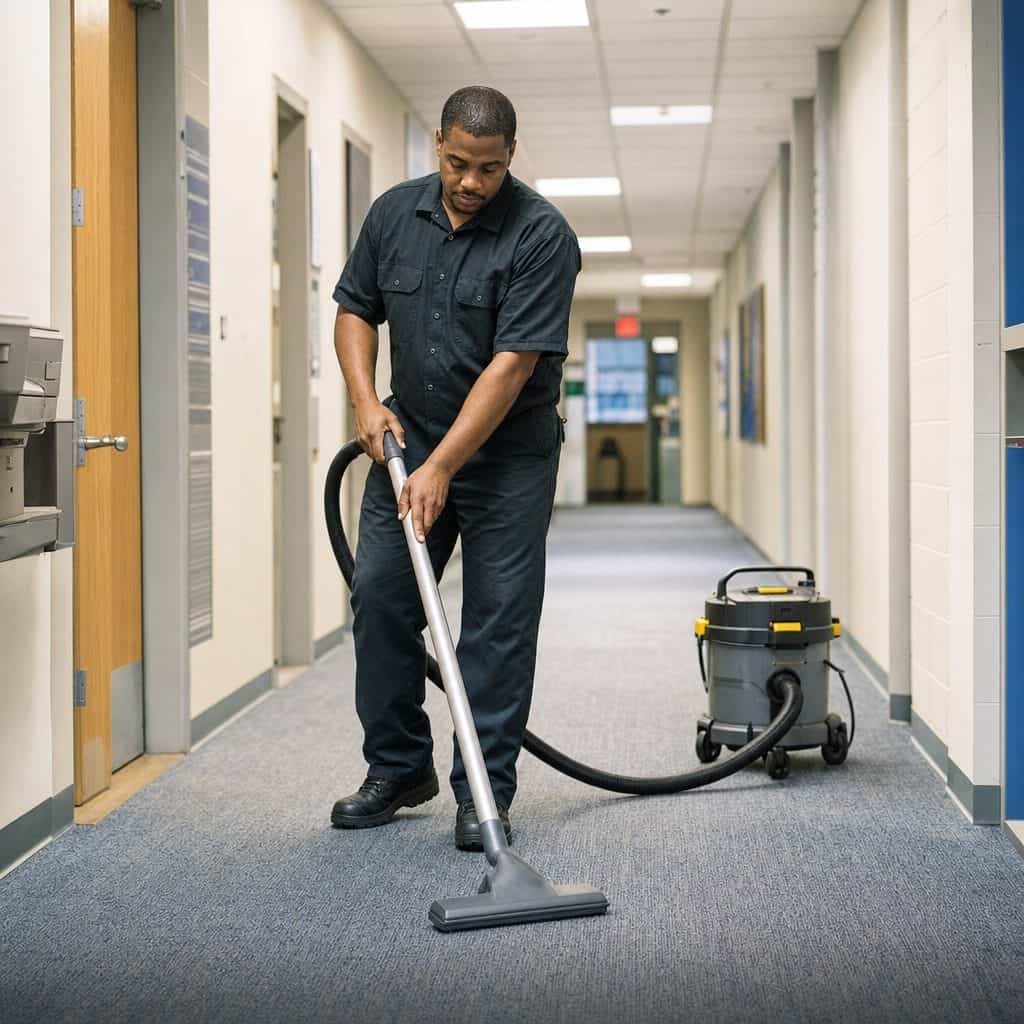
Commercial cleaning insurance in West Virginia is a specialized bundle of coverage, typically general liability, a janitorial bond, and workers’ compensation, built around the specific risk of sending employees into other people’s offices and businesses across Charleston, Huntington, and Morgantown.
Why Commercial Cleaning Companies in West Virginia Need Specialized Coverage
West Virginia’s commercial cleaning industry is concentrated around the state’s largest employment centers: Kanawha County (Charleston), home to state government offices and the state’s largest office market, Cabell County (Huntington), anchored by Marshall University and a regional hospital network, and Monongalia County (Morgantown), built around West Virginia University and a growing base of medical and research facilities. Crews working these contracts service government buildings, hospitals, university campuses, and corporate offices, often after hours with master keys and unsupervised access to restricted areas. That combination of high-value equipment, sensitive records, and after-hours access is exactly what a standard business insurance policy isn’t built to cover.
Picture a crew member straining their back hauling a floor buffer up a narrow stairwell in an older downtown Charleston office building, an injury that turns into a workers’ compensation claim regardless of how carefully the job was staffed. Or a technician dusting near a hospital’s fire-suppression sensors in Huntington accidentally triggers the sprinkler system, causing water damage to equipment and files well beyond the cost of the original contract. A lost or stolen master key ring at a university building in Morgantown can also force a full lock rekey across an entire dormitory or academic building, a cost that falls on the cleaning company if its coverage doesn’t account for it.
West Virginia-Specific Coverage Considerations for Commercial Cleaning Companies
West Virginia does not require a special state-level license specifically for commercial cleaning or janitorial businesses. Instead, cleaning companies follow the same registration path as most other West Virginia businesses: forming an entity (LLC or corporation) through the West Virginia Secretary of State, and obtaining a Business Registration Certificate from the West Virginia State Tax Department before doing any work in the state. Beyond that baseline registration, no additional janitorial-specific permit or trade license applies, though companies handling specialty work such as carpet or upholstery cleaning chemicals should still confirm any applicable local business licensing requirements in the city where they operate.
West Virginia’s state minimum wage is $8.75 per hour, a rate that has held steady since 2016 and applies to employers with six or more non-exempt employees working at one permanent location, according to the West Virginia Division of Labor. Smaller cleaning operations that fall below that threshold default to the federal minimum wage instead. For any cleaning company, that wage figure is a direct cost driver behind your workers’ compensation premium, since West Virginia’s private-market carriers calculate that premium from total payroll, meaning a growing crew and rising wages both push the number up before a single claim is ever filed.
- Private workers’ comp market: West Virginia privatized its workers’ compensation system in 2006, so cleaning companies shop coverage across more than 350 competing private carriers based on classification code and experience modifier rather than paying into a single state fund.
- No special state cleaning license: beyond standard Secretary of State entity formation and a State Tax Department Business Registration Certificate, West Virginia has no dedicated janitorial or cleaning trade license to maintain.
- Mixed commercial and residential work: many West Virginia cleaning companies split their book between office and institutional contracts and residential clients, so coverage needs to follow the crew across both without gaps in liability limits.
- Subcontractor exposure: firms that bring on subcontracted crews for overflow work in Charleston, Huntington, or Morgantown need certificates of insurance and additional-insured endorsements on file, or a sub’s mistake becomes the prime contractor’s claim.
- Equipment protection: floor buffers, carpet extractors, and pressure washers represent real capital investment that general liability alone won’t replace if they’re stolen from a job site or a locked vehicle overnight.
- Lost-key and rekeying exposure: crews with master-key access to office buildings, hospitals, and university facilities in the state’s larger metro counties face real rekeying costs if keys go missing, and that expense needs to sit inside the policy, not outside it.
- Flood-driven cleanup demand: West Virginia’s mountainous terrain and history of flash flooding create periodic water-damage and mold-remediation work for cleaning companies willing to take it on, which brings its own added liability considerations beyond routine janitorial contracts.
Coverage Types for Commercial Cleaning & Janitorial Companies
Here’s what each policy actually covers, in plain terms, along with a link to the full coverage page where one exists:
General Liability Insurance
Covers third-party bodily injury and property damage your business causes while on a client’s premises.
Such as a client slipping on a wet floor after mopping, or a spilled chemical that damages a carpet. This is the coverage most commercial clients in West Virginia require before signing a cleaning contract.
Janitorial Bond
A surety bond, not insurance, that reimburses a client if an employee steals money or property while cleaning their home or business.
It covers theft specifically, not accidental damage, and helps establish trust with West Virginia clients who won’t hire an unbonded cleaning company.
Workers’ Compensation Insurance
Required in West Virginia once a cleaning company has any employees, part-time or full-time.
Coverage is shopped across competing private carriers based on your classification code, payroll, and claims history.
Commercial Auto Insurance
Required for vehicles owned by the business, covering property damage and medical bills from an accident.
Used to transport crews, equipment, or industrial chemicals between job sites across West Virginia.
Inland Marine (Tools & Equipment) Insurance
Covers cleaning equipment, such as floor buffers, carpet extraction machines, and ladders, while it’s in transit or on-site.
Commercial auto insurance covers the vehicle itself, not the equipment riding inside it, which is exactly the gap this coverage closes.
Business Owner’s Policy (BOP)
Bundles general liability with commercial property insurance into a single, typically lower-cost policy.
If you lease or own an office or storage space for your supplies, small, low-risk cleaning businesses are usually eligible.
Commercial Umbrella Insurance
Adds additional liability limits on top of general liability, commercial auto, and employer’s liability coverage.
Cleaning companies bidding on larger West Virginia commercial contracts often need this to meet a client’s required liability limit.
Lost Key Coverage
Reimburses a commercial property for the cost of rekeying locks and reissuing keycard systems if your employee loses master keys.
Larger commercial and multi-tenant properties in Charleston, Huntington, and Morgantown increasingly ask about this coverage specifically before signing a contract.
Why Bonding and Insurance Matter for West Virginia Cleaning Companies
Commercial cleaning crews are given access to offices, retail spaces, and sometimes homes across West Virginia, often unsupervised and after hours. Property managers, business owners, and hosts of short-term rentals routinely require proof of both insurance and bonding before signing a contract or handing over keys and access codes. Being able to produce a certificate of insurance and proof of a janitorial bond on request is now a standard part of winning and keeping commercial cleaning contracts in West Virginia, not an optional extra.
Related Coverage
West Virginia Commercial Cleaning and Janitorial Business Insurance FAQs
Does West Virginia require a special license for commercial cleaning businesses?
No. West Virginia has no dedicated janitorial or cleaning trade license. Cleaning companies register like most other businesses in the state, forming an entity through the West Virginia Secretary of State and obtaining a Business Registration Certificate from the West Virginia State Tax Department.
How much does workers’ compensation cost for a cleaning company in West Virginia?
There’s no single fixed rate. West Virginia privatized its workers’ compensation system in 2006, and more than 350 private carriers now compete for business, pricing coverage based on your classification code, total payroll, claims history, and experience modifier.
Which West Virginia cities have the most demand for commercial cleaning contracts?
Charleston (Kanawha County), Huntington (Cabell County), and Morgantown (Monongalia County) show the strongest concentration of office, government, medical, and university clients that drive ongoing commercial cleaning contracts in the state.
What insurance does a commercial janitorial or cleaning company actually need?
Most commercial cleaning companies need four core policies: general liability insurance, workers’ compensation if you have employees, commercial auto insurance if crews drive between job sites, and a janitorial bond to reimburse clients for employee theft. Companies that lease office or storage space, carry expensive equipment, or bid on larger commercial contracts often add a business owner’s policy, inland marine coverage, and commercial umbrella insurance on top of those four.
What is a janitorial bond, and is it the same thing as insurance?
A janitorial bond, also called a fidelity bond or business service bond, is a type of surety bond, not insurance. It reimburses a client if one of your employees steals money or property while cleaning their home or business. Unlike an insurance claim, a surety company that pays out on a bond claim expects your business to reimburse it afterward, so it protects your client’s trust in you more than it protects your own bottom line.
Does my cleaning company’s insurance cover damage to a client’s property, or only theft?
General liability insurance covers accidental property damage, like a spilled cleaning chemical that ruins a client’s carpet. A janitorial bond covers something different: theft or dishonest acts by an employee. Most commercial cleaning companies need both, since they protect against two different kinds of loss.
Will my commercial auto insurance cover cleaning equipment I carry between job sites?
Not automatically. A standard commercial auto policy covers the vehicle itself and injuries or damage from an accident, not the buffers, vacuums, or extraction machines you’re transporting. Inland marine insurance is the coverage built specifically to protect cleaning equipment while it’s in transit or on a job site away from your main location.
How do I get in touch with a licensed agent about coverage for my cleaning company?
Call (440) 826-3676 to speak directly with a licensed agent, or request a free quote online and a licensed agent will follow up to go over the specific coverage your West Virginia cleaning business needs.
Get Coverage Built for Your West Virginia Cleaning Business
Talk to a licensed agent who will shop 15+ A-rated carriers to find coverage that actually fits your crews, equipment, and contracts.