
Home Inspector Insurance
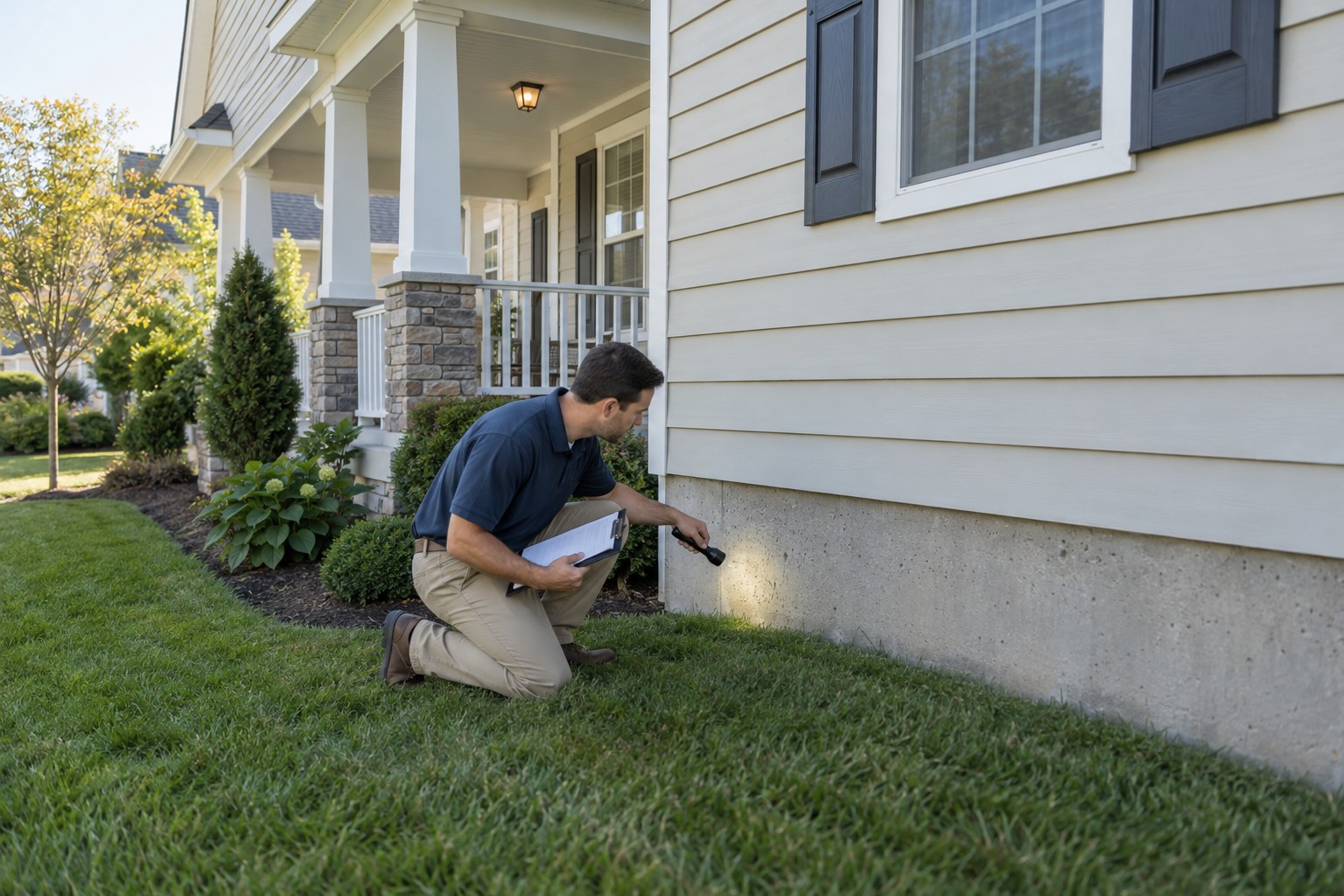
A buyer closes on a home, moves in, and six months later discovers a foundation crack or a hidden mold problem your inspection didn't catch. Now they're alleging negligence, and your professional judgment is the thing on trial. Home inspector insurance protects your practice against claims of missed defects, bad advice, and the everyday bodily injury and property damage risk of walking through someone else's attic, crawlspace, and roofline. The Allen Thomas Group structures a complete program so your business is defended on every inspection, not just the easy ones.
Carriers We Represent
Why Home Inspectors Need Specialized Insurance Coverage
Every home inspection is a professional opinion rendered in a few hours, about a structure that took months to build and will be lived in for decades. The American Society of Home Inspectors (ASHI) puts the exposure bluntly in its own member guidance: more than half of home inspectors will face at least one insurance claim during their careers. That's not a reflection of bad work so much as the nature of the job: a visual, point-in-time inspection can miss a defect that was never visible to begin with, and when it surfaces later, the buyer's first call is often to a lawyer, not back to the seller.
Errors and omissions (E&O) insurance is the coverage built for that exact scenario, responding to the recurring claim patterns in this trade: a missed defect that was never flagged in the report, a dispute over whether the inspection met the terms of the pre-inspection agreement, or a disagreement over advice given about a defect that was actually reported. A missed foundation issue, an undetected roof problem, or a mold dispute can each trigger one of these claim types, and E&O is what funds your defense and any resulting settlement.
The physical side of the job carries its own risk. Inspectors climb into attics and crawlspaces, walk rooflines, and move through occupied and vacant properties alike, creating real bodily injury and property damage exposure that E&O was never built to cover. General liability closes that separate gap, addressing the physical damage an inspection itself can cause, from a ladder scuff to a hole punched through drywall checking an electrical panel.
- Errors & omissions (E&O) for missed defects, failure-to-perform, and bad-advice claims
- More than half of inspectors face at least one claim during their careers, per ASHI
- General liability for bodily injury and property damage caused during an inspection
- Licensing landscape varies significantly by state, unlike most regulated trades
- Ancillary services (radon, mold, pool, termite/WDI) each add their own E&O exposure
- Claims can surface months or years after the inspection, once a defect becomes visible
- A pre-inspection agreement's scope is often central to whether a claim is covered
Core Coverages for Home Inspection Businesses
A complete program for a home inspection business layers coverage so each exposure has a clear home. Professional liability (E&O) sits at the center, responding to claims that your inspection or report fell short of the standard of care, whether that's a missed defect, a report that didn't meet the terms clients expected, or advice about a reported issue that turns out to be wrong. General liability handles the separate exposure of physical injury or property damage during the inspection itself, the kind of claim E&O explicitly does not answer.
From there, the program should reflect the services you actually offer. Many inspectors add radon testing, mold sampling, pool and spa inspection, or wood-destroying-insect (termite) inspection as ancillary services, and each one can expand your E&O exposure beyond a basic visual inspection, so your policy should be reviewed against your actual service list, not just your core inspection work. A business owners policy (BOP) bundles office and equipment property coverage with general liability for a small practice, commercial auto covers your vehicle between job sites, and workers compensation covers any employees or additional inspectors on staff.
We assemble these from 15-plus A-rated carriers so the structure matches your service list and state's requirements, rather than a generic template. Inspectors who also perform real estate appraisal work should review our Appraisal Company Insurance guide as well, since the two service lines carry distinct professional liability exposures.
- Professional liability / E&O for negligence, missed-defect, and bad-advice claims
- General liability for bodily injury and property damage during an inspection
- Coverage reviewed against ancillary services: radon, mold, pool/spa, WDI/termite
- Business owners policy (BOP) bundling office/equipment property and liability
- Commercial auto for travel between inspection sites
- Workers compensation for employees and additional inspectors per state mandates
- Equipment coverage for moisture meters, thermal cameras, and inspection tools
Licensing & Professional Standards for Property Inspection Professionals
Home inspector licensing is not uniform across the country, which sets this trade apart from most licensed professions. Roughly a dozen states, including California, Colorado, Georgia, Hawaii, Idaho, Iowa, Kansas, Maine, Michigan, Minnesota, Missouri, and Utah, have no state licensing requirement for home inspectors at all. California is a notable example: rather than a state license, the practice is governed by the state's own Home Inspector trade-practice law, and the dominant credentialing path runs through voluntary professional membership rather than a government exam. Confirm your own state's current requirement directly with its licensing board, since this is one of the more variable regulatory landscapes among the professions we insure.
Many states that do license this trade also build an E&O or bonding requirement directly into licensure, so carrying coverage is tied to your legal ability to operate, not just good practice. The two major professional bodies in this field, ASHI and InterNACHI, both publish their own Standards of Practice, and ASHI's own guidance to members is to carry E&O "even if your state doesn't require it," underscoring that even in unlicensed states, carrying coverage is treated as a baseline professional expectation rather than optional.
Ancillary certifications add their own layer. Radon testing, mold assessment, and wood-destroying-insect inspection often carry separate state certifications or licenses on top of the core home-inspector credential, and each should be confirmed with your state's licensing authority and reflected in your insurance program.
- No uniform national licensing standard; roughly a dozen states require none
- California: no mandatory state license, governed by its own trade-practice law instead
- Confirm your own state's current requirement directly with its licensing board
- Many licensing states build an E&O or bonding requirement directly into the license itself
- ASHI and InterNACHI both publish Standards of Practice and member E&O programs
- Radon, mold, and WDI/termite inspection often carry separate state certifications
- Treat E&O as a baseline expectation even in states that don't formally require it
Why Inspection Businesses Choose The Allen Thomas Group
The Allen Thomas Group is an independent, family-owned insurance agency founded in 2003 and licensed in 28 states. We are not tied to a single carrier, which means our advice is built around your actual service list and your state's own regulatory landscape, rather than a quota. For a profession where licensing and insurance requirements genuinely vary state by state, that independence matters.
Our advisors compare programs across 15-plus A-rated carriers and explain the trade-offs in plain language: how your pre-inspection agreement's scope interacts with your E&O coverage, which ancillary services need their own endorsement, and what your state actually requires versus what's simply good practice. The agency holds an A+ rating with the Better Business Bureau, and we treat each renewal as a review rather than an auto-renewal, adjusting coverage as your service list grows.
Above all, we act as your advocate. When a claim arrives, often months after the inspection itself, you are dealing with people who know your file, not a call-center queue.
- Independent, family-owned agency founded in 2003 and licensed in 28 states
- Access to 15-plus A-rated carriers for genuine program comparison
- A+ rating with the Better Business Bureau
- Advisory, consultative guidance rather than transactional quoting
- Annual coverage reviews that scale with your service list and inspection volume
- Hands-on claims advocacy from advisors who know your file
- Deep experience structuring programs for professional services firms
How Much Does Home Inspector Insurance Cost?
There is no single published rate for home inspector E&O and general liability, and pricing genuinely varies by inspection volume, whether you work solo or employ additional inspectors, which ancillary services you offer, your state's own requirements, and your claims history. A solo inspector offering standard visual inspections typically pays less than a multi-inspector firm that also performs radon, mold, pool, and WDI inspections, since each added service line is additional exposure underwriters price into the policy.
The clearest cost driver is scope: the broader your service list, the more an underwriter needs to evaluate, and the more your premium reflects that breadth. Claims history matters too, as does whether your state requires a specific minimum E&O limit as a condition of licensure. Because every variable shifts the total, the only accurate figure comes from comparing real quotes across carriers, which is the exercise our advisors run for each practice.
- Inspection volume and whether you work solo or employ additional inspectors
- Ancillary services (radon, mold, pool/spa, WDI/termite) each add exposure and cost
- State-specific minimum E&O limits, where your state requires one
- Claims history is a significant factor in E&O renewal pricing
- Broader service lists mean broader underwriting scope and typically higher premium
- Equipment and auto coverage are priced separately from the core E&O/GL program
- Comparing real quotes across carriers is the only reliable way to see your actual number
Risk Management & Coverage Considerations for Property Inspectors
A detailed, signed pre-inspection agreement is your single best risk-management tool. In a coverage dispute, the agreement's stated scope and your adherence to your professional body's Standard of Practice (ASHI's or InterNACHI's, depending on your affiliation) are typically the central documents reviewed - a well-drafted agreement that clearly states what was and wasn't inspected can be the difference between a covered, defensible claim and an open-ended one.
Stay current on which ancillary services you actually perform versus which ones your policy was underwritten to cover. Adding radon testing, mold sampling, or WDI inspection without updating your coverage is a common and avoidable gap. If you operate in a state with no licensing requirement, don't treat that as a reason to skip E&O - ASHI's own guidance to members is to carry it "even if your state doesn't require it," since the absence of a licensing mandate does nothing to reduce the real claim exposure described above.
Finally, document every inspection thoroughly with photos and clear written findings. A well-documented report is both a better product for your client and your strongest evidence if a missed-defect claim is ever disputed.
- Use a detailed, signed pre-inspection agreement that clearly states scope
- Keep coverage aligned with every ancillary service you actually perform
- Carry E&O even in states with no licensing mandate, per ASHI's own member guidance
- Reference your professional body's Standard of Practice (ASHI or InterNACHI) in your reports
- Document every inspection thoroughly with photos and clear written findings
- Confirm any new certification (radon, mold, WDI) is reflected in your insurance program
- Review the full program annually as inspection volume and services change
Frequently Asked Questions
Do home inspectors need errors and omissions (E&O) insurance?
In practical terms, yes. ASHI's own member guidance states that more than half of home inspectors will face at least one claim during their careers, and E&O is the coverage built to respond to claims that your inspection or report fell short of the standard of care, such as a missed defect or bad advice about a reported issue.
Is a state license required to be a home inspector?
Not everywhere. Roughly a dozen states, including California, Colorado, Georgia, and Michigan, have no state licensing requirement for home inspectors. Requirements vary significantly by state, so confirm your own state's current rule directly with its licensing board.
Is E&O insurance required to get a home inspector license?
In many licensing states, yes - insurance or bonding is built directly into the license requirement. Even in states where it isn't required, ASHI's own guidance to members is to carry E&O regardless, since the underlying claim exposure doesn't go away just because a state doesn't mandate the coverage.
What is the difference between E&O and general liability for a home inspector?
E&O covers claims that your professional judgment fell short, such as a missed defect in your report. General liability covers physical bodily injury or property damage you cause during the inspection itself, such as damage to a client's home. Most inspectors need both, since each covers a distinct kind of claim.
Do ancillary services like radon or mold testing affect my insurance needs?
Yes. Each ancillary service you offer, such as radon testing, mold sampling, pool/spa inspection, or wood-destroying-insect (termite) inspection, can expand your E&O exposure beyond a basic visual inspection. Your policy should be reviewed against your full service list, not just your core inspection work.
What is the most common type of claim against a home inspector?
Industry claims data groups recurring claim types into three categories: neglect (failing to find or report a defect), failure to perform (not meeting the terms of the pre-inspection agreement), and bad advice (an inappropriate recommendation about a defect that was reported).
How much does home inspector insurance cost?
There is no single published rate. Pricing depends on your inspection volume, whether you employ additional inspectors, which ancillary services you offer, your state's own requirements, and your claims history. Comparing real quotes across carriers is the most reliable way to see an accurate number for your practice.
Protect Your Home Inspection Business With a Program Built Around Your Risk
Our advisors compare programs across 15-plus A-rated carriers to structure E&O, general liability, and auto coverage that fits your actual service list. Call The Allen Thomas Group at (440) 826-3676 for a consultative review of your coverage.